



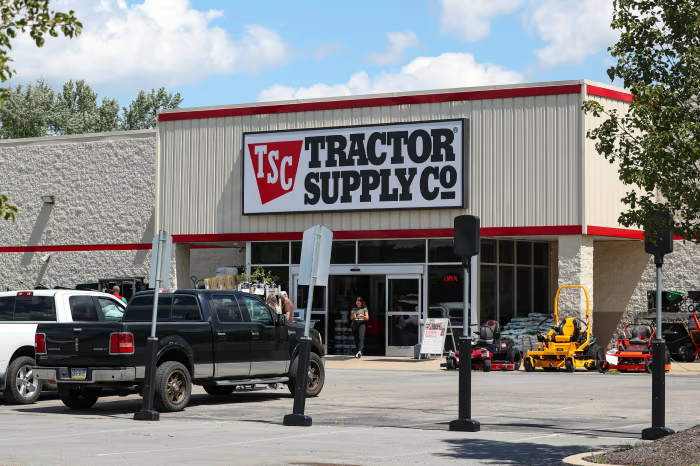
Tractor Supply is seeing strong momentum in its delivery business as the retailer continues to expand its final-mile network and improve how it serves larger customer orders.
During an earnings call, executive vice president and chief supply chain officer Colin Yankee said delivery volume rose by a double-digit percentage in the quarter ended March 28 compared with the same period last year.
The growth is closely tied to the company’s expanding hub-based final-mile model. Under that strategy, Tractor Supply brings together drivers and inventory from different facilities into regional hub locations that serve nearby customers more efficiently.
The retailer established around 200 final-mile hubs last year and plans to open another 176 in 2026.
Yankee said the growing network is helping the company reduce cost per delivery while better meeting customer demand, especially for larger order quantities. He noted that customers are increasingly using the service for bulky and high-volume purchases that few others can deliver nationally at scale.
He cited examples including orders for 250 bags of shavings or 75 fence panels, highlighting the retailer’s ability to support large-item fulfilment with its own infrastructure.
President and chief executive Hal Lawton said final-mile expansion is one of the main drivers behind recent growth in Tractor Supply’s digital business. He said the retailer is scaling delivery capabilities while improving efficiency and reducing cost to serve.
The company continues to rely on delivery partners for small and medium-sized products, while internal teams focus on large and bulky items. When the initiative was first launched, Tractor Supply said it aimed to self-deliver up to 95% of large-item orders, helping avoid the surcharges often associated with moving oversized goods through parcel carriers.
For the first quarter, Tractor Supply reported a 3.6% increase in net sales year on year, while comparable store sales edged up 0.5%. Gross margin remained flat at 36.2%, with benefits offset by higher tariffs and transportation costs linked to delivery.
Earlier this year, Lawton said the final-mile strategy could generate around $10 million annually in freight-related savings, supporting the retailer’s margin performance over time.