



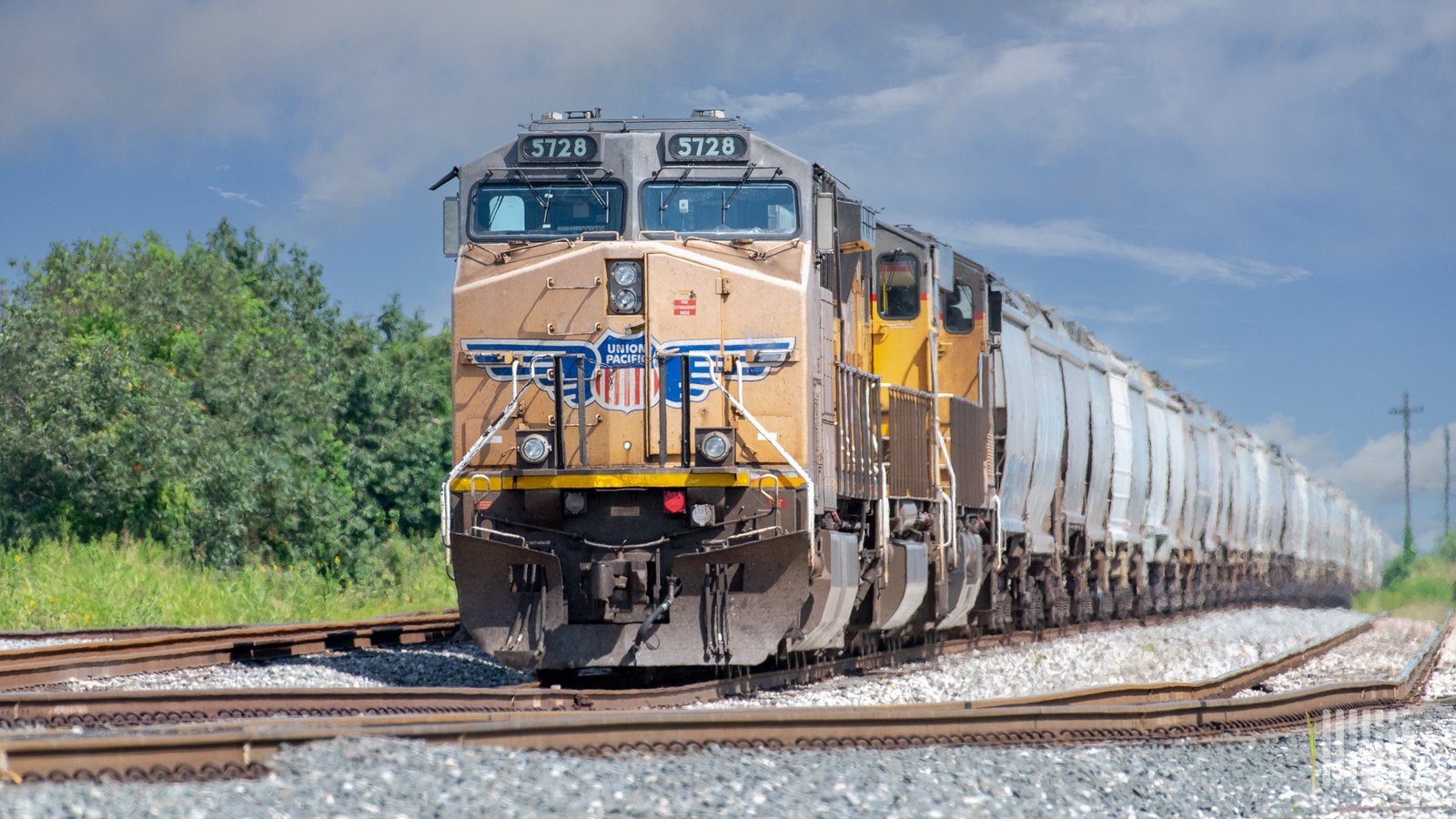
Union Pacific Chief Executive Jim Vena has expressed confidence that the revised merger application with Norfolk Southern will satisfy the Surface Transportation Board, arguing that the updated filing directly addresses the concerns that led regulators to initially reject the proposal as incomplete.
The $85bn deal to acquire Norfolk Southern is one of the most closely watched railroad combinations in recent years, and its fate now depends on whether regulators consider the revised submission sufficiently detailed — particularly on issues that previously raised red flags, including divestitures, governance structures and competitive safeguards.
Speaking at the Wolfe Research Global Transportation and Industrials Conference in New York, Vena said Union Pacific has significantly adjusted its approach after the initial application failed to meet regulatory expectations. A key revision includes providing the full merger agreement and clarifying conditions under which the deal could be abandoned.
One of the most sensitive elements is the threshold of regulatory concessions. Vena explained that early internal estimates suggested potential conditions could reach around $750 million, but that expectation was revised downward as the filing took shape. “Is it zero? No, it’s not. But it’s not $750 million,” he said, adding that the agreement still includes a $750 million trigger point that could force a reassessment of the deal’s viability.
Despite that, Vena was clear that Union Pacific is prepared to walk away if the merger no longer serves shareholder interests. He emphasized that the deal must improve the company’s performance, strengthen growth prospects and deliver value for investors — otherwise the railroad is comfortable remaining independent.
Under the agreement, Union Pacific would also withdraw if regulators impose extensive trackage rights obligations or forced asset sales. The only exception would be a required divestiture of one of the overlapping Kansas City–St. Louis mainlines, a corridor where both companies currently operate parallel routes.
That potential restructuring is already being discussed internally, although Vena acknowledged that any divestiture would be complex and time-consuming. He noted that discussions with multiple stakeholders are ongoing as the company prepares for possible regulatory conditions.
A major point of contention remains Union Pacific’s ownership stake in the Terminal Railroad Association of St. Louis (TRRA), a jointly controlled switching railroad also owned by BNSF, Canadian National, CSX and Norfolk Southern. Rival railroads argue that the revised application still fails to fully address how Union Pacific would divest or restructure its interest.
In response, Union Pacific argues that the updated filing removes uncertainty by making divestiture a mandatory condition of approval, ensuring it cannot gain control of the asset even temporarily. Vena said the company would ensure it never exceeds a 50% position, suggesting options such as converting shares into non-voting equity or returning ownership stakes.
He also revealed that Union Pacific convened a special TRRA board meeting to address concerns raised by competitors, although he claimed other railroads did not participate despite being invited — a point he used to suggest resistance is more tactical than substantive.
Other Class I railroads, including BNSF, CSX and Canadian National, maintain that the revised application remains incomplete, particularly due to the absence of a formal control application over TRRA. They argue that this omission undermines the regulatory review process and complicates assessment of competitive impacts.
Union Pacific rejects those criticisms, with Vena dismissing them as competitive “noise” and arguing that the merger would ultimately benefit the broader freight system. He said the combination would shift freight from trucks to rail, improve single-line service offerings and reduce costs through more efficient routing and equipment utilization.
According to Vena, these efficiencies would increase competitive pressure across the rail sector, forcing rivals to respond on pricing and service levels. He also reiterated that faster transit times and improved asset turnover would be central benefits for shippers.
The Surface Transportation Board is expected to decide by the end of next week whether the revised application will be accepted as complete — a key procedural step that will determine whether the merger moves into a full regulatory review.