



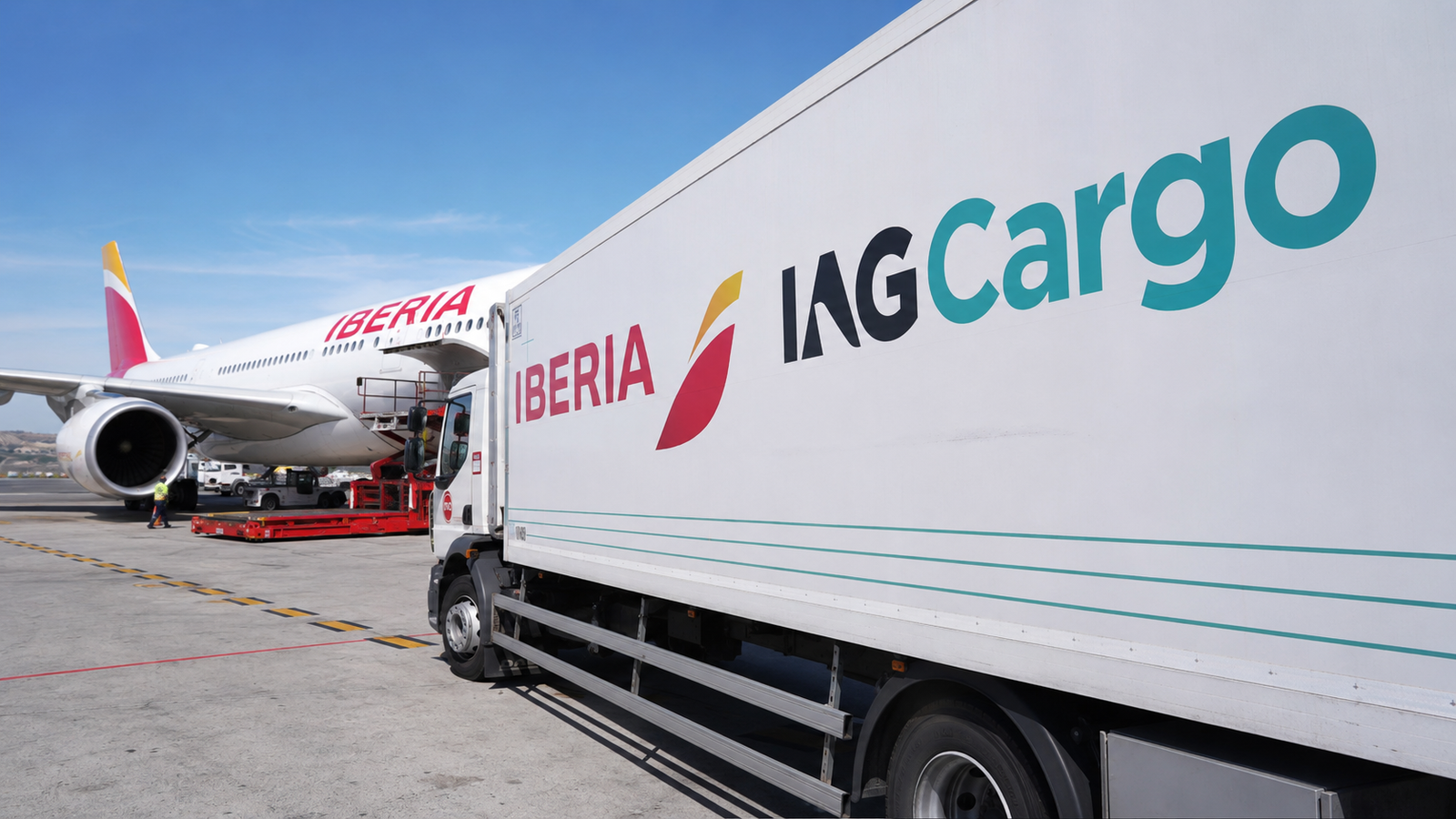
The cargo division of IAG Cargo is expanding its Latin American network with the launch of two new routes from Spain, reinforcing growing trade flows between Europe and the region.
From June 2026, IAG Cargo will operate a three-times-weekly service between Madrid and Monterrey, starting on June 2, alongside a second three-times-weekly connection between Barcelona and Lima, launching on June 3.
The Madrid–Monterrey route marks a first for the company, establishing a direct link between Spain and northern Mexico. Monterrey is one of the country’s most important industrial centres, with strong activity in automotive, aerospace and high-tech manufacturing, and is also playing a growing role in nearshoring supply chains serving North America.
The new connection is expected to open additional opportunities for cargo flows between Europe and Mexico’s industrial base, particularly for time-sensitive and high-value goods moving through IAG Cargo’s Spanish hubs.
The Barcelona–Lima service further strengthens trade links with South America, supporting demand for shipments such as perishables, pharmaceuticals and other sensitive cargo categories requiring reliable air connectivity.
Together, the new routes form part of IAG Cargo’s wider summer schedule, which includes 275 weekly widebody services from its Spanish hubs to destinations across North America, Latin America and the Caribbean.
Beyond Spain, the group continues to rely on its broader network footprint. London alone offers capacity on more than 700 weekly widebody flights, while Dublin serves as a key transatlantic gateway with around 100 weekly rotations. These hubs collectively support the company’s global connectivity across six continents.
Alongside network expansion, IAG Cargo is also continuing to develop its specialist logistics services, including its recently launched AOG solution designed to accelerate the transport of critical aircraft parts for airlines and maintenance operations.
The new routes underline the carrier’s strategy of strengthening long-haul trade corridors, particularly between Europe and fast-growing Latin American markets where demand for air freight capacity continues to rise.