




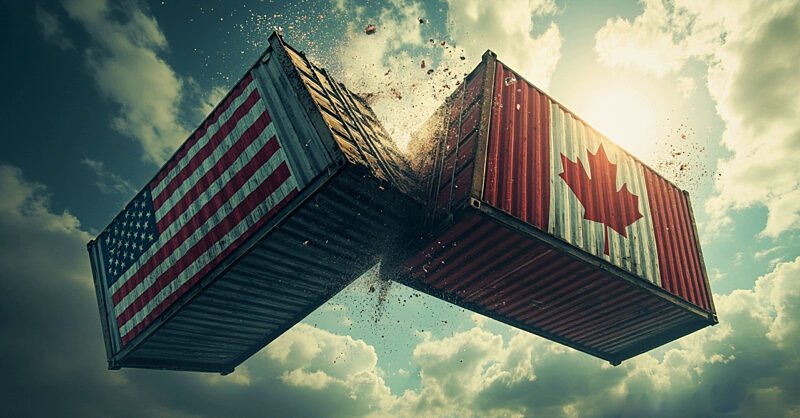
Economists say the latest tariffs announced by U.S. President Donald Trump are expected to affect roughly five per cent of Canada’s exports to the United States, creating significant challenges for certain industries while having a more limited impact on the broader Canadian economy.
On Monday, Trump signed a series of executive orders introducing a 50% tariff on a range of Canadian products, including honey, hockey sticks and cement. The measures would apply without exemptions under the North American free trade agreement and are scheduled to take effect on August 19.
The proposed tariffs would hit about $28 billion of Canadian exports annually to the U.S., said BMO senior economist Robert Kavcic.
Kavcic said the total value of the exports involved would not be that significant for the Canadian economy as a whole, but he warned businesses in the sectors being targeted could be under significant financial pressure if the tariffs go ahead as planned.
CIBC Deputy Chief Economist Benjamin Tal, who had a similar view, said the new measures are a sector-specific issue and not a broad economic threat.The tariffs are likely to have a concentrated impact on the industries directly affected and not cause widespread disruption across Canada’s economy, he suggested.
The Trump administration has defended the new trade measures by pointing to several longstanding trade disputes with Canada. U.S. officials cited Canada’s supply-managed dairy system, provincial restrictions on the sale of American alcoholic beverages and quotas affecting the U.S. automotive industry as key reasons for imposing the additional duties.
The tariffs, if implemented, could add stress on cross-border supply chains and increase costs for exporters to the U.S. market, particularly in sectors targeted directly by the new measures. The announcement also adds another factor of uncertainty for businesses engaged in trade in North America as companies consider the potential impact ahead of the planned August implementation date.