



For much of maritime history, weather was treated as a familiar operational risk: something a master could anticipate, route around and account for through insurance and voyage planning.
In 2026, that calculation is changing.
Weather is increasingly becoming a permanent feature of the global trade system itself. The threat is no longer limited to a storm crossing a vessel’s path. It can take the form of a canal running short of water, a highway disappearing beneath floodwaters, or railway infrastructure becoming too hot to safely operate.
The events of this summer have offered a striking illustration of what climate disruption means for trade. Heat domes across Western Europe, flash floods that destroyed a border crossing in the Himalayas, and the gradual decline of water levels in Panama’s Gatun Lake may appear unrelated. Yet they share a common consequence: each affected infrastructure that global shipping relies upon.
These events did not necessarily strike ships directly. They struck the systems that allow ships to move cargo beyond the port — and shipping ultimately absorbed the consequences.
Europe: when infrastructure reaches its temperature limit
Western Europe experienced its hottest June–July period on record this year, with consequences extending far beyond public health and daily life.
Rail networks, for example, have physical temperature limits. Overhead electrical lines and rail steel can be affected by extreme heat, while France’s SNCF suspended intercity services after high temperatures raised concerns about track and infrastructure deformation.
Wildfires added another layer of disruption.
As fires spread across France and Spain throughout July and into August, aviation authorities were forced to reroute flights around smoke plumes. Spain alone had recorded more than 150,000 hectares burned and more than 100,000 people evacuated by late July. Meanwhile, the high-speed rail connection between Madrid and Barcelona experienced repeated interruptions.
A United Nations Economic Commission for Europe assessment released during the crisis offered a broader warning: by the middle of the century, European transport infrastructure could face between 10 and 50 additional days per year above 25°C. Pavement deterioration, bridge-joint expansion and rail deformation could increasingly become standard engineering considerations rather than exceptional circumstances.
For maritime trade, the consequences are felt well beyond the shoreline.
A port’s ability to move containers depends on the trucks, trains and warehouses connected to it. If rail freight serving ports such as Barcelona or Marseille is halted because of extreme heat or diverted because of wildfires, containers begin accumulating at terminals. Dwell times increase, and delays can eventually reach inland customers weeks after the original fire has been extinguished.
The lesson is straightforward: a port can only be as resilient as the weakest link in the corridor behind it.
And that corridor is now, quite literally, capable of catching fire.
Nepal: when a trade corridor disappears
If Europe demonstrates how climate conditions can disrupt infrastructure, Nepal has provided an even more severe example: the outright disappearance of a critical trade route.
On August 26, a glacier collapse in Langtang National Park triggered a debris avalanche and flash flood. Scientists have linked the event to climate-driven instability affecting glaciers and permafrost.
The flood travelled almost 100 kilometres through the Trishuli and Bhote Koshi valleys before reaching the Gyirong Port complex. The crossing handles close to one-third of all trade between Nepal and China.
Reports indicate that 32 bridges and approximately 25 miles of road were swept away. The destruction included the entire route from Betrawati to the Rasuwagadhi border post.
The result was the loss of the only overland route connecting Kathmandu with Tibet.
This represents climate risk in its most unforgiving form. There is no delay to absorb, no temporary schedule adjustment and no easy short-term replacement. The route itself has ceased to exist.
For landlocked Nepal, where overland corridors carry enormous economic importance, the consequences extend far beyond fluctuations in freight rates. Reconstruction could take months or potentially years. During that period, some trade may simply stop, while other cargo will have to travel through substantially longer and more expensive alternatives.
Nor is this an isolated incident.
In July 2025, a glacial lake outburst destroyed the Nepal-China Friendship Bridge at the same border. The region also experienced landslide-related closures in 2024.
The significance lies in the pattern. These are not simply isolated extreme events. They are occurring with increasing frequency around the same vulnerable chokepoints.
That should force planners to reconsider what they mean when they describe a disruption as a “one-off” event particularly across glacier-fed corridors in regions ranging from the Andes to the Karakoram.
Panama: a chokepoint tightening in slow motion
Nepal demonstrates what a sudden rupture looks like. The Panama Canal represents the opposite scenario: a strategic chokepoint becoming progressively more constrained, one announcement at a time.
A strengthening El Niño has reduced rainfall across the watershed supplying Gatun Lake, the reservoir on which the canal’s locks depend. NOAA has placed the probability of the phenomenon reaching “very strong” status by late 2026 at 81%.
The Panama Canal Authority has already reduced the maximum authorised draft for Neo-Panamax locks five times during 2026. The limit has fallen from the design maximum of 50 feet to 47.5 feet by early September.
So far, the number of daily transits has been protected.
That reflects a lesson learned during the much more severe 2023–24 drought, when daily transits fell as low as 22 vessels and backlogs lasted for weeks.
But protecting the number of ships does not eliminate the economic impact of draft restrictions. Less cargo can be carried aboard each vessel on a route responsible for approximately 5% of global maritime commerce, including container, LNG, LPG and dry bulk trades.
The effects are quieter than those seen in Nepal, but potentially much larger at scale.
A gradual loss of capacity on a route without an equally efficient alternative can push operators toward transshipment, partial cargo loads or longer voyages around the Cape of Good Hope or through the Suez route. Each alternative introduces additional costs, emissions and scheduling penalties.
This is climate change expressed not through a single catastrophe, but through attrition.
And attrition can be harder to insure against because it may never cross the threshold required to trigger force majeure.
Hurricane Katrina already provided the warning
There is an important reason not to regard these developments as entirely unprecedented.
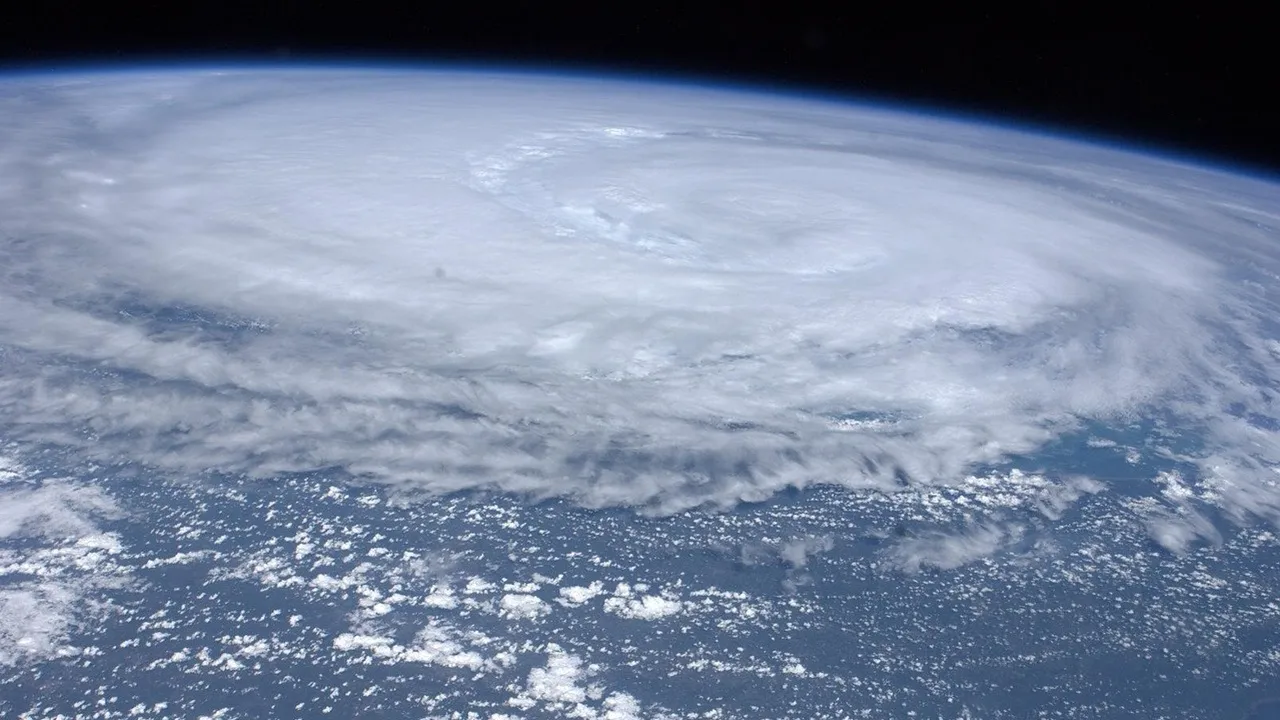
Hurricane Katrina, which struck the U.S. Gulf Coast in August 2005, provided an early and devastating demonstration of what a major climate-scale disruption can do to trade infrastructure.
The Port of New Orleans and the Port of South Louisiana. together responsible for a huge share of U.S. grain exports and a critical portion of the country’s crude oil and refined-product flows were crippled for weeks.
Approximately one-quarter of U.S. oil production and a similar proportion of Gulf refining capacity went offline.
At the same time, the Mississippi River, a crucial export artery for Midwestern corn and soybeans, was effectively closed to deep-draft shipping until channels could be cleared of wreckage and debris.
Fuel prices rose sharply across the country within days. The problem was not that global oil supplies had suddenly disappeared. Rather, the chokepoint responsible for moving those supplies to market had been knocked out.
Katrina left trade planners with two major lessons, both of which are visible again in 2026.
The first is that dependence on a single corridor represents a structural vulnerability, not simply an efficiency advantage.
The Gulf Coast’s concentration of refining and export capacity meant that one storm could influence global fuel and grain prices. The same principle can now be seen in the way repeated draft restrictions at a single canal can affect container and LNG markets.
The second lesson is that recovery almost always takes longer than the storm itself.
Dredging the Mississippi and restoring Gulf refining capacity took months. The economic consequences continued long after media attention had moved elsewhere.
Nepal’s Rasuwagadhi crossing could face a similar reality, with reconstruction likely to require years rather than weeks.
Yet one thing has changed surprisingly little over the past two decades: the industry’s willingness to invest in redundancy before a crisis occurs.
Alternative corridors, distributed capacity and climate-hardened infrastructure require upfront spending. Companies have generally been more reluctant to make those investments than to absorb the potentially much larger costs of recovery after disruption.
Katrina, the 2023–24 Panama drought, and the disruptions affecting Nepal and Europe this year therefore form part of the same story.
The lesson is simply arriving more frequently.
What the pattern means for global trade
Four different mechanisms have emerged across two decades: a hurricane crippling a river and refining corridor, extreme heat degrading infrastructure, a glacier collapse eliminating a trade route, and drought reducing the capacity of a major canal.
Together, they point to a common conclusion.
Climate risk is rarely presented to global trade as one clean, insurable event. Increasingly, it appears as sustained and compounding pressure on chokepoints that were designed for a climate that no longer exists.
The 2023–24 Panama drought demonstrated that water management could become a direct trade variable. This year’s recurrence, arriving alongside El Niño, suggests that the industry has improved its contingency planning enough to reduce transit cuts while still accepting draft restrictions.
But that is not the same as achieving structural resilience.
Nepal’s repeated glacial-lake failures around the same border crossing illustrate the other side of the equation. Infrastructure has repeatedly been rebuilt in a location that remains vulnerable to the same hazards.
For maritime and trade leaders, the operational message is increasingly difficult to ignore.
These should no longer be treated as three separate news stories or as a series of unrelated weather events. They are manifestations of the same underlying risk.
Route resilience, corridor redundancy and climate-adjusted infrastructure standards are no longer simply environmental, social and governance considerations.
They are now matters of commercial due diligence.
The chokepoints that shape the next decade of global trade may not all appear on conventional geopolitical risk maps.
Some are being defined by rainfall.
Others by temperature.
And some by the melting point of ice located a thousand miles from the nearest port.