




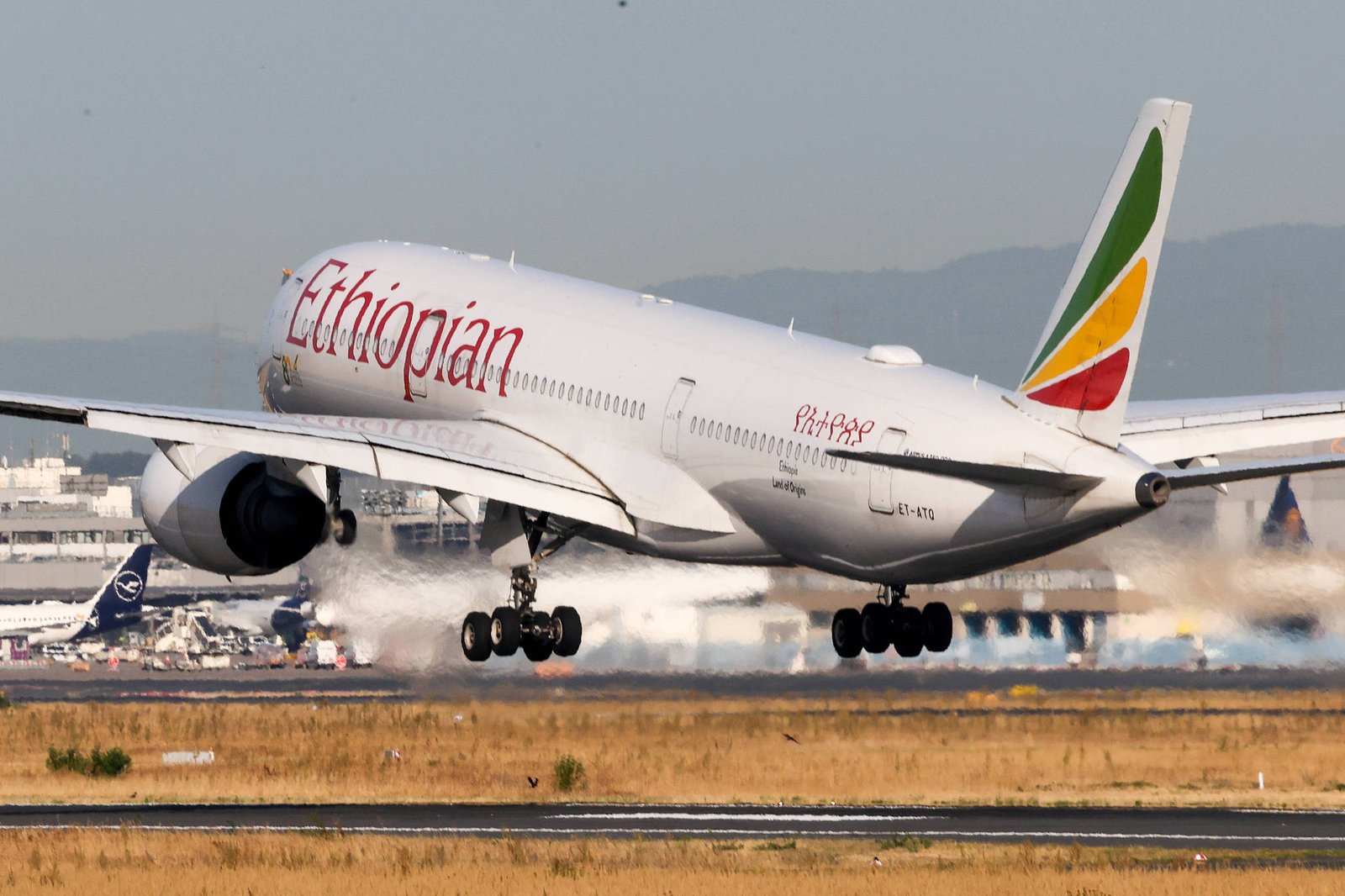
Boeing’s backlog of unfilled orders for its 777 Freighter remained unchanged at 38 aircraft at the end of September 2026, according to the manufacturer’s latest orders and deliveries report. Although two aircraft were handed over during the month, a new order from Ethiopian Airlines Cargo for two additional B777Fs offset the deliveries and kept the outstanding total stable.
Air China Cargo and FedEx each received one B777F in September. The aircraft delivered to Air China Cargo came from the 11 orders attributed to unidentified customers in Boeing’s backlog as of 30 August 2026. With these two deliveries, the number of B777Fs delivered in 2026 reached 20, compared with 35 throughout 2025.
Ethiopian Airlines signed its order for two B777Fs on 30 September as part of a broader agreement covering 10 aircraft. The deal also includes eight next-generation B777-8Fs, which have yet to receive certification, along with options for eight additional aircraft. Ethiopian Airlines chief executive Mesfin Tasew put the catalogue value of the agreement at $5 billion, although the actual purchase price remains confidential.
The state-owned Ethiopian carrier already operates 12 B777Fs. Boeing has recorded six orders for the current-generation freighter in 2026, placed by China Airlines, China Southern Cargo and Ethiopian Airlines Cargo.
Air China Cargo expands its freighter fleet
Air China Cargo added its 14th Boeing 777 Freighter, registered B-229D, to its fleet on 1 October, coinciding with China’s 77th National Day. The delivery brings the carrier’s total freighter fleet to 24 aircraft, comprising 14 B777Fs, eight Airbus A330s and two Boeing 747s.
The airline is also preparing for the arrival of 10 Airbus A350Fs. Its order book includes six aircraft announced in November 2025 and four additional units added in May 2026. The new-generation freighters are expected to complement the carrier’s A330-200P2F aircraft, supporting operations across long-haul and medium-to-long-haul routes.
Regulatory relief extends the B777F’s production window
Boeing’s current-generation B777F was originally expected to leave production at the end of 2027. Under emissions requirements based on International Civil Aviation Organization (ICAO) standards, newly built aircraft that fail to meet prescribed fuel-efficiency and CO2 limits cannot receive their first airworthiness certificate. The GE90-powered B777F does not comply with those requirements.
However, delays affecting the next-generation B777-8F prompted Boeing to seek an exemption from the US Federal Aviation Administration (FAA). The regulator granted relief allowing up to 35 new B777Fs to be certified between 1 January 2028 and the end of 2030.
The B777-8F is currently targeted to enter service in 2029, although some customers anticipate that its introduction could slip to 2030. The exemption provides Boeing with additional time to supply the established freighter while the manufacturer works towards certification and entry into service of its successor.
FedEx remains Boeing’s largest outstanding B777F customer
The distribution of Boeing’s 38 unfilled B777F orders at the end of September highlights the importance of major cargo operators to the programme.
FedEx accounted for seven outstanding aircraft, followed by Saudia with four and Emirates with three. China Airlines, China Southern Cargo, Silk Way West Airlines and Ethiopian Airlines Cargo each had two aircraft remaining on order.
A further six aircraft were listed against Volga-Dnepr UK Limited, which is in administration, while 10 remained attributed to unidentified customers.
Airbus A350F adds competitive pressure
The B777F backlog is being maintained as Airbus advances its competing A350F programme. The European manufacturer’s new freighter completed its first flight from Toulouse on 29 September, marking a significant milestone in the development of the aircraft.
At the end of August, Airbus had secured 115 A350F orders from 14 customers. The programme is therefore emerging as a growing competitor in the large freighter market, where Boeing’s established B777F continues to attract orders despite the regulatory constraints facing the current-generation aircraft.
Ethiopian Airlines Cargo’s latest commitment provides a further boost to Boeing’s existing programme, while the delivery of the first A350F and the anticipated introduction of the B777-8F underline the transition taking place in the global freighter market.