




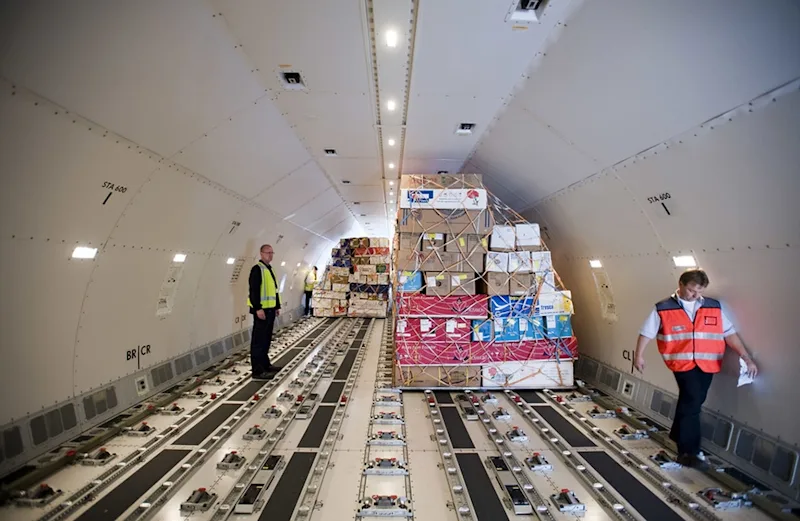
Amsterdam Schiphol Airport (AMS) recorded an 8% year-on-year increase in cargo tonnage in September, handling a total of 127,750 tonnes. The results reflect continued growth at the Dutch air freight gateway, where cargo flows have been adapting to changes in European customs regulations.
The September figures comprised a 46% share of belly-hold cargo carried in passenger aircraft and 54% transported on full freighters. A year earlier, the distribution stood at 44% for belly-hold shipments and 56% for freighter operations, representing a two-percentage-point gain for cargo carried in passenger aircraft.
Since the beginning of the year, cargo volumes at Schiphol have increased by 10%. The performance comes after a period of slower inbound freight activity from the Far East, following the European Union’s removal of the customs duty exemption for low-value goods on 1 July. The change prompted adjustments across the European air freight market as operators responded to the new regulatory framework.
Temperature-sensitive goods remain central to Schiphol’s cargo mix
The main commodities handled at Amsterdam Schiphol during September included electrical machinery, flowers, fish, fruit, vegetables, pharmaceutical products and spare parts. Several of these product categories depend heavily on reliable temperature-controlled logistics, underlining the importance of cold-chain capabilities at the Dutch airport.
Maastricht Aachen Airport, which belongs to Royal Schiphol Group alongside Amsterdam Schiphol and is described as the group’s main gateway’s “seventh runway”, also reported strong growth. The airport handled 4,158 tonnes of cargo during September, marking a 17% increase compared with the same month last year.
In addition to its conventional air cargo volumes, Schiphol processed 35,149 tonnes of Road Feeder Service (RFS) freight, transported by road as part of air cargo supply chains.
Far East inbound traffic recovers as outbound volumes expand
Figures for regional traffic show an improvement in inbound shipments from the Far East compared with August. The rebound comes after the introduction of new EU customs rules for low-value goods, which had come into force at the same time as a 15% fall in volumes compared with before the abolition of the exemption.
Outbound cargo also saw good performance with total volumes up 13%.” Performance varied widely by destination region:
-
Far East: outbound volumes up 11%.
-
North America: shipments +26%
-
Central & South America: Up 44% in volume.
-
Africa: outbound cargo grew by 20%.
-
Middle East: 14% less volumes.
The figures show different developments in Schiphol’s international cargo network. Inbound traffic from the Far East is beginning to recover from the disruption caused by the EU’s customs changes. Outbound shipments have experienced especially strong growth to the Americas and Africa. But the drop in Middle East volumes points to a patchy performance across the airport’s regional markets.