



Recurring drought and declining water levels are increasingly turning inland waterways into a structural supply chain risk, according to transport and logistics insurer TT Club. Restrictions on major rivers and canals can reduce vessel capacity, shift cargo to alternative transport modes and place additional strain on already stretched logistics networks.
TT Club is urging companies that depend on inland waterways to prepare for prolonged periods of restricted navigation rather than treating low-water conditions as an exceptional or temporary disruption.
Falling river levels can force barges to operate with reduced loads, restrict access to certain sections of waterways and create additional delays and freight costs. The consequences can quickly extend beyond inland shipping, affecting connected ports, warehouses and road and rail networks.
“Inland waterways remain an essential component of efficient, lower-emission freight transport. However, the assumption that these corridors will always provide a dependable alternative to road and rail must now be challenged,” said TT Club risk assessment manager Neil Dalus.
The insurer stressed that drought should increasingly be viewed as a business continuity issue rather than simply an environmental event.
“Drought should no longer be considered a rare environmental issue. It is a business continuity risk with the potential to affect vessel capacity, route availability, port operations and the wider transport network,” Dalus said.
“The question for operators is not whether low-water conditions will occur, but whether they have the visibility, flexibility and contingency arrangements required to manage them.”
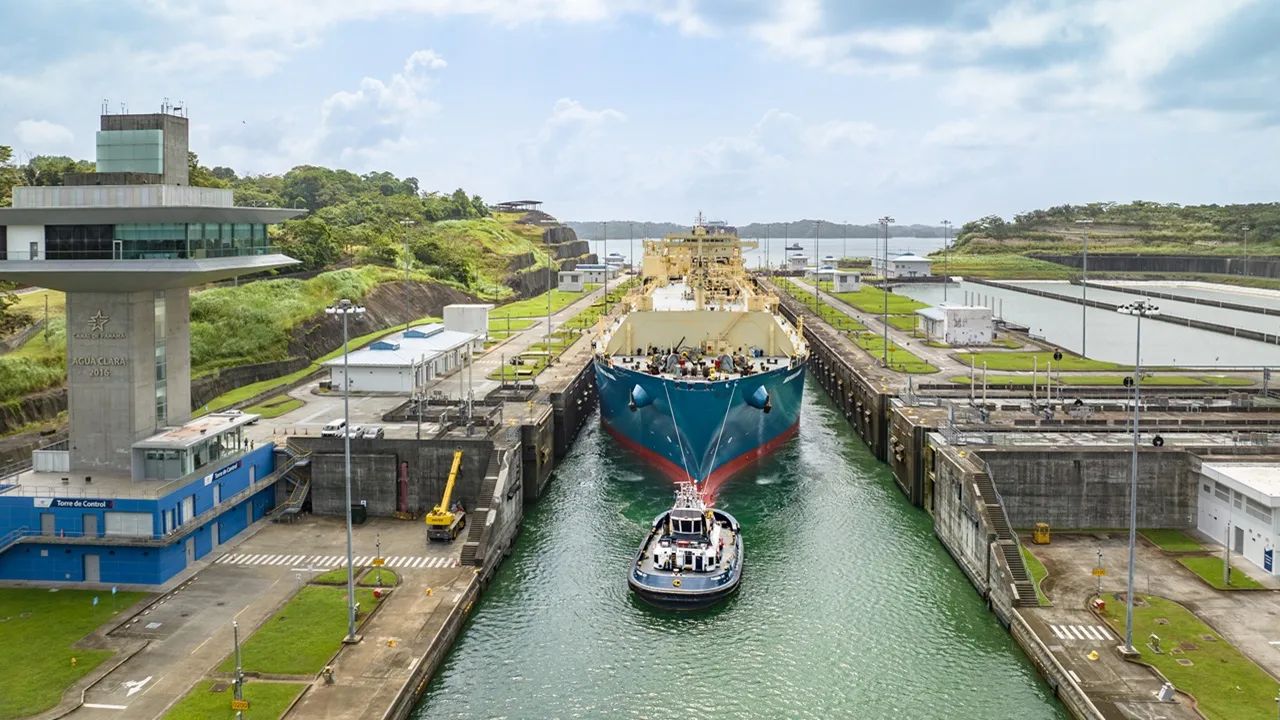
The warning comes as insufficient rainfall once again puts pressure on capacity at the Panama Canal, providing a clear example of how water availability can become a direct constraint on global shipping.
The Panama Canal Authority reduced the number of available daily transit slots from approximately 38 to 34 on September 3. A further reduction to 32 transits is scheduled from September 15 after rainfall in the canal watershed fell below expectations.
The Panama Canal Authority’s new administrator, Ilya Espino de Marotta, has identified the canal’s Rio Indio water supply project as her top priority.
Draft restrictions also remain in place. However, the authority this week postponed a planned October reduction after Gatun Lake levels proved better than forecast. The maximum authorised draught for vessels using the Neopanamax locks remains 14.63 metres Tropical Fresh Water.
The situation is significantly less severe than during the 2023-24 drought, when restrictions reduced daily canal transits from the normal level of around 38 to as few as 22. Ships were also forced to reduce their cargo intake.
Pressure extends to European inland transport
European inland freight has repeatedly been hit by the same pattern. Low water levels on the Rhine have forced barges to reduce their loads and increased demand for road and rail capacity, adding pressure to hinterland connections serving major ports such as Rotterdam and Antwerp-Bruges.
Previous low water periods on the Rhine have shown the consequences extend far beyond barge operators. As cargo transfers to trucks and trains, the need for land transportation grows, and rates on those systems go up.
“We have seen the same disruption in the Amazon basin. In 2023, barge operators on the Madeira and Tapajós rivers reduced barge loads by as much as 50 and 40 percent, respectively, as low water levels limited navigation and delayed agricultural exports.
TT Club warned the availability of water for navigation may increasingly be seen as part of a wider competition for scarce resources.
One is Romania. Authorities have had to balance the water needs of Danube navigation with other needs such as power generation.
In times of severe drought, governments may have to make difficult choices between transport, agriculture, drinking water and energy production. Competition for the scarce water resources might add another layer of uncertainty to ship operators.
Climate pressure could complicate modal shifts
The growing pressure to reduce supply chain emissions is also creating a potential contradiction. Governments and cargo owners seeking to move more freight onto inland waterways as a lower-emission alternative could increasingly encounter climate-related restrictions on those same routes.
TT Club nevertheless stressed that waterborne transport will remain an important lower-emission freight option. But companies increasing their reliance on inland shipping should incorporate greater variability in water levels into their supply chain planning.
This could mean identifying alternative road and rail routes before disruption occurs, improving visibility of river forecasts, reassessing inventory and storage requirements and testing how supply chains would perform during extended periods of reduced barge capacity.
“The most resilient organisations will be those that understand their dependencies, can activate alternative transport options quickly and have already considered how their supply chains will perform under persistently constrained conditions,” Dalus said.