



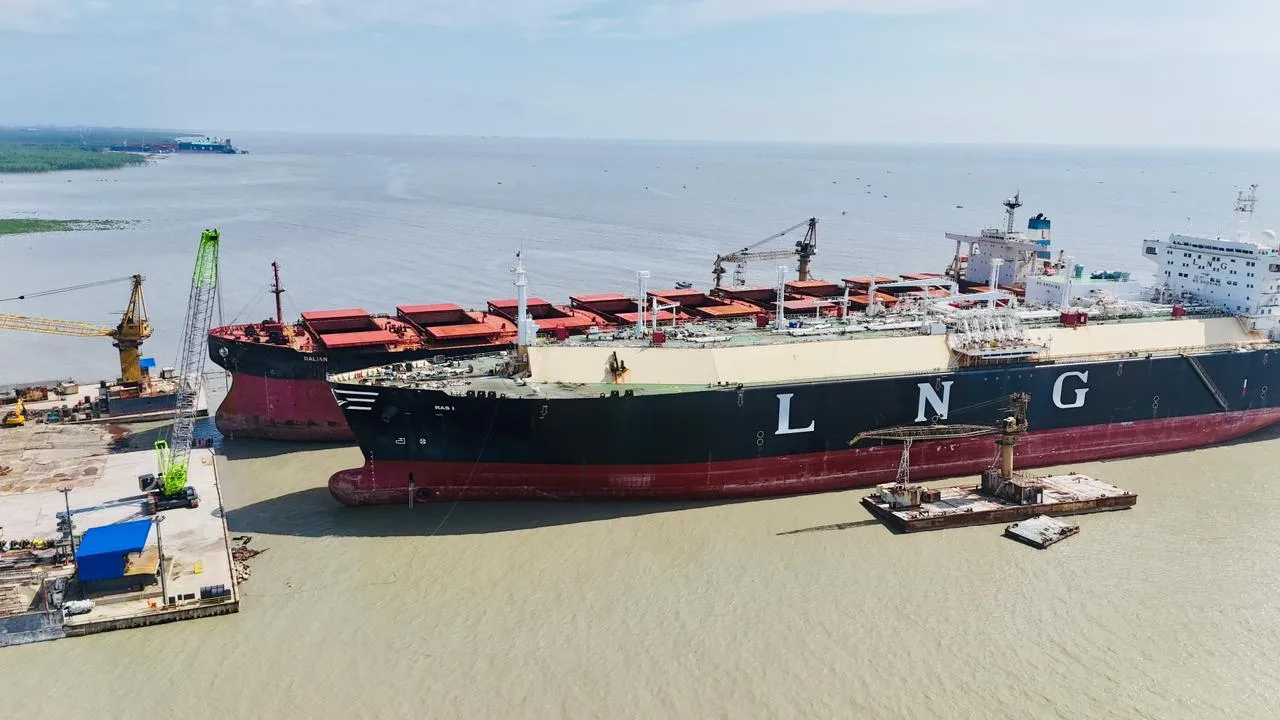
Ten workers lost their lives during a ship recycling operation in Chattogram on 14 August, a tragedy that has once again placed questions over safety standards, certification and the progress made across the ship recycling industry.
Whatever the eventual findings on responsibility, an accident on this scale is unacceptable. The immediate priority must be to establish exactly how the incident occurred, determine whether existing risk assessments failed to account for specific hazards and ensure that the same sequence of events cannot happen again.
The statutory investigations will determine the full circumstances and responsibilities. The observations presented here are based on a preliminary technical assessment and are not intended to prejudge those findings. They do, however, highlight a broader safety issue that deserves attention throughout the ship recycling sector.
The maritime industry has spent decades establishing rigorous controls for enclosed-space operations. Before a worker enters such a space, its atmosphere is tested, ventilation is established, access is controlled and emergency procedures are prepared. These measures remain fundamental.
But the Chattogram accident raises another question: do those controls begin early enough?
The workers involved in the initial exposure were operating in an open work area when the bottom of a double-bottom ballast tank was cut. They were not carrying out a conventional confined-space entry. The hazard originated inside an enclosed space, but the exposure occurred outside it.
That distinction should not be interpreted as a defence. Instead, it should encourage the industry to examine whether its safety controls need to begin before an enclosed space is actually breached.
Hydrogen sulphide is heavier than air. A sudden release from a low point can create a dangerous cloud close to ground level, even when the surrounding environment is technically open. Simply being outside a tank therefore does not guarantee that natural ventilation will protect workers from a substantial and rapid release.
This distinction is critical to understanding the incident. It avoids the misleading choice between calling it a conventional confined-space accident and assuming that an open work area is inherently safe. Neither description fully reflects the nature of the hazard.
Our preliminary technical assessment indicates that prolonged biological activity inside a ballast tank may have played a significant role. Biofilm can develop inside ballast tanks, and when seawater remains in a sealed environment for an extended period, oxygen depletion can create anoxic conditions. Over time, temperature, changes in pH and other conditions may contribute to the formation of hydrogen sulphide.
The condition of a ballast tank is therefore not necessarily fixed. A tank presenting one level of risk at an earlier stage of recycling can develop substantially different internal conditions after remaining closed for many additional months.
That point is particularly important in a recycling operation that unfolds over an extended period.
By the time of the accident, approximately 70% of the vessel had already been recycled. The engine room and accommodation had been dismantled safely, while two other ballast tanks had previously been handled using the same general method without producing the same outcome.
That history should neither diminish the seriousness of the accident nor be used to defend any individual participant. Instead, it demonstrates a well-known challenge in industrial safety.
When a procedure has been carried out successfully several times, confidence in the method naturally grows. An operation can gradually become routine. Yet previous success does not mean that the conditions behind the next section of steel will be identical.
The successful opening of one ballast tank cannot serve as the risk assessment for the next.
The wider certification context is equally relevant. The recycling facility had been reviewed by recognised organisations and was operating within the developing Hong Kong Convention certification framework.
That does not establish that every operational risk had been identified. Nor does the accident render certification meaningless. Rather, it demonstrates why safety and certification systems must be capable of evolving when operational experience reveals a hazard that has not been adequately considered.
A stored-energy event as well as a toxic-atmosphere event
The technical classification of the accident is therefore important.
It can be characterised as an uncontrolled release of stored hazardous liquid and its dissolved gas load from a residual enclosed space into an adjacent open work area while that space was being breached at its lowest point.
In this respect, the incident was not simply a toxic-atmosphere event. It was also a stored-energy event.
That distinction matters because the existing safety architecture for ship recycling is considerably clearer when it comes to controlling entry into an enclosed space than when it comes to controlling the first breach of that space from outside.
The initial opening itself can release the contents of the tank, together with any hazardous gas associated with those contents, directly into the surrounding work area.
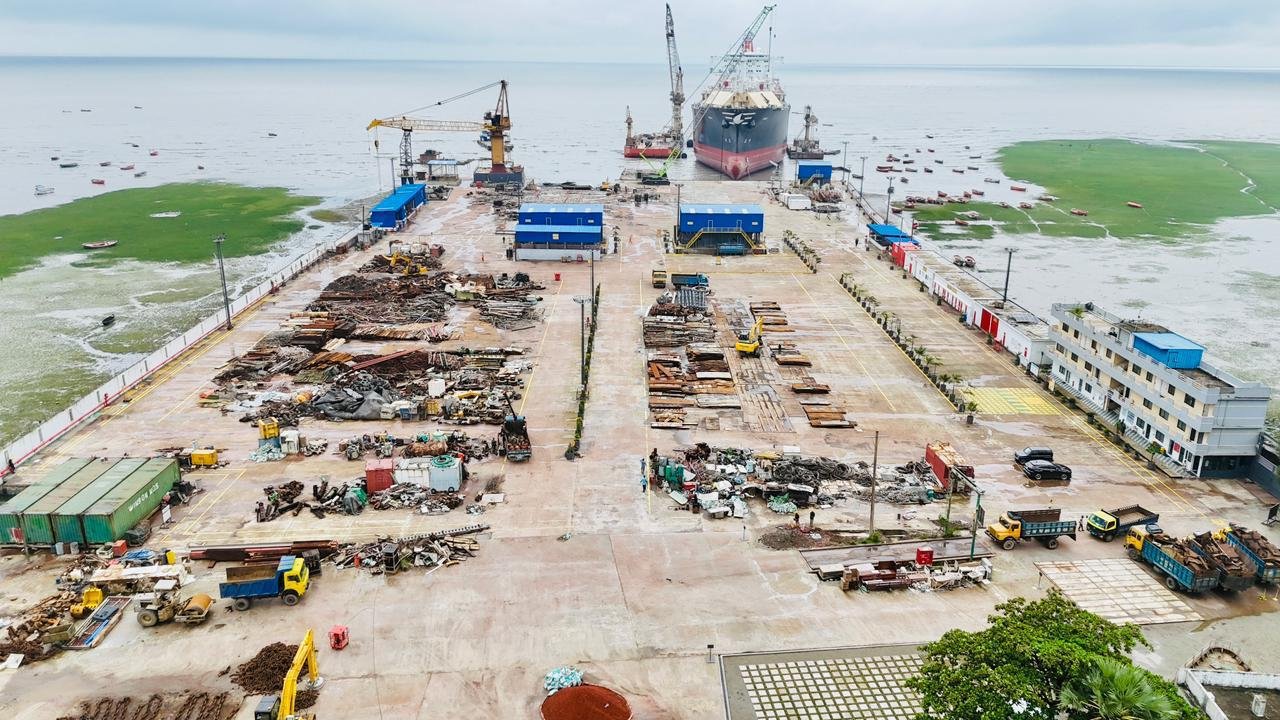
Credit: GMS
Safety controls must begin before entry
This is the gap the industry should now address.
The first opening of a previously sealed ballast tank, void, cofferdam or similar space should itself be regarded as a high-risk operation, even when no one intends to enter the space.
The safety system must control the breach as well as the entry.
That requires previously sealed spaces to be reassessed before opening, with consideration given to how their internal conditions may have changed over time. Appropriate gas monitoring and exclusion arrangements should also be established around the initial opening.
But procedures alone will not solve the problem.
Training and awareness are equally critical. Workers, supervisors and safety personnel must understand that H2S exposure is not limited to someone physically entering a tank. They need to recognise that a toxic atmosphere can develop rapidly in an adjacent open work area and that smell must never be treated as an indicator that an area is safe.
Emergency response must be built around the real hazard
The same principle must apply to emergency response.
When a colleague suddenly collapses, the instinctive reaction is often to rush forward and provide assistance. During a toxic-gas incident, however, that instinct can turn one casualty into several within moments.
Rescue operations therefore cannot rely on improvisation.
Where the risk assessment identifies the need, appropriate breathing apparatus must be immediately available. Trained personnel must be capable of responding, while access to a suspected gas-affected area must be controlled.
Regular and realistic rescue drills are just as important.
A drill should replicate what would actually happen if someone collapsed in a gas-affected work area. Who raises the alarm? Who prevents other workers from entering? How quickly can a properly protected rescue team reach the casualty? Is the necessary equipment ready for immediate deployment?
These are operational questions, not paperwork exercises.
Responsibility for any specific failures must be established and addressed through the official investigation process. At the same time, the wider industry should not treat the incident as a problem limited to one yard, one vessel, one cash buyer, one owner or one certification body.
If a routine operation can generate a hazard that existing risk assessments did not adequately anticipate, the lesson belongs to the entire system.
The maritime industry already recognises that entering an enclosed space requires strict controls. The lesson from Chattogram is that those controls may need to start one step earlier.
A work area can be open, yet the danger can still come from inside the tank.
Ship recycling safety must start before the first cut.