



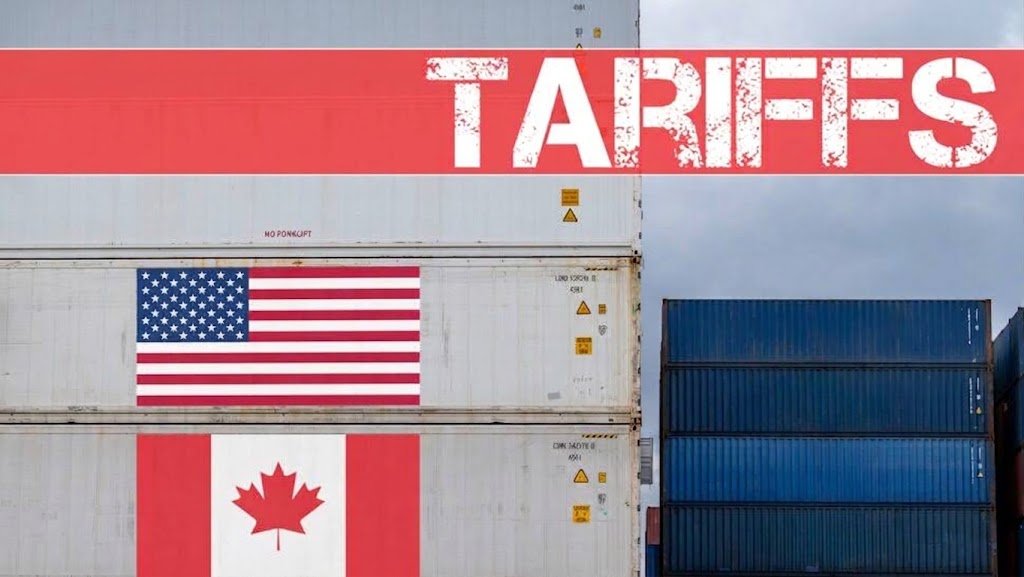
Headlines are portraying the latest U.S. trade measures against Canada as sweeping bans on Canadian imports. But a closer reading of the tariff annexes reveals a considerably narrower policy, one that logistics and trade professionals will need to navigate line by line.
Beginning Sept. 29, 2026, selected tariff lines will move from a 50% additional duty to an outright import prohibition under Section 338 of the Tariff Act of 1930. Other Canadian products will either remain subject to the 50% tariff or be removed from the list altogether.
The three White House proclamations appear designed to put pressure primarily on consumer-facing and packaged goods rather than entire industrial sectors.
“The headline says the U.S. just banned Canadian dairy, alcohol, and motor vehicles. I read the annexes. That’s not quite what happened,” wrote James Ferry, a longtime trade compliance specialist and board member of World Trade Center Denver, in a LinkedIn post.
The distinction is particularly clear in the automotive sector. The motor vehicle prohibition occupies a single tariff line and applies to motorcycles and mopeds equipped with engines larger than 800cc. Passenger cars, light trucks and most automotive parts are not covered by the ban.
The dairy-related prohibition is spread across 14 lines, although Ferry points out that most of those products are not actually dairy. The list includes eight whey tariff lines, five molasses lines and non-alcoholic beer.
The pattern, he argues, is clear: the prohibitions focus heavily on consumer products that compete for retail shelf space, while industrial inputs generally remain subject to the 50% additional duty.
“This is shelf-space policy wearing trade-remedy clothing,” Ferry wrote.
The alcohol annex similarly targets specific finished beverages, including malt beer, wine, cider, whisky, vodka and other spirits.
A staggered timeline for importers
For companies moving Canadian goods into the United States, the changes are not arriving all at once. Customs broker A.N. Deringer has highlighted a series of dates that will alter both costs and compliance exposure.
Sept. 15 – Changes to the 50% duty list. Rock salt and cement will be removed from the additional-duty list, while all-terrain vehicles and additional dairy-related tariff lines will be added. There is no phase-in period, meaning affected importers face an immediate impact on their profit and loss statements.
Sept. 18 – Tighter importer-of-record enforcement. U.S. Customs and Border Protection will strengthen enforcement of importer-of-record data. According to an Aug. 19 CBP notice, the agency will begin voiding IOR numbers when Form 5106 information is inaccurate or incomplete. Once an IOR number has been voided, it cannot be used to enter merchandise.
Sept. 29 – Import prohibitions begin. Canadian goods specifically designated in the proclamations and previously subject to the 50% additional duty will instead be prohibited from entry.
USMCA does not provide an exemption
Two operational issues stand out from the proclamations and related guidance.
First, qualifying under the United States-Mexico-Canada Agreement does not provide an exemption from the new measures.
C.H. Robinson said in a statement that USMCA origin is not an exemption. The White House explicitly states that Section 338 duties and now the associated prohibitions apply regardless of USMCA eligibility. They can also be applied on top of Section 232 duties that may already affect a particular product.
For importers looking for ways to manage the Sept. 29 deadline, bonded warehouses could provide a meaningful mitigation option.
Ferry notes that goods already imported but not yet entered for consumption before Sept. 29 remain subject to the 50% additional duty rather than the prohibition. In practical terms, that can turn an outright ban into a costly but still payable duty.
However, the opportunity is strictly tied to the entry-for-consumption deadline. Once that window closes, the option disappears sharply.
Litigation is unlikely to restore access
Legal challenges may also have limited practical upside for importers.
Each of the three proclamations contains a severability clause. Ferry says that if a court were to strike down the prohibition component, the 50% additional duty would automatically return for the same products.
That means the most realistic outcome for challengers may not be a return to pre-Section 338 treatment. Instead, the products could simply move from being “banned” to being “expensive.”
That assessment was also made by legal analyst Edmarverson A. Santos in Diplomacy & Law.
For trade counsel and customs brokers, the message is therefore increasingly straightforward: companies should approach the new U.S.-Canada measures as a line-by-line compliance exercise, rather than relying on broad headlines about a sweeping Canadian import ban.
The distinction between a product that is prohibited, one that remains subject to a 50% duty and one that has been removed from the list could have an immediate operational and financial impact on importers.