




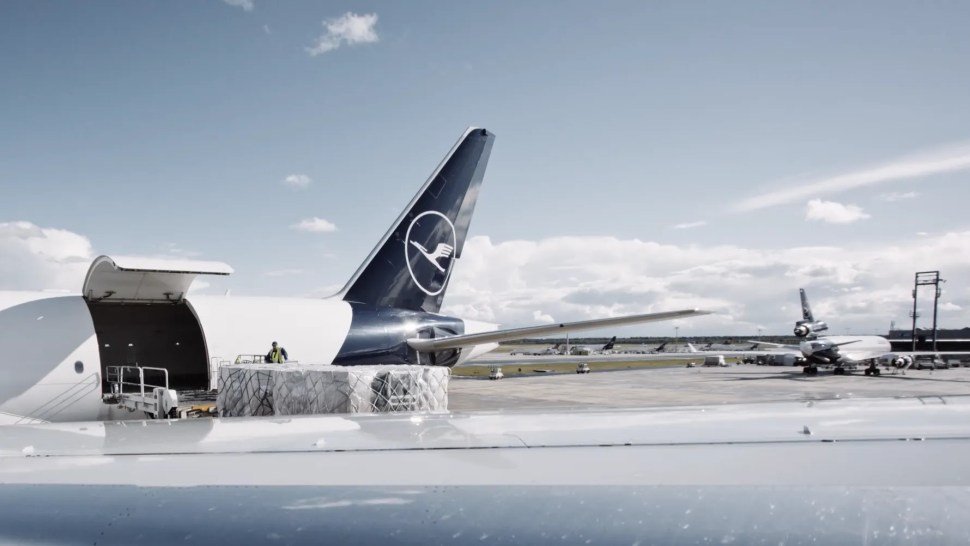
Lufthansa Cargo, the logistics arm of Deutsche Lufthansa Group, has reached an agreement to acquire airport service provider LUG air cargo handling GmbH, a move aimed at making cargo transfers on the ground more efficient and reducing the operational slowdowns that can affect customers relying on fast freight services.
LUG currently provides cargo handling and distribution services at Frankfurt, Munich and Hamburg airports in Germany. Through the acquisition, Lufthansa Cargo ([XETRA: LHA]) will immediately gain additional capacity for handling its own shipments while also broadening its revenue base by continuing to serve other airlines that require ground-handling services, the company said Tuesday.
The transaction remains subject to the customary antitrust and regulatory approvals. LUG will continue operating as an independent company, meaning customers are not expected to see any changes to the services they currently receive.
“In an increasingly volatile market environment, we want to become more flexible, more efficient and more resilient for our customers. That is why we are making targeted investments in our infrastructure in our home market in Germany to set the course to provide an even better offering for our customers and achieve profitable growth,” said Frank Bauer, chief operating officer of Lufthansa Cargo, in a company news release.
LUG is currently owned by the Dettmer Group. The company employs approximately 400 people and manages more than 538,000 square feet of warehouse space across its operations.
The financial terms of the acquisition have not been disclosed.
Building a broader cargo network
Lufthansa Cargo currently ranks No. 14 among the world’s air cargo carriers by traffic volume, according to the International Air Transport Association. Its fleet includes 12 Boeing 777 freighters, while the carrier can also market capacity aboard six additional 777 freighters operated by AeroLogic, the joint venture between Lufthansa and DHL Express.
That gives Lufthansa Cargo control over a total of 18 widebody freighters. The company also makes use of belly capacity aboard sister carriers Lufthansa Airlines, Austrian Airlines, Brussels Airlines, Discover Airlines and SunExpress to transport freight.
The carrier has increasingly concentrated its commercial strategy on high-margin industries, including pharmaceuticals, semiconductors, automotive and artificial intelligence. Strengthening infrastructure on the ground is an important part of that premium strategy.
The LUG transaction is therefore being pursued alongside a much larger infrastructure investment at Lufthansa Cargo’s Frankfurt hub. The company is constructing a $682 million cargo terminal covering 3.5 million square feet. The facility will feature high-bay areas designed for more efficient pallet storage as well as an automated transport system, significantly increasing both cargo-handling capacity and operational efficiency at the hub.
Extending integration beyond airport handling
Lufthansa Cargo’s strategy of vertical integration also reaches into cross-border logistics.
Earlier this year, the company combined heyworld, which specializes in expedited cross-border shipping for e-commerce shipments, with CB Customs Broker. The two businesses were brought together under a new company, GlobeCross GmbH.
According to Lufthansa Cargo, the combination creates an integrated platform specifically designed for e-commerce customers, offering faster and more predictable services while ensuring full compliance in an increasingly complex global trade environment.
The carrier says customers will benefit from a more integrated operating structure, including a single interface, shorter decision-making processes, fewer delays at international borders and faster implementation of customized logistics solutions.
With the planned LUG acquisition, the Frankfurt terminal investment and the creation of GlobeCross, Lufthansa Cargo is continuing to expand its presence beyond simply moving freight by air, placing greater emphasis on the infrastructure, handling and cross-border services that determine how efficiently cargo reaches its final destination.








Comments 1