




The U.S.-Canada trade spat is entering a more aggressive phase, with the Trump administration going beyond tariffs and directly hitting Canadian products as well as limiting their access to long-term U.S. federal contracts.
New restrictions on Canadian alcohol, dairy products and motorcycles will take effect Sept. 29, the White House announced Tuesday, according to the Associated Press.
The measures will cover a range of Canadian wines and spirits, as well as certain motorcycles and mopeds, dairy products including whey and certain types of molasses.
Instead of another round of tariffs on those products, the administration will ban them from the U.S. market starting Sept. 29 if the broader trade dispute hasn’t been resolved, Yahoo Finance reports.
The announcement came just hours after Canada’s retaliatory tariffs went into effect at 12:01 a.m. Tuesday.
Canada’s new tariffs between 15% and 50% on hundreds of U.S. products including steel, aluminum, cheese, appliances, clothing, cosmetics and agricultural equipment take effect immediately. Tariffs on steel and aluminum have been doubled to 50 percent.
Collectively, the Canadian measures affect about $20 billion of U.S. goods, or about 6% of U.S. goods exports to Canada last year.
Ottawa has called the measures a “dollar-for-dollar” response to U.S. tariffs. Washington’s tariffs, by comparison, cover about $28 billion of Canadian imports.
Trump To Raise Federal Procurement Pressure
The escalation is also extending beyond the movement of goods across the border.
President Donald Trump on Tuesday ordered the General Services Administration to start removing Canadian-origin products from its Multiple Award Schedules, Reuters reported.
The schedules are used by U.S. federal agencies to buy products and services under long-term government contracts, providing the administration with another avenue to pressure Canadian companies.
Trump said the limits would stay in place until Canada gives what he described as “full and fair reciprocity” to U.S. farmers and companies.
The president also accused Canada’s federal and provincial governments of preventing U.S. firms from competing in Canadian government procurement markets.
On Tuesday, Trump said, “I am directing the GSA, in coordination with the USTR, to take all necessary steps to REMOVE Canadian-origin products from GSA’s Multiple Award Schedules.”
The latest steps follow a breakdown in U.S.-Canada trade talks on Aug. 21, as both governments take more hardline positions as the dispute escalates.
Prime Minister Mark Carney conceded Tuesday the confrontation could cause significant economic pain, but said Ottawa would continue to resist U.S. demands.
Carney told the Associated Press, “We will do what it takes for as long as it takes.”
Carney has increasingly described Canada’s response as part of a broader effort to reduce the country’s economic reliance on the United States. More than 70 per cent of Canada’s exports now cross the border.
The size of the relationship is large. In 2025, the U.S. sent $333.6 billion worth of goods to Canada and imported $381.9 billion from Canada, the U.S. Trade Representative said.
Cross-border freight volumes start declining
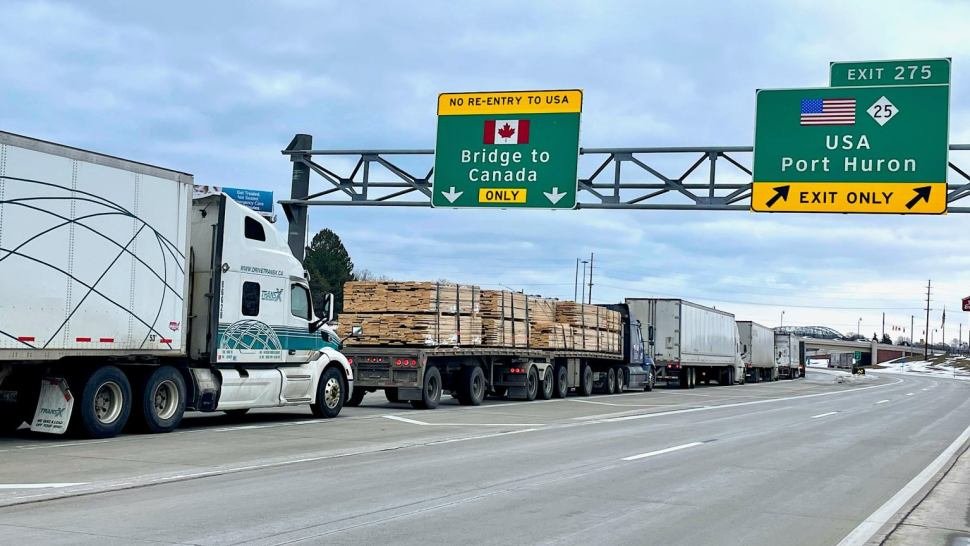
That rising uncertainty is already being reflected in cross-border freight.
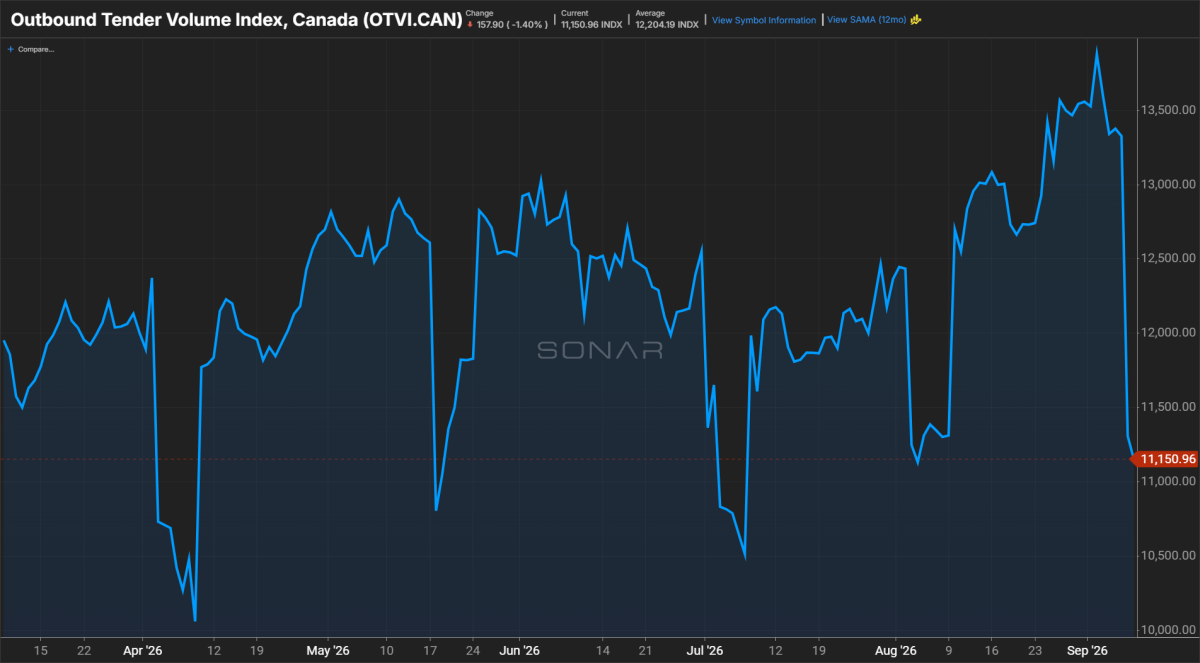
Freight volumes from Canada to the U.S. (OTVI.CAN) have dropped around 16% since Sunday, after surging at the end of August, according to SONAR, the freight market analytics and data platform.
But some of the recent fall can be blamed on the Labor Day holiday in the United States on Monday.
SONAR platform data shows that freight volumes from Canada to the U.S. have dropped by more than 16% since Sunday, after shippers seemed to front load a lot of shipments in August. For more information on FreightWaves SONAR, click here.
The drop follows what seems to have been a big build-up in shipments in August as companies shipped goods ahead of the latest tariffs and the risk of more disruption.
Another layer of uncertainty for cross-border planning for companies with integrated North American supply chains is created by tariffs, import restrictions, and procurement measures.
A Rising Threat to Integrated Supply Chains
The latest flare-up shows how quickly the U.S.-Canada trade dispute is spreading beyond traditional tariff policy.
The trading environment for businesses on both sides of the border has gotten more complicated with restrictions now targeting specific Canadian products and federal purchasing contracts.
The two economies are still closely linked, especially in the areas of freight, manufacturing and cross-border supply chains. Any prolonged disruption could therefore spill over from the directly targeted products and affect transportation flows, sourcing decisions and business costs throughout the North American market.
Why it matters: The escalating dispute is bringing new costs and uncertainty to one of the world’s largest trading relationships and adding to the strain on deeply integrated cross-border freight and manufacturing supply chains.