



Transporting oversized project cargo is a familiar challenge for the global logistics and heavy-lift sector, but moving a 29-tonne steel artwork across the Atlantic and then into the Nevada desert required a particularly precise operation. CEVA Logistics coordinated the international movement of Eiffela Broken Dream, a monumental installation created by French artist Philippe Maindron for its debut at Burning Man, the renowned arts and culture event held in Nevada’s Black Rock Desert.
The 30-metre-long and 15-metre-high structure required coordination across several stages of the supply chain, including inland road transport, transatlantic ocean freight, customs brokerage and specialised project logistics operations on two continents.
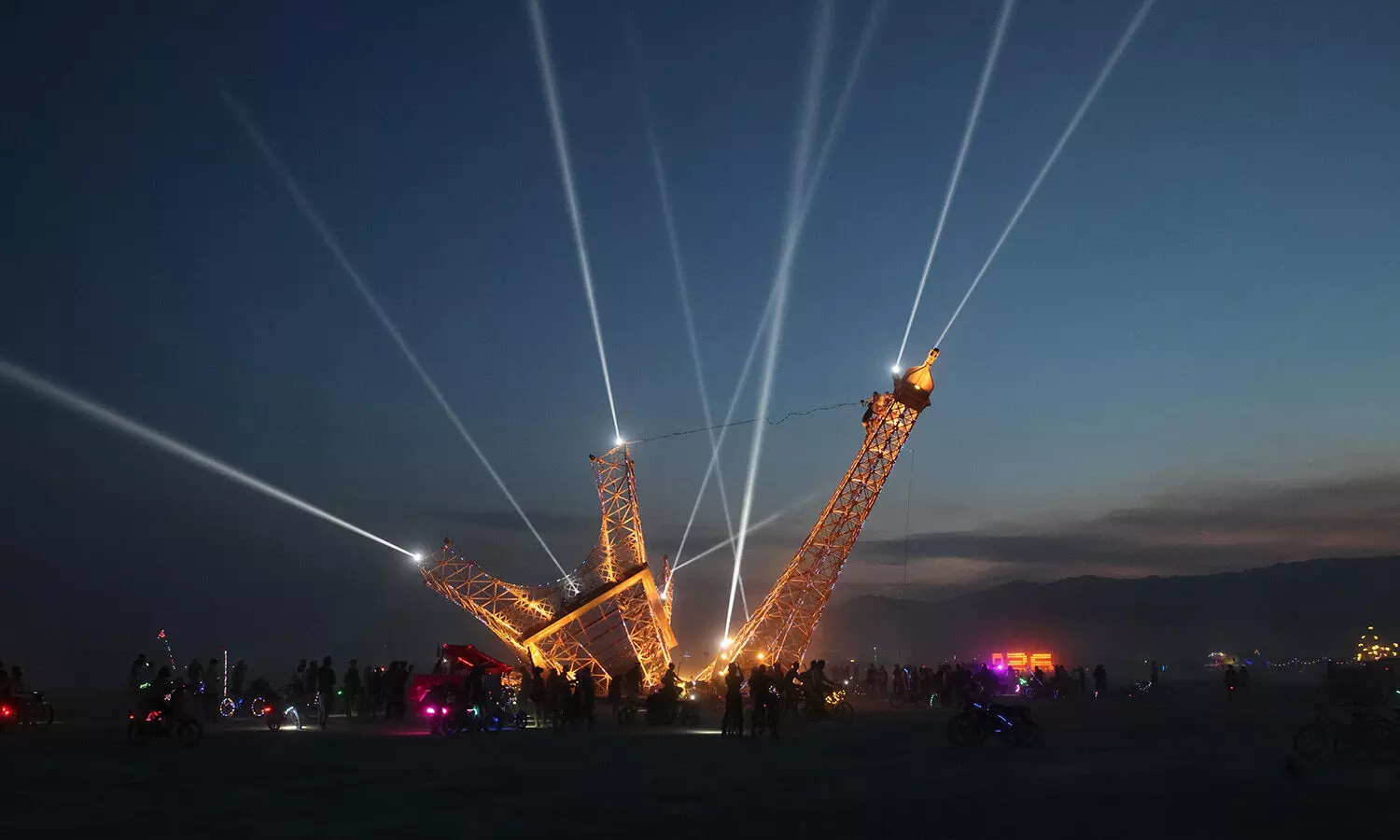
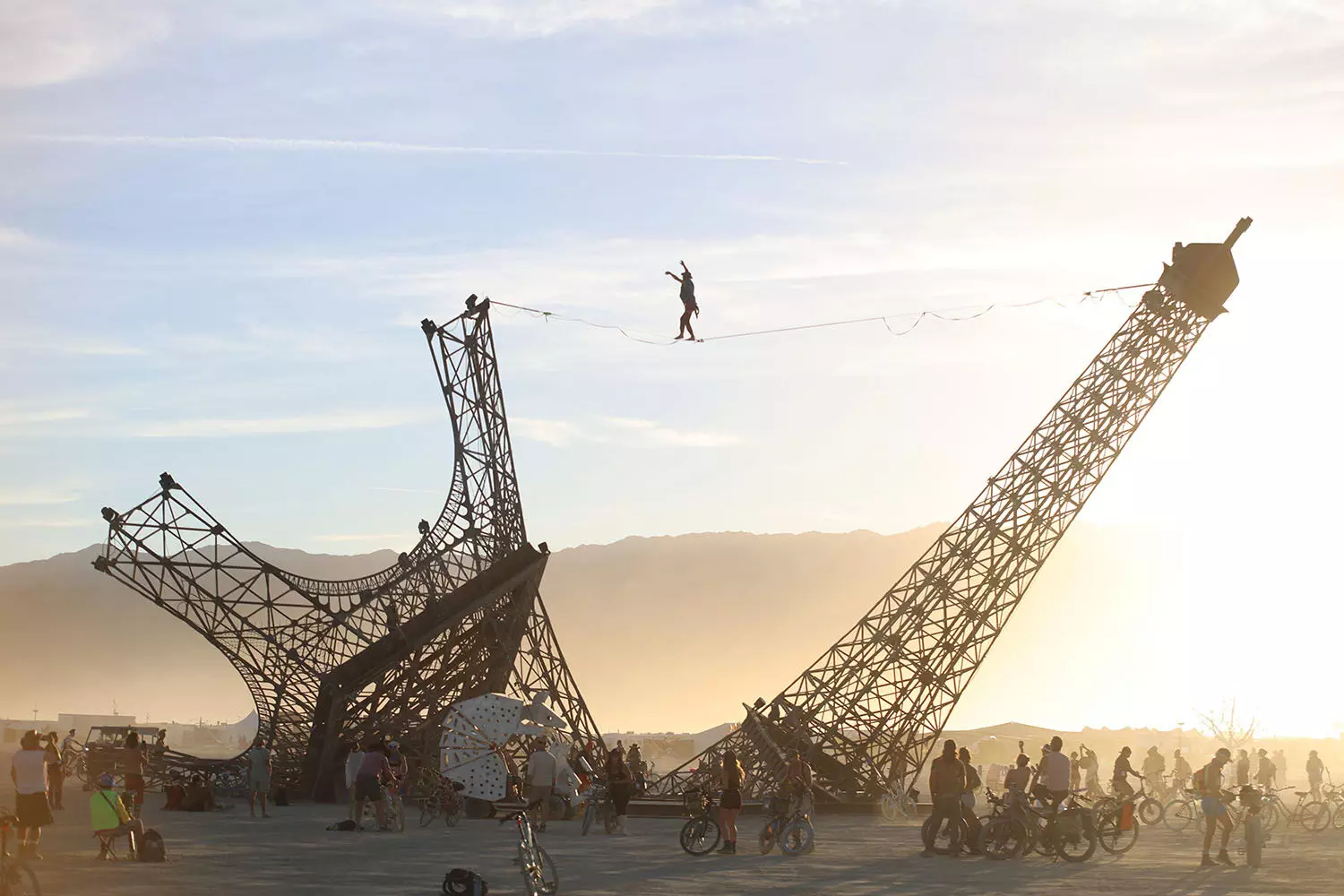
Created in Rochetrejoux in France’s Vendée region, Eiffela Broken Dream is built entirely from 29 tonnes of industrial steel. The installation recreates the Eiffel Tower in a deliberately fractured form, with the monument divided into two separate structural sections.
Maindron designed the work around the contrast between collapse and hope. The lower portion evokes the scattered remains of a lost civilisation, while the upper section rises towards the sky as a representation of resilience and human renewal.
At Burning Man, however, the installation takes on another function. The gap between the two fractured peaks becomes an active performance space, with a high-wire cable suspended across the desert for a tightrope walker to cross above the playa.
Although the entire structure was engineered so that it could be dismantled, transported and rebuilt, the enormous number of individually numbered components made specialist international logistics expertise essential throughout the project.
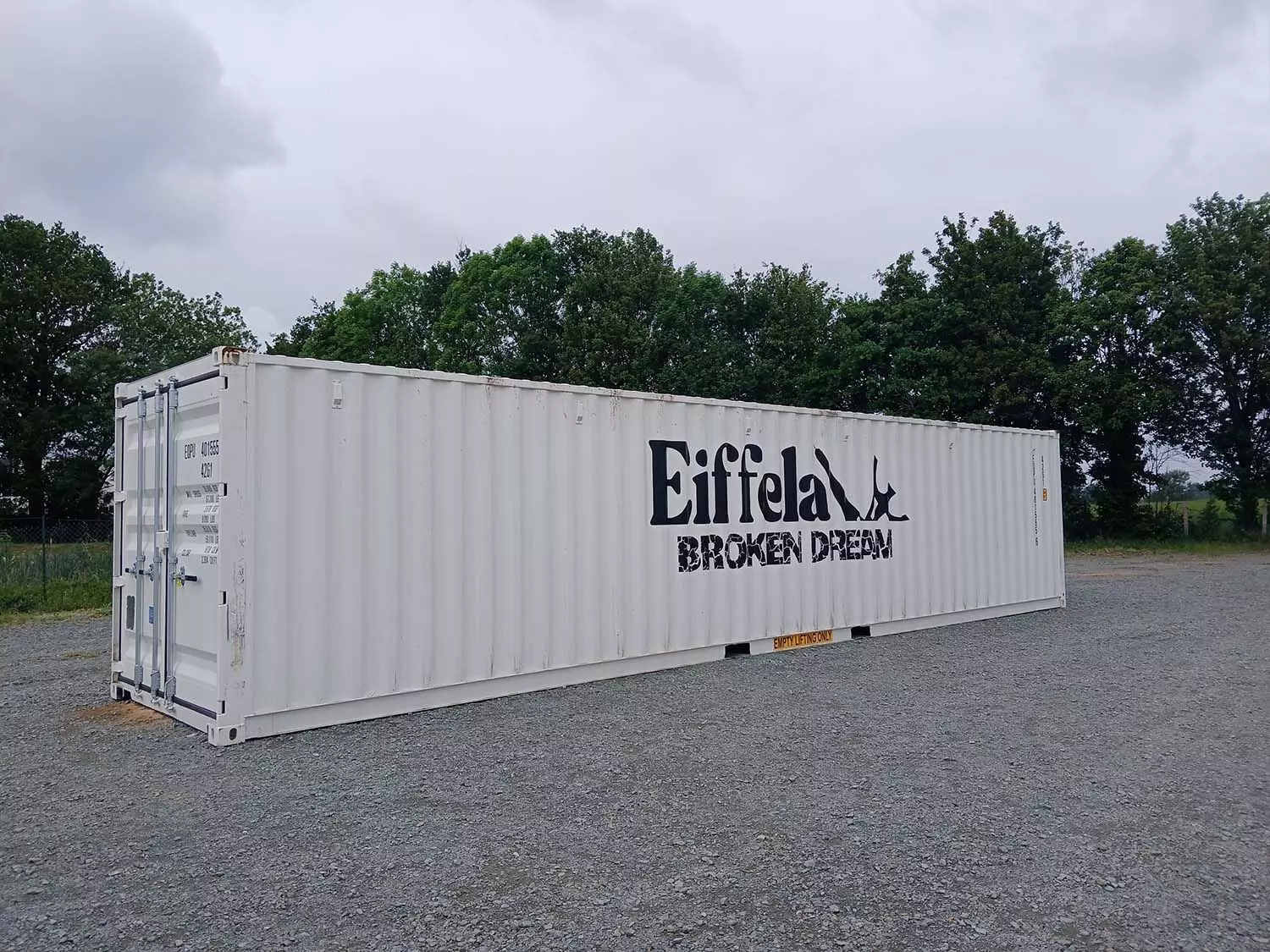
The transatlantic operation began well before the cargo reached the port. Every component of the sculpture was prepared, catalogued and packed at the Vendée workshop into four dedicated shipping containers.
Because several of the steel elements were oversized and irregularly shaped, CEVA selected two open-top containers for the main structural components. Two additional standard dry containers carried handling tools, rigging equipment and other machinery required for assembly.
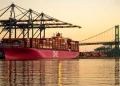
On May 6 and 7, the first containers left Rochetrejoux by road, heading for the Port of Le Havre. Once the cargo had been handled and marshalled at the port and loaded aboard the container vessel, the ship departed Le Havre on May 14 for its Atlantic crossing.
The vessel subsequently reached the Port of Oakland in California. The four containers were discharged on June 25 and 26 before CEVA arranged the next domestic road movement to a secure staging facility in Reno, Nevada. The cargo arrived there on June 30 and July 1.
Reno became a strategically important staging point for the project until late August. From early July until the scheduled departure on August 25, Maindron’s technical team worked at the storage site to pre-assemble roughly one-quarter of the sculpture.
Completing around 25% of the structure in a controlled urban environment was a key part of the preparation. It reduced both technical risks and the amount of labour that would be required once the remaining components reached the much more demanding conditions of the Nevada desert.
The project also required careful attention to customs and regulatory requirements. Importing and exporting a non-standard 29-tonne steel artwork, together with its handling and assembly equipment, created a series of specific customs brokerage challenges.
CEVA’s specialised Customs teams in France coordinated the relevant procedures, with the La Roche-sur-Yon agency in Vendée playing a central role because the artwork had been manufactured in the region.
CEVA worked closely with Maindron Production throughout the classification process, providing guidance on the appropriate Harmonized System (HS) codes and determining the most suitable customs entry arrangements.
The equipment, tools and assembly gear that would return to France after Burning Man were registered under temporary import status. The artwork itself, by contrast, was entered under definitive import status because Maindron intends to auction the installation in the United States after the festival.
Close coordination between CEVA’s French and U.S. customs teams allowed the necessary import documentation to be completed and cleared smoothly ahead of the cargo’s arrival in Oakland.
Once the storage and pre-assembly phase in Reno was completed, the project entered its final-mile stage on August 25.
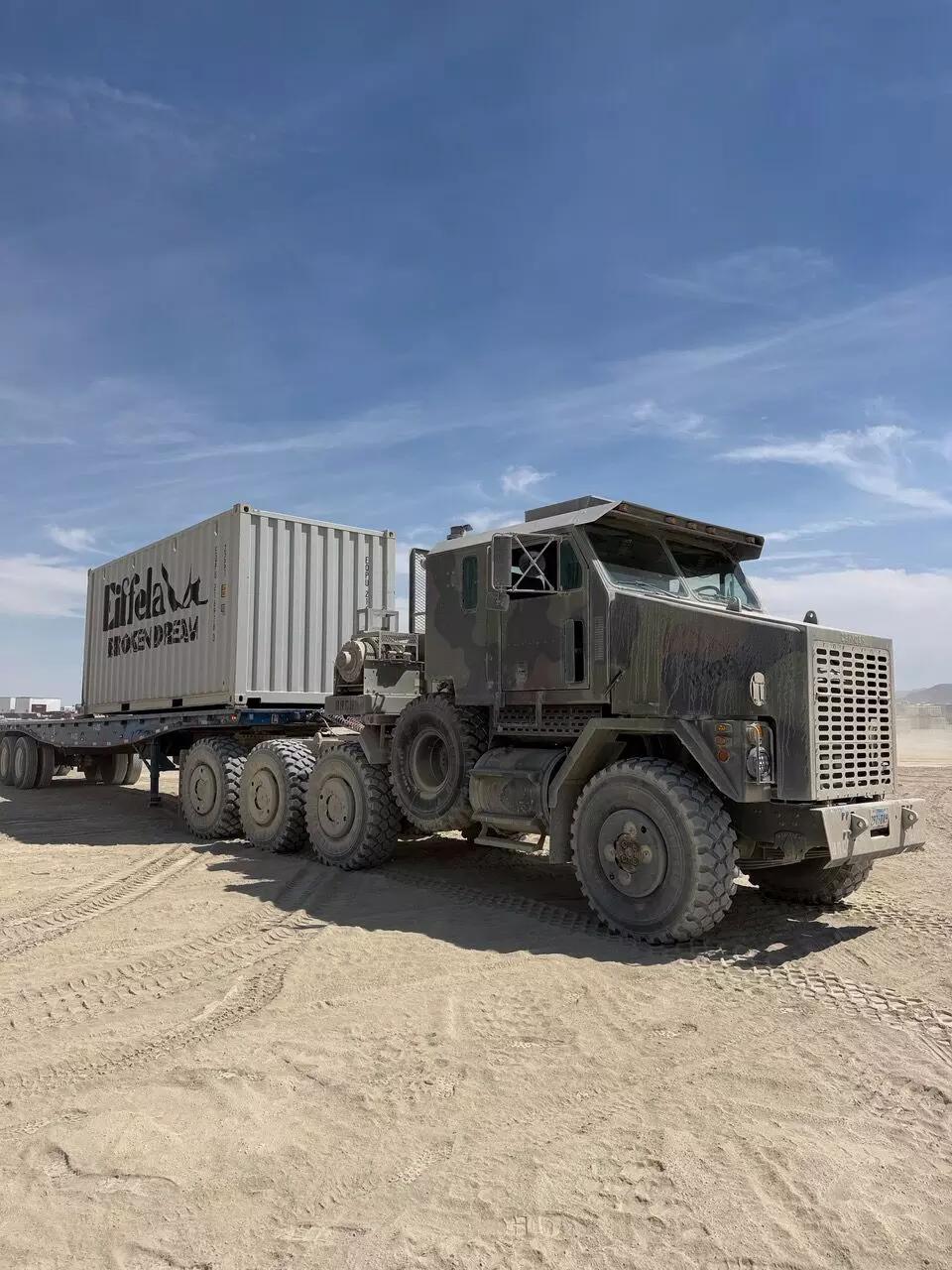
CEVA was not responsible for the final movement from Reno into the Black Rock Desert. That portion of the operation was handled by Burning Man’s dedicated event logistics provider, which took responsibility for transporting the partially assembled structure and the remaining components to Black Rock City.
The festival’s logistics team used heavy-duty flatbed trucks for the desert journey. The operation required careful attention to local highway permits, axle-weight distribution and environmental restrictions designed to protect the fragile playa surface.
After reaching the designated installation site, the assembly teams faced a strict 72-hour window to complete the remaining three-quarters of the 29-tonne fractured tower. The work had to be carried out in an environment where strong winds and dust storms could add another layer of difficulty to an already demanding construction operation.
Photographer Abel Arnou documented the final-mile desert transport.
The project illustrates how specialised logistics can extend far beyond conventional freight movements when artworks combine extreme dimensions, high value and immovable event deadlines.
Jesús Rogelio Garza, Head of Ground and Rail – North America at CEVA Logistics, said the operation required the same level of discipline and operational control expected in major industrial projects.
“This is not standard freight; it is a 29-ton work of art with a fixed delivery window and the need to arrive in pristine condition,” Garza said, highlighting the close cooperation required between CEVA’s ocean, road and customs teams.
The successful transport of Eiffela Broken Dream also adds to the wider track record of CEVA Logistics and its parent company, CMA CGM Group, in moving culturally significant and delicate cargo.
The group previously handled the transatlantic shipment of a nine-foot bronze Statue of Liberty from France to Washington, D.C. The sculpture was cast from Auguste Bartholdi’s original 1878 plaster.
For Maindron’s fractured Eiffel Tower, the combination of detailed multimodal planning, international customs expertise and dedicated project management enabled the artwork to reach the Nevada desert according to schedule.
The operation ultimately demonstrates the increasingly important role of specialised logistics in moving ambitious cultural projects across borders — from a workshop in western France to one of the world’s most unconventional artistic environments.