



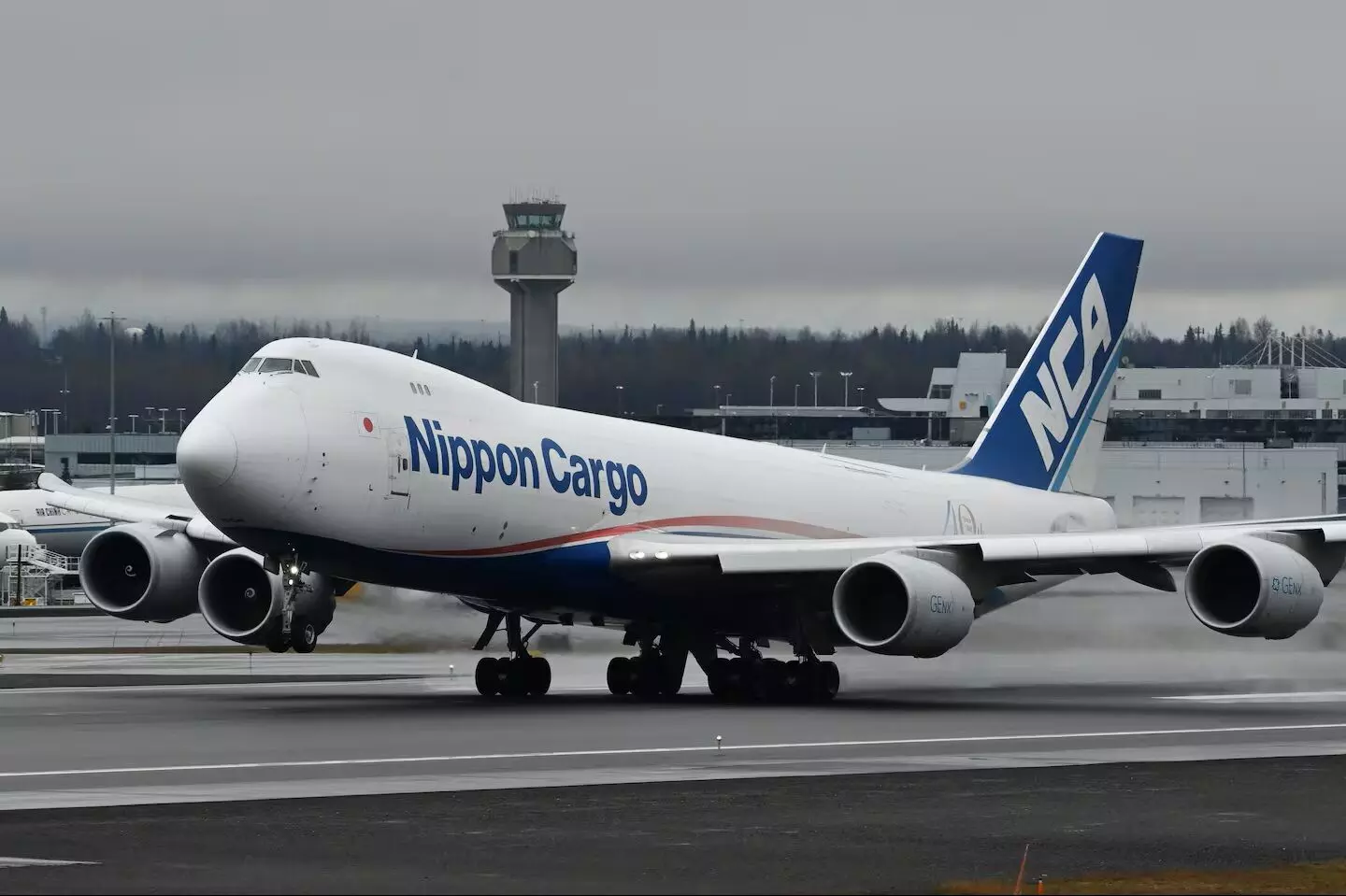
Ted Stevens Anchorage International Airport (ANC) saw another month of growth in freighter activity in August 2026, with cargo aircraft landings reaching 2,756, according to NorthLink Aviation’s monthly cargo update.
The August figure was 5% higher than the same month a year earlier and represented an increase of nearly 5% compared with July, when ANC recorded 2,627 cargo landings. Over the past twelve months, the airport registered 30,809 freighter landings, marking a 2% year-on-year increase.
The composition of Anchorage’s freighter fleet continues to be led by the Boeing 747-400F. Over the trailing twelve-month period, the aircraft accounted for 12,112 landings, putting it well ahead of the 777F, which recorded 10,276. The 747-8F followed with 6,654 landings.
Other freighter types represented a considerably smaller share of activity. The 767F recorded 959 landings during the same period, while the A330F reached 557. The Boeing 747 Dreamlifter registered 236 landings, and the MD-11 recorded only 15.
Atlas Air leads August carrier activity
Atlas Air was the busiest carrier at ANC in August, with 670 landings. Kalitta Air ranked second with 387, followed by Cathay Cargo with 256.
The two major integrators also maintained a significant presence at the airport. UPS and FedEx Express combined for 896 landings during the month, an increase of 4% compared with August 2025.
However, FedEx Express recorded a different trend over the longer term, with its freighter landing volumes down 14% on a last-twelve-month basis.
Fast aircraft turnaround remains a key strength
Operational data also demonstrated the ongoing efficiency of Anchorage as a major transpacific cargo hub.August average aircraft ground time at ANC was 2.6 hours, while total average taxi time was 24.4 minutes.
More than 90% of all parking events were under four hours in length. The numbers illustrate the airport’s ability to handle large volumes of freighter traffic with relatively fast aircraft turnarounds, demonstrating its importance to cargo operations across the transpacific network.