




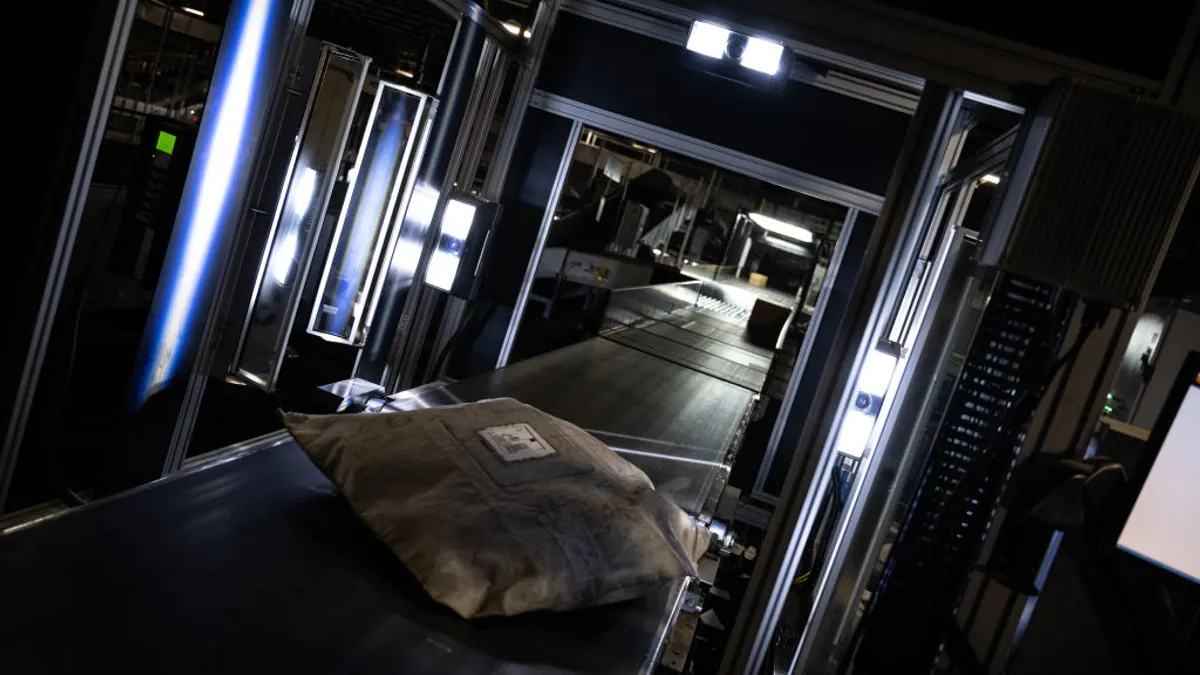
UPS is increasing the use of radio-frequency identification (RFID) technology across its shipping network, aiming to double the number of packages receiving on-customer-site labeling to 6 million per day in 2027. The initiative is designed to provide shippers with earlier and more accurate shipment information and help the carrier streamline its collection operations.
During a company earnings call Tuesday on the third quarter of 2026, CEO Carol Tomé said UPS has installed RFID labeling capabilities at 315 customer sites. The system enables packages to be tagged with RFID labels as they enter the carrier’s transportation network, providing businesses with greater visibility from the start of the shipping process.
Today, the program handles close to 3 million packages daily at customer facilities. This is up from 2.2 million packages per day in July, showing the speed at which UPS is rolling out the service. “This volume is expected to increase to 6 million packages per day in 2027, Tomé said.
Early Identification for Better Shipment Visibility
By tagging the point of origin with RFID, shippers get more accurate information on their outbound shipments. When the packages are picked up, the RFID tags are scanned automatically by UPS vehicles, gathering shipment data with less manual intervention.
The technology also solves operational challenges for UPS. “Getting packages identified sooner helps reduce confusion about missed pickups and other pickup problems,” Tomé said.
Early adopters of the service include high-end jewelry retailer and technology products distributor Ingram Micro. Their involvement suggests the appeal of RFID-based tracking to a wide range of industries, particularly those shipping large volumes of merchandise or expensive items.
UPS is also moving its RFID identification past customer locations. The UPS Store locations can get RFID labels for packages as part of the company’s broader drive to automate shipment tracking across its network.
“The carrier anticipates delivering more than 4 billion RFID-enabled packages by the end of 2026,” Tomé said.
RFID Technology Enhances UPS’ Commercial Offerings
The expansion also fits with UPS’ strategy to win and retain big commercial customers. In the past, company executives for large U.S. retailers, especially those with large volumes of inbound freight, have noted the benefits of RFID labeling.
“Enterprise retailers love the technology because it gives them advance visibility into the goods that are arriving at their distribution docks,” said Matt Guffey, executive vise president and chief U.S. domestic officer of UPS, on an earnings call in January 2025.
This gives companies the ability to better plan incoming shipments and to staff based on anticipated delivery volumes . Improved visibility can therefore facilitate receiving operations and help retailers to manage their labor resources.
These capabilities are an added competitive advantage for UPS in the race to win large commercial shipping contracts.
Automation keeps changing the UPS network
The RFID deployment is part of a larger automation strategy that aims to increase productivity and improve the efficiency of the carrier’s operations.
Tomé said nearly 70% of all UPS packages are projected to move through an automated process in the fourth quarter of 2026. This would be better than the 66.5% of automation we have seen by the end of 2025.
By using RFID identification, automated scanning and increasingly automated handling processes, UPS is looking to reduce manual tasks and improve the movement of parcels throughout its network.
The company is also positioning these investments as a means to enhance its operational capacity during times of particularly high demand.
With the holiday peak season approaching, Tomé noted that UPS is entering the season with a more automated, efficient network better able to handle the seasonal increase in package volumes.
That planned expansion to 6 million RFID-labeled packages per day in 2027 will be another step in the carrier’s broader transformation, combining better shipment visibility for customers with greater operational efficiency across its logistics infrastructure.






