





J.B. Hunt Transport Services shares fell 12% in early Wednesday trading after the company issued a warning on third-quarter earnings, pointing to a sharp increase in operating costs that is currently outpacing pricing gains.
Speaking late Tuesday at a Morgan Stanley investor conference, company executives said they now expect earnings per share for the current quarter to decline between 5% and 10% sequentially. Rising diesel prices and higher driver-related expenses were identified as the main sources of pressure.
At the midpoint of that outlook, third-quarter EPS would come in at about $1.77, approximately 16% below the current consensus estimate of $2.10. That would leave earnings roughly in line with the third quarter of 2025.
J.B. Hunt also identified around $25 million in incremental driver-related expenses, including recruiting and bonuses, along with at least a $10 million sequential fuel headwind.
Fuel surcharges typically operate with a one-week lag, meaning recent diesel price increases are hitting results before the associated surcharge adjustments flow through. Diesel prices rose 10% sequentially from July to August and have continued moving higher through September. Prices have increased sequentially in eight of the 11 weeks of the third quarter.
The company noted that the same dynamic could work in reverse. Once fuel prices begin to decline, the current headwind could turn into an earnings tailwind.
J.B. Hunt (NASDAQ: JBHT) characterized the current cost inflation as “more cyclical than structural.” Management also linked higher driver costs to what it described as a strong freight market. At the same time, the company appears to be bringing some expenses forward as it prepares for peak season and positions the business for longer-term growth.
A major factor in the near-term impact is the structure of J.B. Hunt’s business. About 96% of its operating income comes from its intermodal and dedicated units, two businesses that tend to respond slowly when freight rates shift. That lag creates what management described as “more of a timing issue.”
Intermodal contract pricing generally trails truckload pricing by about two quarters. Dedicated operations are even more insulated from short-term market movements, with most contracts running for five years and incorporating annual cost-based price escalators rather than adjustments tied directly to market conditions.
J.B. Hunt’s intermodal bid season begins in October, with roughly 10% of its contracts up for renewal in the fourth quarter. The remaining contracts renew evenly across the first three quarters of the year.
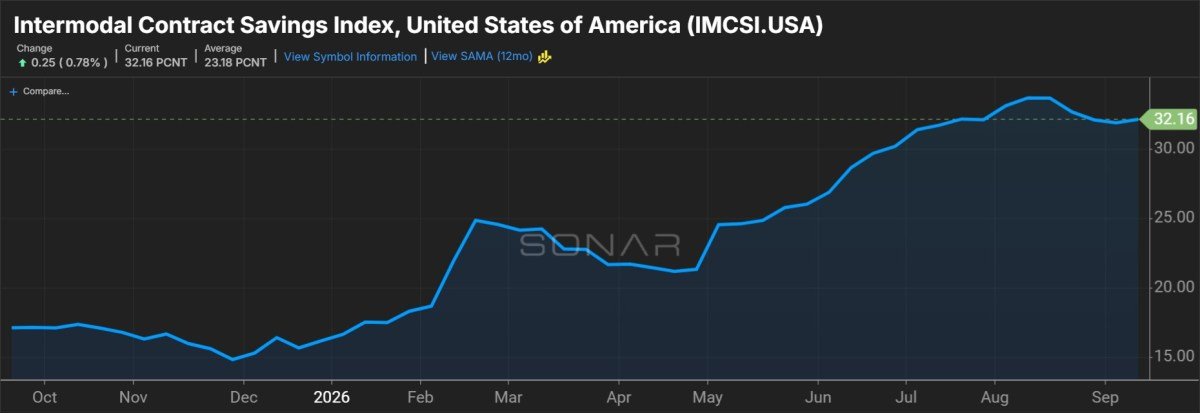
Current Sonar data indicates that intermodal is now 32% cheaper than truck, significantly above the typical 10% to 15% discount in the East and approximately 25% in the West.
Management believes the upcoming bid season presents “a big opportunity to close that gap.” However, J.B. Hunt said it does not intend to pursue “out-of-cycle” rate increases simply to accelerate that process. Such moves can continue to affect customer relationships even after market conditions reverse.
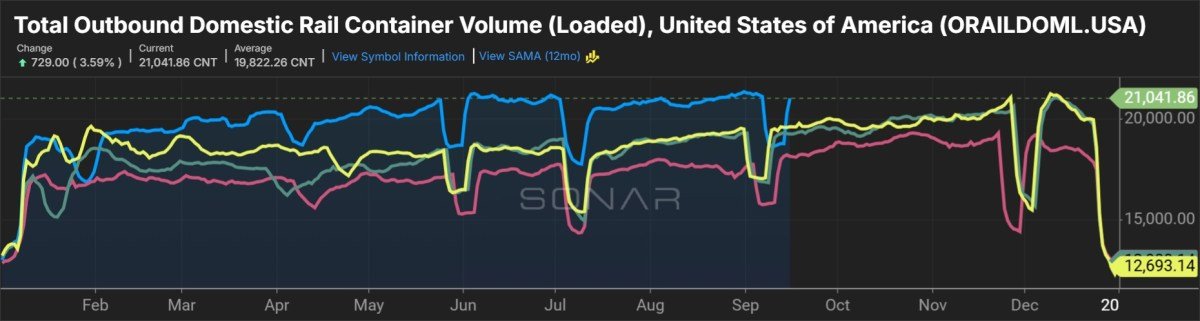
Beyond the cost pressures, J.B. Hunt continues to report “really strong demand” across most of its businesses, with final-mile operations standing out as the exception.
The company has continued to gain market share in both intermodal and truckload in recent quarters. For now, however, management said its priority is yield rather than volume until margins improve.
Record fuel prices, combined with elevated truckload rates, remain supportive of road-to-rail conversion, providing a potential boost to intermodal demand. J.B. Hunt’s dedicated pipeline has also reached an all-time high, another indication of strong underlying demand in that segment.
The third quarter of 2026 could therefore interrupt a run of four consecutive quarters of year-over-year margin and earnings improvement. Yet management’s broader view of the capacity environment remains challenging, saying the situation is “not letting up at all, if anything it’s probably getting worse.”
That tightening capacity backdrop could benefit large-scale, asset-based operators with the resources to handle market volatility.
Why it matters
Other carriers are likely facing some of the same fuel and labor cost pressures, but the effect on J.B. Hunt is particularly pronounced because of the company’s heavy reliance on intermodal and dedicated transportation.
Both segments adjust to changes in market pricing more slowly than traditional over-the-road operations. As a result, while other carriers may also face higher costs, their near-term margin pressure could be less pronounced than what J.B. Hunt is currently experiencing.