



With experienced truck drivers increasingly difficult to replace and the financial exposure from accident litigation continuing to grow, private fleets are shifting their safety strategies toward developing the drivers they already employ.
That was a key takeaway from “The Coaching Roadmap: Developing Your Driver Workforce,” a panel held during the International Foodservice Distributors Association’s 2026 Solutions Conference, held Sept. 13-15 in San Antonio.
The session brought together Hayden Cardiff, vice president of safety solutions at Descartes, and Tim Eckhardt, senior director of safety at Dot Foods Inc..
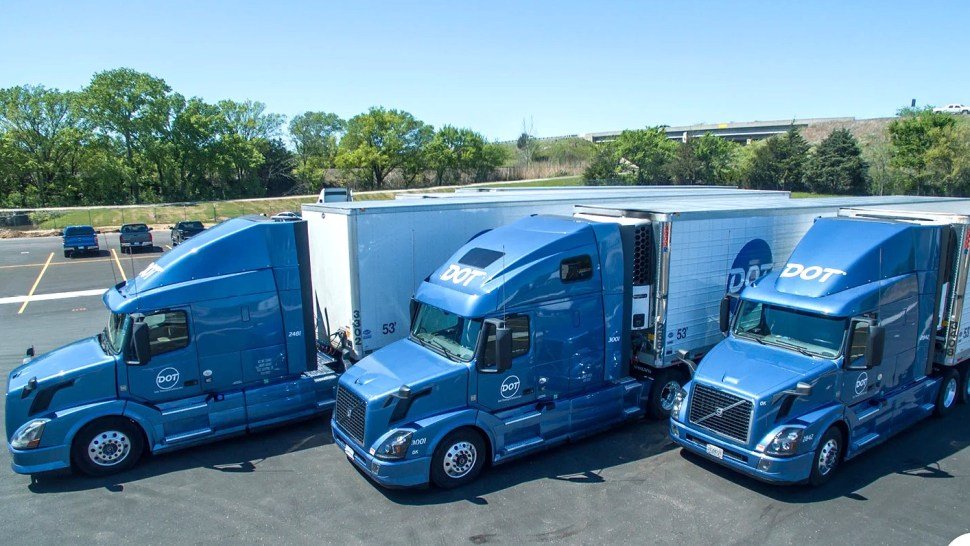
Eckhardt is responsible for safety across Dot Transportation, Dot Foods’ transportation operation, with oversight that includes driver safety, training, accidents, litigation and risk management. The fleet operates nearly 2,200 trucks across the United States and Canada.
Based in Mount Sterling, Illinois, Dot Foods describes itself as North America’s largest food industry redistributor and less-than-truckload consolidator. Its operation also includes roughly 2,900 multi-temperature trailers.
According to Cardiff, a combination of driver shortages, higher operating costs and the growing threat of so-called nuclear verdicts is forcing fleets to rethink how they manage driver performance.
A fleet can no longer assume that replacing an underperforming driver will be a simple solution, he said. With qualified drivers harder to find, companies increasingly need to spot potential risks earlier while putting more effort into retaining, training and engaging the people already behind the wheel.
At Dot Foods, that shift has translated into a safety model that relies less on reacting to incidents and more on using data, technology and driver behavior patterns to identify problems before they escalate.
“In the past, you were digging through systems, digging through spreadsheets, digging through everything you could to find the data, and then you ended up basically going off a gut of which drivers were your highest risk or not,” Eckhardt said.
Dot pays particular attention to behaviors such as driver distraction and speeding, while concentrating resources on those whose performance indicates the highest level of risk.
The company does not attempt to coach every single event generated by cameras, telematics or other safety systems. Instead, the objective is to determine which drivers actually need the greatest amount of intervention.
Dot concentrates much of that effort on roughly the bottom 10% to 20% of its driver population. That group is not fixed, however, because drivers move in and out of it as their performance improves or declines.
Its scoring system ranges from zero, indicating the strongest performance, to 100. Drivers with scores above 70 are required to have a professional development plan and are subject to additional monitoring.
As of the week before the conference, Eckhardt said, only about 30 Dot drivers had scores above 70 — a significant reduction compared with the number when the program was first launched.
The purpose of the system is not automatically to remove those drivers from the fleet.
Instead, professional development plans can combine coaching, additional training, ride-alongs and technology-based interventions targeted at specific behaviors. Drivers who repeatedly exceed speed limits, for example, can have their trucks electronically governed to help address the issue.
“It’s not just to build a plan and coach till you turn blue,” Eckhardt said. “Find technology, find other resources you can to help change that behavior and help set them up for success.”
Not every driver will improve enough to remain in the operation. When that happens, Eckhardt said, fleets need to have an “exit strategy” in place before a major accident occurs.
Timing is another critical part of the coaching process, he said. Managers need to address risky behavior while an incident or recurring pattern is still recent instead of waiting several weeks or months to intervene.
The coaching itself also has to be tailored to the individual.
A veteran driver who has spent 20 years with the same fleet may respond well to a brief and direct conversation. A newer driver, by contrast, may need a more detailed explanation of why a particular behavior is dangerous or why a certain policy is in place.
Dot has also moved toward greater transparency with employees, explaining accident costs, safety policies and the reasons behind technology installed in its trucks.
At the same time, the company aims to make safety coaching more balanced by recognizing positive performance as well as correcting mistakes. Managers use camera footage not only to flag problems but also to highlight drivers who make good decisions on the road.
Eckhardt said that approach can help separate driver development from discipline while strengthening trust between managers and drivers.
“If you have a relationship around that driver, you’ve been able to build that relationship,” Eckhardt said. “But when your first conversation with that driver is to give them discipline or tell them what they did wrong, normally that relationship doesn’t recover after that.”
Maintaining those relationships becomes more difficult when managers are responsible for too many drivers. Eckhardt said managing around 150 drivers makes meaningful coaching challenging, while a ratio closer to 70 or 80 drivers per manager is more manageable.
Technology remained a recurring theme throughout the discussion. Dot’s safety efforts draw on cameras, telematics, predictive analytics and vehicle controls, among other tools.
Cardiff said fleets increasingly face a problem that is very different from simply not having enough information: They now have too much of it.
Trucks and back-office systems can produce enormous amounts of data, making it difficult for safety teams to distinguish what deserves attention from what does not.
The challenge, he said, is separating “signal versus noise” and using the available information to identify which drivers actually require intervention.
Dot has also connected safety performance directly to driver compensation.
Eckhardt said the company’s quarterly driver safety bonus has grown to nearly 10% of driver income, providing a financial incentive for employees to meet defined safety metrics.
When an audience member asked how Dot measures the return on investment of safety technology, Eckhardt said the company compares the cost of the technology with the potential financial impact of a crash.
A $250,000 technology investment, for example, could pay for itself if it prevents a single accident costing a similar amount, he said.
Dot is continuing to evaluate additional safety technologies. Eckhardt said the company recently revisited the possibility of testing a system designed to limit drivers’ cellphone use, although no decision has been made and practical and legal questions remain under consideration.
For now, Dot allows drivers to use cellphones because its over-the-road drivers need to communicate with their families while they are away from home.
Training remains another major part of the company’s safety approach. Dot has approximately 200 over-the-road driver trainers and targets a ratio of about 12 drivers per trainer.
Depending on a driver’s experience and skill level, over-the-road training can last four, eight or 12 weeks.
For Eckhardt, however, one of the most significant lessons from Dot’s evolution in safety is not a particular piece of technology. It is transparency.
When drivers understand why a policy exists, why a camera was installed or why a certain technology operates inside the cab, fleets have a better chance of securing employee buy-in, he said.
“One of the biggest things we have done is just transparency and open books and share the why behind everything out there,” Eckhardt said.
Why it matters
Driver shortages and rising accident litigation costs are pushing private fleets toward more proactive safety programs that use data, technology, targeted coaching and driver development to identify and address risky behavior before it results in a crash.