



British Columbia’s construction industry is heading into another period of uncertainty as voters prepare to go to the polls two years ahead of schedule, with industry leaders pressing the next government for greater stability around public spending, infrastructure projects and labour planning.
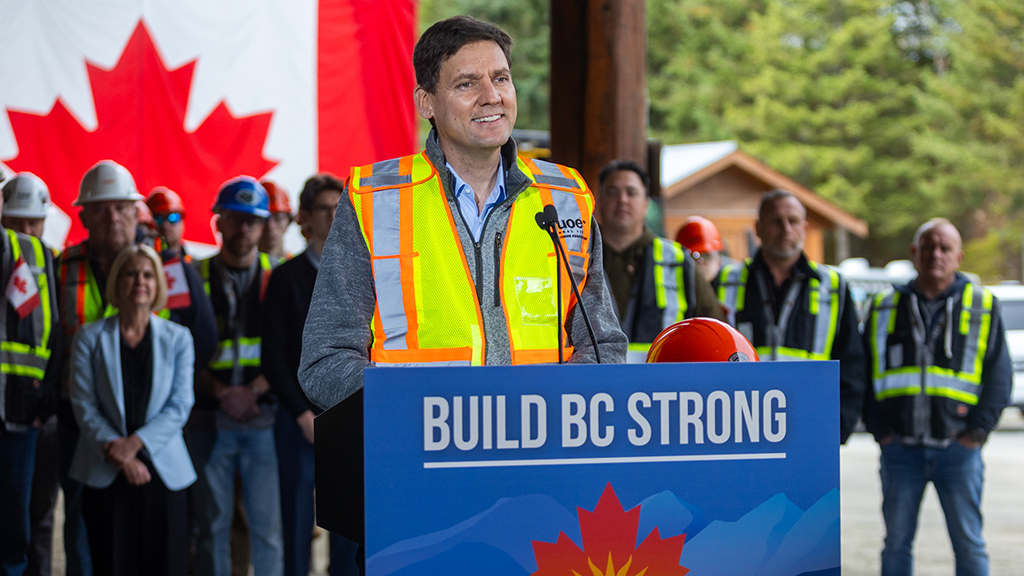
Premier David Eby called a snap election on Sept. 22, pointing to the continuing trade war with the United States as one of the key reasons for asking British Columbians to vote on Oct. 24.
The political landscape was already unsettled before the election was called. Over the weekend preceding the announcement, B.C. Conservatives leader Kerry-Lynne Findlay resigned after 14 MLAs left the party, citing her leadership among the reasons for their departures.
Despite the political turbulence, the message from much of the construction sector has been consistent: regardless of which party forms the next government, industry leaders want certainty around projects that are already planned or underway.
“It doesn’t matter who wins, but what the industry needs is more commitment from the winning party to actually get to work with industry and deliver on promises that are easy to make during the election period,” said British Columbia Construction Association president Chris Atchison.
Atchison said the industry has spent years pushing for greater payment certainty while dealing with an unreliable pipeline of projects and the loss of a major-projects inventory.
“Our industry can build anything under the most difficult of circumstances and we’re a good partner with government. We need government to be a good partner with industry,” he said.
For Vancouver Regional Construction Association president Jeanine Martin, the return of several major projects before the election was welcome, but she argued that long-term infrastructure planning should not be driven by political cycles.
“In advance of the election we certainly weren’t unhappy to see some major projects come back online as a leverage point for the government,” Martin said. “Our preference would be seeing these projects separated from politics and have the government realize consistency of projects we can depend on, plan for, and build to is what the industry needs.”
The sudden election call has also created immediate planning challenges for contractors and workers, according to Progressive Contractors Association of Canada BC regional director Dan Baxter.
The snap election, he said, “puts construction on the back foot in terms of planning as much as it puts political parties on the back foot.”
Baxter also argued that many of the sector’s most pressing challenges are the same issues that were present during the 2024 election and are not primarily the result of U.S. President Donald Trump’s actions.
He pointed to provincial deficits of $13 billion, provincial debt approaching $180 billion, higher taxes intended to help address that debt, and infrastructure projects that the government has described as being “re-paced.”
“These are all issues that have cropped up in recent years, especially since Premier Eby has held the reins of power,” Baxter said.
He argued that a straightforward way to address some of these concerns would be to open tendering for all major public infrastructure projects to a wider pool of contractors and workers.
“The simple solution to (those issues) would be to open up tendering on all public major infrastructure projects, allowing every contractor and worker regardless of union affiliation to bid on that work,” he said.
According to Baxter, greater competition in the bidding process could improve efficiency and productivity across the construction sector while helping reduce costs.
The BC Building Trades, meanwhile, emphasized the importance of maintaining investment in skills development and union labour. Executive director Brynn Bourke also placed greater emphasis on the economic pressure created by aggressive U.S. actions.
“Big decisions need to be made. Are we going to continue to invest in services and expand the province’s capital plan, or do we want to contract and focus on reducing the deficit?” Bourke asked.
For Electrical Contractors Association of BC president Matt MacInnis, certainty in procurement and project delivery is the sector’s most pressing concern.
“The single most important thing our members look for from the next government is certainty in procurement and execution,” MacInnis said. “When government commits to a capital plan, (we want to) see that fully delivered.”
He warned that uncertainty becomes especially difficult when projects previously included in government forecasts are later removed or when public agencies fail to deliver on the spending they had planned for the year.
“It’s very challenging for the construction industry when you see billions of dollars of work disappear that was previously forecast or if government agencies can’t successfully execute on what they said they’d spend in a year,” MacInnis said.
“The construction industry needs that certainty on a year-to-year basis in order to plan workflow and labour,” he added.
The Independent Contractors and Businesses Association of B.C. (ICBA) also used its platform to outline its priorities ahead of the election.
Speaking on the ICBA’s Coffee and Construction podcast, vice-president of advocacy and communications Jordan Bateman said the association’s policy recommendations remain straightforward: government spending should focus on investments capable of generating an economic return.
“We have to get spending and have to invest in things that give a return on investment in our economy,” Bateman said.
He called for a stronger push into natural gas and other resource development as part of an effort to generate the economic growth needed to address the province’s finances.
“We have to go hard into natural gas and hard into as many resources as we can in order to ensure we have the economic boost we need in order to pay down David Eby’s $13.8 billion deficit,” Bateman said.
“We have to get to yes and it’s all on the table now.”