



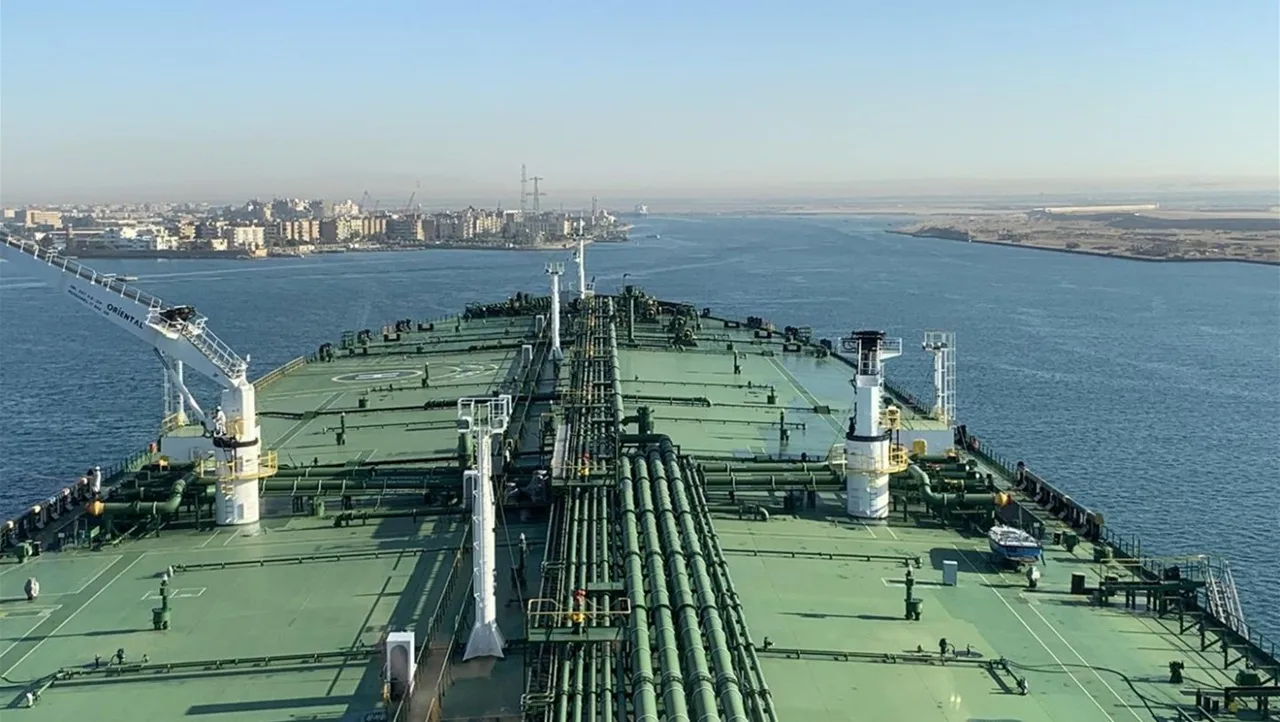
Saudi Arabia has resumed tanker loadings at the Yanbu terminal on the Red Sea, following the September attack on the East–West pipeline that temporarily disrupted exports.
The East–West pipeline was struck on 11 September in an attack blamed on Iraqi militants. Operations resumed last week, and shipping-tracking companies are now reporting renewed tanker activity at Yanbu, with the loadings identified through satellite imagery.
According to TankerTrackers.com, satellite observations confirmed a significant return of activity. In a post on X, the company said ESA satellite imagery captured over the Red Sea on 27 September 2026 showed Saudi Arabia loading nearly 10 million barrels of crude oil at Yanbu and Al Muajjiz, alongside loadings of refined products. The imagery also enabled the visual identification of 40 tankers, regardless of their activity or proximity to the terminals.
The restart of loadings is positive news for tanker owners, although it has not so far appeared to materially affect already record-high rates for large tankers. Rates for transits of the Strait of Hormuz have surpassed $1 million per level, reflecting the exceptional tightness in the market.
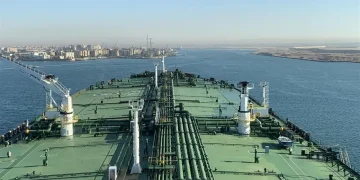
Against this backdrop, the 2026-built DHT Gazelle, a VLCC owned by DHT Holdings, has reportedly been fixed by SK Energy for a voyage from the Red Sea, via the Suez Canal, to South Korea. According to Tankers International, the fixture covers 270,000 tonnes of crude at a total rate of $55 million, equivalent to approximately $634,000 per day.
The security situation in the region continues to reshape tanker trading patterns. Because of the Houthi threat to vessels calling at Saudi ports, VLCC operators are avoiding the southern Red Sea and the Bab el-Mandeb, forcing ships onto substantially longer routes.
These voyages can involve partial unloading and reloading at the Sumed pipeline, followed by a journey to Asia via the Cape of Good Hope. The resulting increase in sailing distances is generating additional tonne-miles and further reducing effective tanker capacity.
That loss of capacity is particularly significant in an already tight VLCC market. Around 15% of the VLCC fleet is estimated to be waiting in the Gulf of Oman to carry out ship-to-ship transfers involving shuttle tankers moving cargo from the Arabian Gulf through the Strait of Hormuz.
With longer voyages absorbing additional vessel capacity, the latest Yanbu loadings come as the tanker market remains under intense pressure, while security-related diversions continue to reshape global VLCC trading patterns.