



A major US customs enforcement initiative launched earlier this year by President Donald Trump is moving closer to implementation, with a fast-track regulation now under review by the Office of Management and Budget (OMB). The measure is designed to close longstanding loopholes in US import compliance and strengthen enforcement against non-compliant importers.
The initiative stems from Executive Order 14411, “Strengthening Customs Enforcement,” signed by Trump on June 3. The order directs the Department of Homeland Security (DHS) and US Customs and Border Protection (CBP) to reinforce customs enforcement and tighten compliance requirements for importers of record (IORs).
The executive order points to several persistent compliance issues, including the undervaluation of imports, the withholding of critical information about importers of record and imported goods, the avoidance of duty payments and illegal transshipment schemes. It calls for stronger compliance mechanisms, greater transparency, increased enforcement activity and tougher penalties for non-compliance.
Steptoe lawyers Stephanie Wang and Joanna Griffin said after the order was signed that the measures would create new compliance obligations for all IORs, with additional requirements for foreign IORs, while also increasing enforcement and penalties.
The implementing regulation has been submitted to OMB as an Interim Final Rule (IFR) rather than going through a conventional rulemaking process. The public OIRA record shows that DHS submitted the rule titled “Heightened Requirements for Foreign Importers of Record” for review on September 24, 2026. An IFR is intended to move a regulation toward effectiveness without first going through the lengthy public-comment process associated with a proposed rule.
At the centre of the executive order is a tougher regime for foreign importers of record. Foreign IORs would be prohibited from using informal-entry procedures for low-value goods, removing an important advantage historically associated with so-called de minimis treatment for overseas e-commerce platforms and foreign sellers.
The order also tightens the rules governing formal entries. Foreign IORs would generally no longer be allowed to rely on continuous entry bonds unless CBP permits it after determining that customs revenue would be fully protected and compliance requirements would be assured. They would instead face heightened bonding and eligibility requirements and would need either to meet the applicable Customs Trade Partnership Against Terrorism (CTPAT) requirements or use a CTPAT-validated and licensed customs broker.
In addition, foreign importers would be required to provide CBP with more extensive information, including anticipated import volumes, the year a company was established, ownership and beneficial-ownership disclosures, business affiliations and information about domestic assets.
Another central element is the creation of a centralized “good standing” framework. CBP is expected to maintain an updated importer registry, remove inactive IORs and confirm that active importers comply with applicable regulations and disclosure requirements. The agency is also instructed to develop risk-based tiers based on compliance histories, enforcement actions and audit results.
Importers that fall out of “good standing” could effectively be shut out of the US import system. Under the executive order, IORs not in good standing would not be allowed to import goods into the United States or carry out activities directly related to importing, including designating a customs broker to act on their behalf.
The order further calls for enhanced and recurring vetting of individuals and entities involved directly in imports, including foreign IORs, IOR affiliates, customs brokers, custodians of bonded merchandise and freight forwarders.
With the stricter compliance framework now under regulatory review, Steptoe’s Wang and Griffin have cautioned importers, customs brokers and foreign manufacturers to prepare for a more demanding customs environment. Companies will need to determine whether they could be classified as foreign IORs and whether they can satisfy the tougher eligibility, disclosure and “good standing” requirements.
The lawyers also advised companies to prepare for more audits and enforcement actions and to strengthen their internal customs compliance programmes as the new requirements take shape.
Although the measures are primarily aimed at foreign shippers and cargo interests, the consequences could extend into the wider US container supply chain. The executive order’s Section 5, “Streamlined Disposal,” directs DHS to accelerate the seizure and disposal of non-compliant imports, including through reduced regulatory barriers for voluntary abandonment, higher bond requirements for high-risk shipments and the use of third-party disposal authorities.
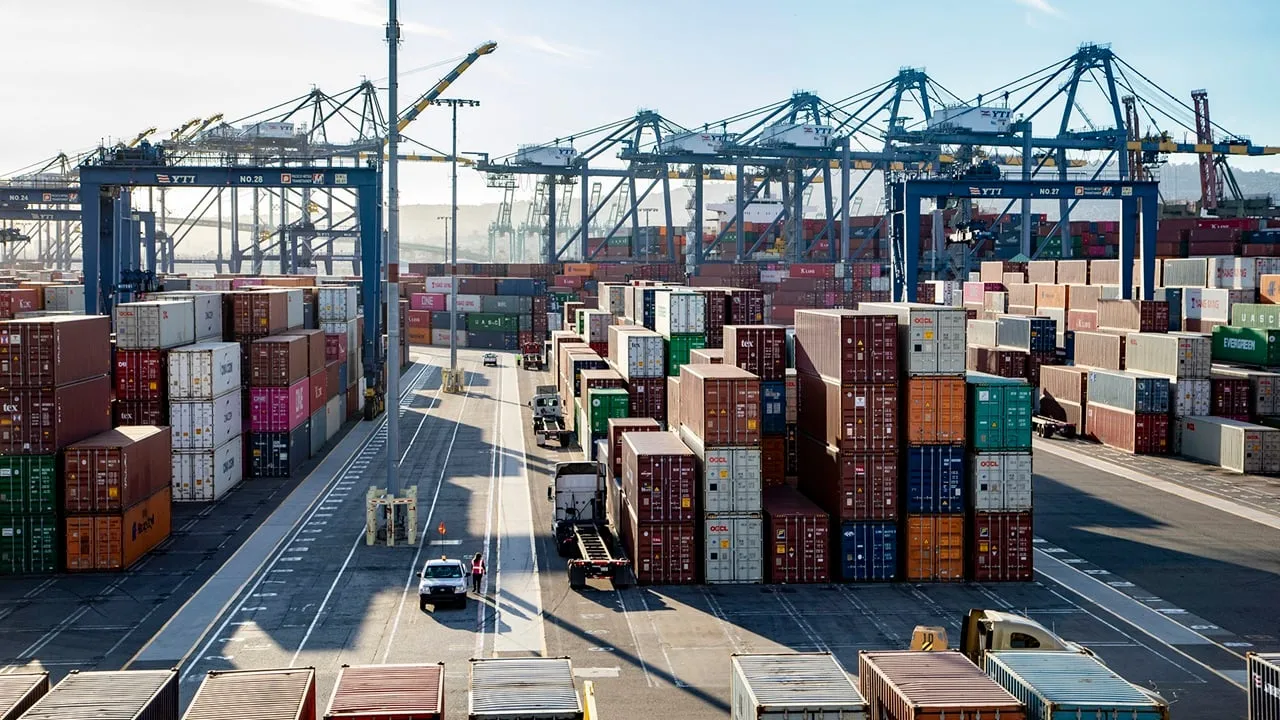
That could create downstream operational consequences for US container terminals and vessel operations if non-compliant or uncollected cargo remains trapped in terminal yards. The prospect of seized, abandoned or otherwise unresolved containers could increase pressure on storage capacity while tying up equipment and disrupting normal cargo flows.
The White House’s broader customs programme therefore reaches beyond importer documentation and eligibility. It combines tighter requirements for foreign IORs with stronger enforcement, expanded vetting, more extensive disclosures and faster disposal mechanisms, setting the stage for a significantly more rigorous US import compliance regime.