



Container shipping companies are accelerating their return to the Suez Canal and the Red Sea, reversing a diversion strategy that has kept much of the global fleet sailing around the Cape of Good Hope for nearly three years. Yet the recovery of this shorter trade route is unfolding against a deteriorating security backdrop, as tensions between Saudi Arabia and Yemen-based Houthi forces threaten to undermine the confidence behind the industry’s latest decisions.
The scale of the return has grown considerably since the summer. According to Alphaliner, 63% of pre-war container capacity on the Far East–Europe trade is now deployed on services using the Red Sea corridor. BIMCO had previously reported that more than half of capacity had returned, following months of limited activity through the Suez Canal and the southern Red Sea. Although the route offers shorter transit times and the prospect of lower operating costs, the resurgence of maritime traffic is prompting renewed concern among industry organisations about whether the security situation can sustain this momentum.
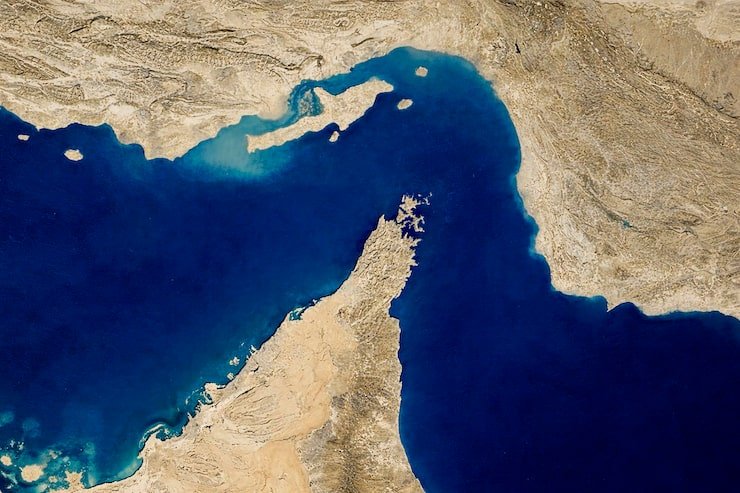
For almost three years, shipping lines have largely avoided the corridor following attacks on commercial vessels during the latest Middle East conflict. Early attempts to restore Red Sea transits were made in 2026, but the US war on Iran delayed a broader return to the Suez Canal. In recent weeks, however, carriers have increasingly resumed operations through Bab el Mandeb, the strategic chokepoint connecting the Red Sea with the Gulf of Aden.
The Global Shippers’ Forum (GSF) has warned that the rapid shift back to the shorter route could expose cargo owners and seafarers to renewed danger. Its director, James Hookham, described the situation to Seatrade Maritime News in stark terms: “This is a situation that works until it doesn’t”.
Shippers welcome the prospect of faster deliveries and potentially lower transport costs, Hookham explained, but remain concerned about the possibility of a sudden reversal. A collapse in security could quickly disrupt schedules and supply chains, particularly if another missile strike triggers a new round of attacks on commercial shipping. In Hookham’s assessment, the industry may be only one missile strike away from renewed disruption.
He also questioned whether cargo owners have sufficient influence over decisions that could expose their goods to military danger. “Shippers are having to trust that shipping lines have called this right and are not putting cargoes, never mind their crews, in harm’s way,” he said.
Shipping lines approached about the safety of returning to the region have largely referred to statements previously made by their senior executives. On 12 October, Hapag-Lloyd said that every transit would remain subject to a thorough security review, with voyages taking place under naval protection and in close coordination with relevant authorities and security partners.
Maersk, meanwhile, referred to comments made by its chief executive, Vincent Clerc, in mid-August. Clerc said that the company’s analyses, together with consultations involving military and intelligence stakeholders, indicated that the conditions for a full return through the Red Sea were being met at that time.
The Houthis have also reportedly offered assurances concerning merchant shipping. According to the Global Shippers’ Forum, the movement informed the European Commission in a letter that commercial vessels had nothing to fear unless they called at Saudi ports. GSF noted that the Houthis had so far adhered to that position.
Nevertheless, the implications for cargo owners remain unresolved. Hookham raised a further concern over the financial consequences of a ship being damaged in a military incident after its operator had deliberately chosen to return to a hazardous route. He questioned whether the vessel owner could claim General Average against the cargo carried on board when the decision to expose the ship to danger rested solely with the operator. General Average is the maritime principle under which certain extraordinary sacrifices or expenses incurred to preserve a voyage may be shared among the parties with interests in the voyage.
“This seems like the maritime equivalent of moral hazard,” Hookham added, highlighting the possibility that operational decisions and the resulting financial risks could fall on different parties.
Despite the concerns, commercial activity through the region is increasing. Dynamar analyst Darron Wadey acknowledged that Houthi activity against shipping in the Bab el Mandeb and Red Sea area has fallen significantly. The last reported vessel attack in the region before the latest escalation was in autumn 2025, but Wadey cautioned against interpreting the interval without attacks as proof that the corridor is safe.
Asked whether this made navigation through the Red Sea safe, he replied: “Not entirely.” He warned that the situation remains fundamentally fragile and could deteriorate rapidly, bringing back the pattern of attacks on commercial shipping experienced between 2023 and 2025.
Recent reporting has also underscored the risks. The French newspaper Le Monde reported last week that a drone threatening the 23,112-TEU CMA CGM Champs Elysees had been destroyed by a naval escort. The incident illustrates how military protection may remain important even as commercial operators increase their use of the route.
Ship-tracking information from Veson’s VesselsValue AIS shows that vessels are already making substantial use of the corridor. Among them is Maersk’s 9,000-TEU Tangier Maersk, which was reported sailing towards Jeddah at 18 knots before proceeding south through Bab el Mandeb, then towards Salalah and on to India.
At the time of writing, VesselsValue AIS data showed more than 30 ultra-large and New Panamax container ships transiting the region, alongside numerous smaller vessels. Operators using the corridor include Maersk, Cosco, CMA CGM and Hapag-Lloyd, while Premier Alliance has announced that two of its services are also making the return.
Alphaliner’s latest assessment points to a broader industry shift. Eight of the ten largest container shipping lines are expected to operate through Bab el Mandeb in the near future. The consultancy examined the routing patterns of the top ten carriers on the Far East–Europe trade between 15 September and 15 October 2026. During that period, it observed ships transiting the Red Sea on 24 of the 46 direct services operated by those carriers between the two regions.
The figures represent a significant change from the beginning of the year, when BIMCO said container ship transits through the Suez Canal and southern Red Sea remained 60% below pre-war levels. CMA CGM and feeder operators had continued to use the route, but most major carriers remained cautious about committing their wider networks to a full return.
A further indication of changing attitudes emerged in July, when the carriers operating under the Gemini Cooperation tested the route by deploying their AE15 service through the region. At the time, Antonella Teodoro, an analyst at MDS Transmodal, warned that the move was unlikely to signal an immediate, industry-wide return to the shorter passage.
“The industry has invested significantly in alternative routings, network resilience and supply chain flexibility, and many of these changes are likely to remain embedded in carriers’ strategies as they continue to balance efficiency with risk management,” she said.
The subsequent acceleration has nevertheless exceeded the cautious pace observed earlier in the year. With capacity using the Red Sea now at 63%, Alphaliner expects a full return through Bab el Mandeb by the first quarter of 2027.
Wadey believes the latest figures suggest that a complete return could be within reach over the next six months. The proportion of capacity using the corridor reached 63% during the first nine months of the year, while the pace of the shift has increased almost exponentially over roughly the past month. If that trend continues, a near-complete restoration of Red Sea services could take place by early 2027.
He also expects the remaining vessels to follow a different pattern from those already making the shorter passage. Some ships that initially departed through southern Africa would continue along the Cape of Good Hope route, while vessels sailing later could overtake them by using the Suez Canal. The resulting transition could leave a diminishing number of ships on the longer route even as most capacity returns to the Red Sea.
However, these projections depend heavily on how the regional conflict develops and on the Houthis’ response to changing military and political circumstances. The improving commercial outlook is therefore closely tied to a security environment that remains unpredictable.
Recent diplomatic and military developments have added to the uncertainty. Riyadh has invoked its protective agreement with Turkey and Pakistan following the recently announced Mecca defence deal. Egypt has also declared that it would come to Saudi Arabia’s defence.
These commitments follow a series of Houthi attacks reported by ACLED, the Armed Conflict Location & Event Data project, which disrupted Saudi air travel and damaged energy infrastructure. The incidents have raised concerns about Riyadh’s ability to protect critical national assets amid a widening confrontation.
ACLED has also reported that Saudi authorities delayed a major four-day investment conference that had been scheduled to take place in Riyadh from 26 October. The event is now expected to be held next year.
Even before the latest strikes, ACLED had warned that the Houthis were strengthening their position around Bab el Mandeb. The group’s evolving approach, according to the organisation, increasingly reflects “calibrated coercion rather than maximum disruption”.
Rather than immediately seeking to disrupt all maritime traffic, the Houthis are targeting Saudi-linked shipping in an apparent effort to increase pressure on Riyadh while limiting the likelihood of a broader military response from allies such as the United States. The United Kingdom has sent fighter jets to the region in a defensive role intended to protect Saudi infrastructure.
This selective approach does not remove the danger to commercial shipping. The Houthis retain the capability to expand their maritime targeting if the confrontation escalates, potentially reversing the recovery of traffic through the Red Sea and forcing shipping lines to reconsider their routing decisions.
ACLED’s assessment is therefore a warning against treating the latest increase in container transits as evidence that the threat has passed. “The threat to shipping nevertheless remains persistent, as the Houthis retain both the capability and the willingness to widen maritime targeting if the confrontation escalates,” the organisation concluded.