



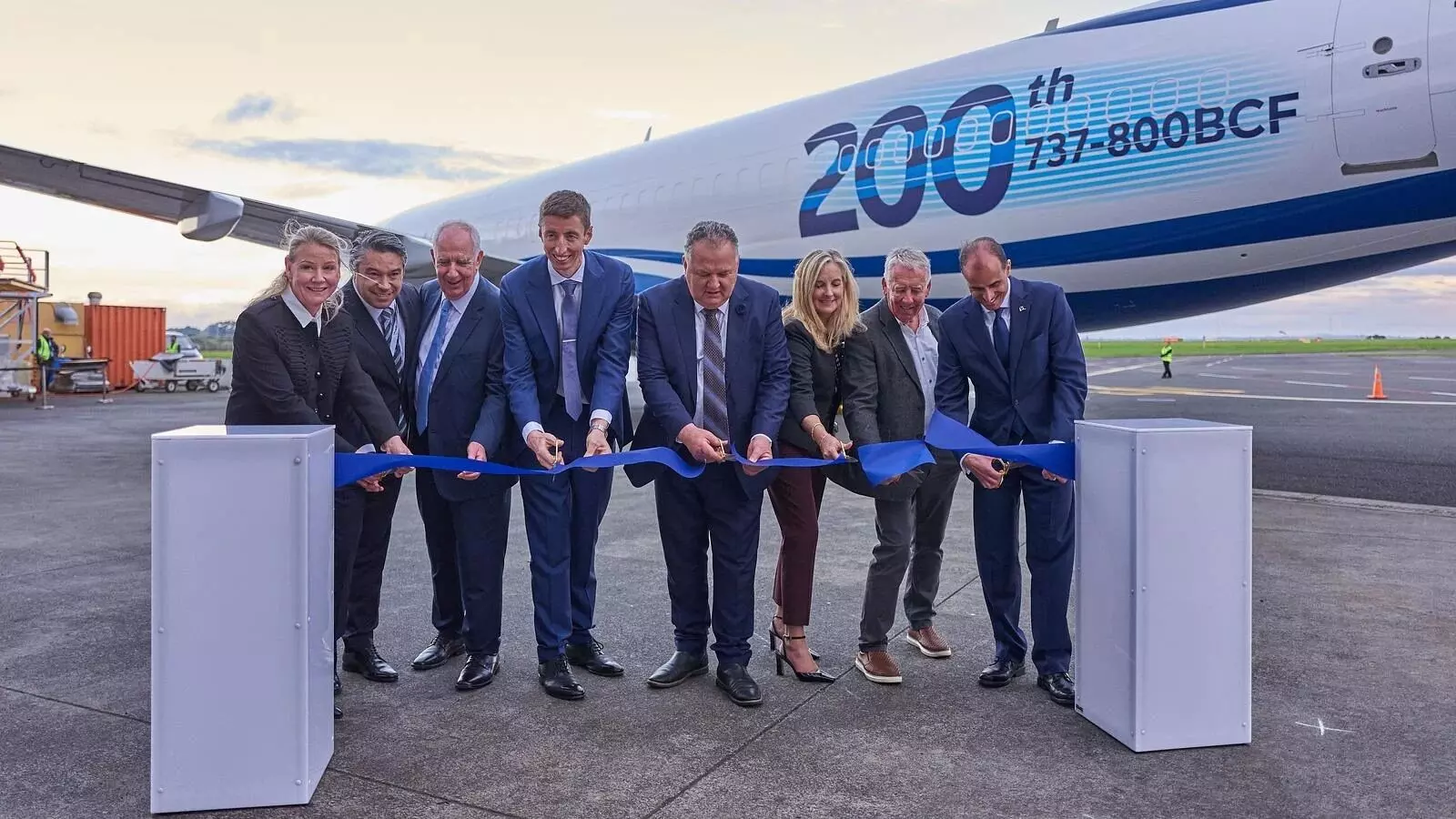
Boeing has delivered its 200th 737-800 Boeing Converted Freighter (BCF), marking a major milestone for a programme that began in February 2016. Initially launched with orders and commitments for up to 55 conversions, the aircraft programme has since become the world’s best-selling standard-body freighter, with more than 250 orders and commitments recorded.
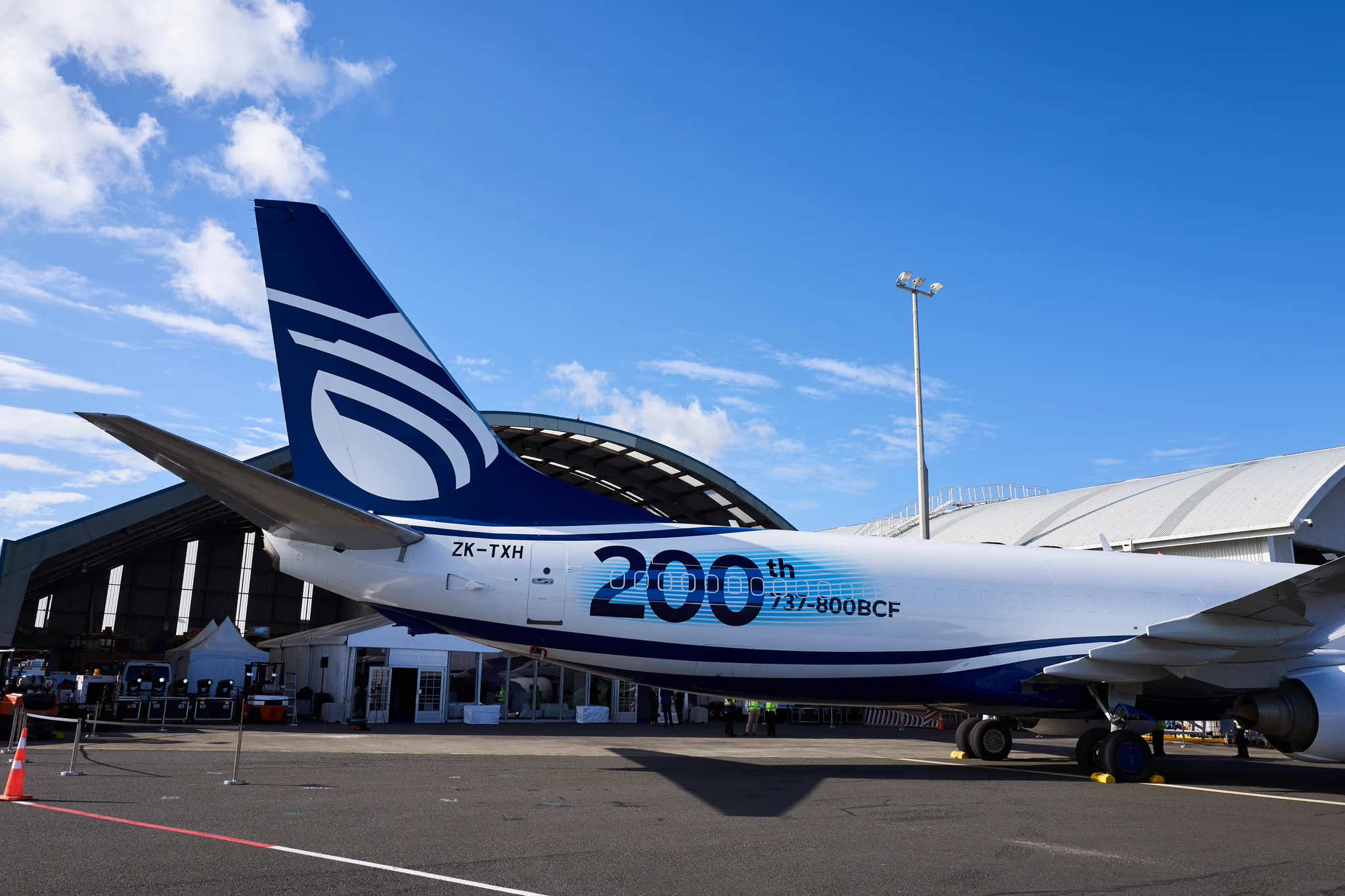
The milestone aircraft features a special livery commemorating the 200th conversion. It was officially handed over on 10 October during a ceremony in Auckland, New Zealand, to aircraft lessor Babcock & Brown Aircraft Management (BBAM), which has leased the freighter to Bahrain-based Texel Air.
The event brought together representatives from Chisholm Enterprises, Texel Air, BBAM, the Civil Aviation Authority of New Zealand, New Zealand First Party and Boeing.
Lindsey Douglas, Boeing’s vice president of Cabin, Modifications, Maintenance and Digital Services, described the delivery as a significant achievement for the programme. She highlighted the aircraft’s reliability, operational efficiency and suitability for replacing older standard-body freighters, while recognising the contribution of long-standing partners Texel Air and BBAM. She also noted the growing reliance of operators worldwide on the 737-800BCF to serve customers and expand their businesses.
Texel Air expands its New Zealand freighter fleet
The delivery increases Texel Air’s New Zealand-based 737-800BCF fleet to seven aircraft. These freighters support postal and logistics customers, including NZ Post and Freightways, by providing additional capacity for domestic freight movements and other air cargo requirements.
John Chisholm, founder and chairman of Texel Air, said that having another aircraft based in New Zealand would give the company greater operational flexibility. The additional capacity is intended to help meet the needs of businesses transporting time-sensitive shipments, accommodate specialised charter operations and maintain connections between communities and companies that depend on air freight.
From its Mumbai debut to a global freighter programme
The 200th delivery marks a decade of development for the 737-800BCF, which Boeing unveiled in February 2016 during the sixth edition of Air Cargo India in Mumbai.
Held from 23 to 25 February that year, the biennial exhibition and conference brought together participants from the air cargo industry. Boeing’s announcement quickly became one of the event’s main highlights, supported by the company’s presence at the exhibition and the participation of its freighter and cargo leadership.
At launch, Boeing secured commitments from seven customers for up to 55 conversions, comprising 30 firm orders and 25 additional commitments.
The 737-800 was the first Next-Generation 737 model that Boeing offered for passenger-to-freighter conversion. The initiative also represented the manufacturer’s first conversion programme based on the 737 platform, extending a business in which Boeing had already been transforming passenger aircraft into freighters for more than 50 years.
Stan Deal, then senior vice president of Commercial Aviation Services at Boeing Commercial Aeroplanes, said at the time of the announcement that the global cargo sector was recovering slowly, but converted freighters could serve express cargo markets, particularly on domestic routes.
Boeing projected the need for more than 1,000 converted freighters in the 737 size class over the next 20 years. China’s domestic air freight carriers were expected to represent almost a third of the projected demand.
The manufacturer had previously planned to deliver the first converted aircraft in Q4 2017. The first delivery finally took place in 2018. The programme has since expanded to 200 finished conversions, boosted by rising volumes of express shipments, postal traffic and e-commerce goods.
On 27 September 2022, Boeing achieved another major milestone by delivering its 100th 737-800BCF to AerCap, the world’s largest aircraft lessor. AerCap then leased the plane to Brazilian carrier GOL Linhas Aéreas to help grow GOLLOG, the airline’s logistics business unit.
The conversion work on that aircraft was carried out at Boeing Shanghai Aviation Services Co. Ltd (BSAS) – the location of the programme’s first 737-800BCF conversion line.
Boeing’s conversion of passenger planes into freighters
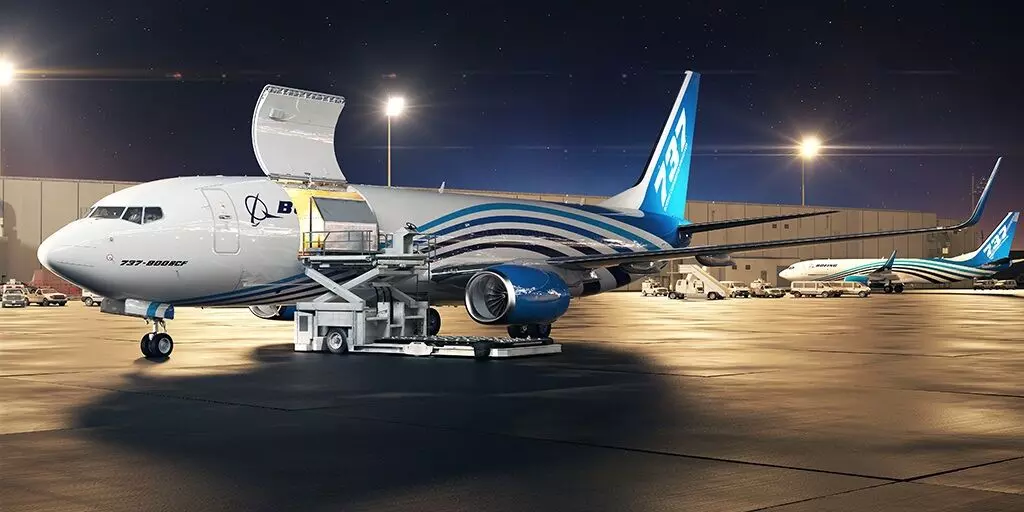
The conversion process for the 737-800BCF makes use of Boeing’s engineering and dedicated parts kits and the capabilities of designated maintenance, repair and overhaul (MRO) facilities. Each passenger plane is converted at a place with a dedicated 737-800BCF conversion line.
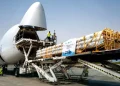
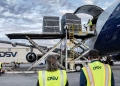
The process begins by removing the passenger cabin interior and reinforcing the aircraft’s floor beams. Then a big cargo door is fitted on the main deck, along with a cargo loading system to accommodate pallets and containers.
Boeing markets the resultant aeroplane as an efficient and reliable freighter in its class, and supports it to the same standard as a new Boeing freighter.
The aircraft is primarily intended for express cargo services on domestic and regional networks. It will complement larger freighters, which generally carry high-density cargo on long-haul routes.
Cargo capacity and travel distance
The main deck of the 737-800BCF has 12 pallet positions, consisting of 11 standard pallets and one half pallet. This provides approximately 141.5m3 (5,000ft3) of cargo volume.
It also features two lower-lobe cargo compartments with a further capacity of more than 43.7 cubic metres or 1,540 cubic feet.
The converted freighter has a payload capacity of about 24 tons and can work on routes of about 2,000 nautical miles, or about 3,700 kilometres.
The 737-800BCF’s attributes make it a particularly good fit for regional distribution networks and time-sensitive freight operations such as express deliveries, postal services and e-commerce shipments.
With 200 deliveries and over 250 orders and commitments, the programme is well established in the standard-body freighter market. The new aircraft also marks an operational extension of Texel Air’s New Zealand operation, providing additional capacity for customers who rely on flexible and dependable air cargo services.