



US Air Force backs KONA’s development with $3.5 million award
The US Air Force has awarded $3.5 million to Natilus, a US-based aerospace manufacturer, to advance the development of its KONA regional cargo aircraft. The funding is intended to bring the programme closer to full-scale flight testing and an operational demonstration focused on military logistics.
The award comes through Operational Energy – Innovation (OE-I) and the Department of the Air Force, under the Assistant Secretary of the Air Force for Energy, Installations and Environment. It will support the development of KONA, an optionally piloted aircraft with a payload capacity of 3.8 tonnes, designed for regional cargo distribution and logistics missions in contested environments.
KONA is being developed to fill the capability gap between light utility aircraft, such as the Cessna C-208, and larger tactical airlifters, including the C-130. With a range of 800 nautical miles and the ability to carry 3.8 tonnes of cargo, the aircraft is intended to facilitate regional freight movements, including missions involving short runways and locations with limited infrastructure.
Blended-wing configuration aims to cut fuel consumption
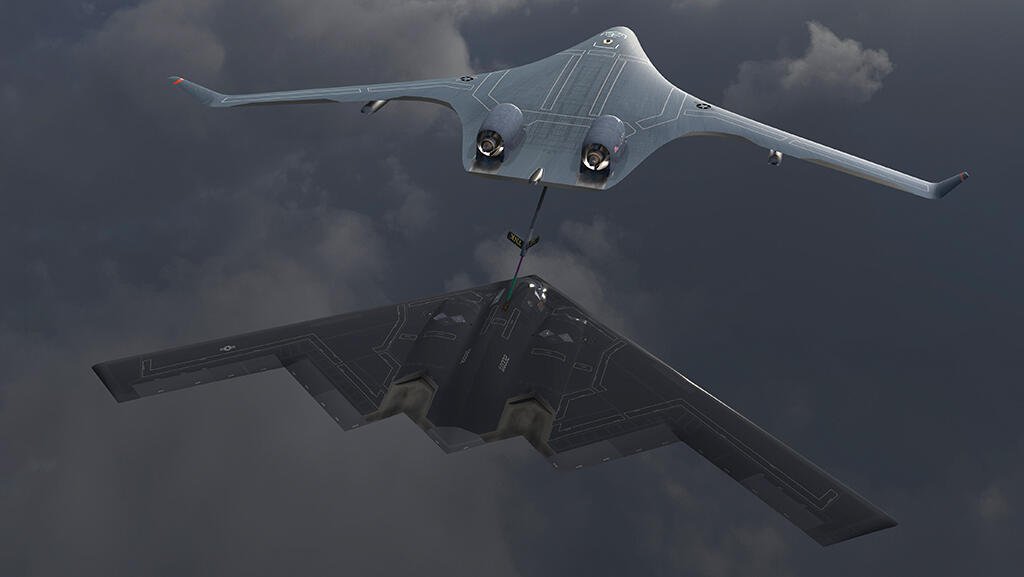
A central feature of KONA is its blended-wing-body configuration, which Natilus says could reduce fuel consumption by approximately 30% compared with conventional aircraft of a similar category. Lower fuel requirements could improve operational flexibility, particularly in areas where fuel availability and distribution remain difficult.
The aircraft is being developed with Indo-Pacific operations in mind. In this region, long distances, widely dispersed operating locations and logistical constraints on fuel supplies complicate military transport and resupply activities. KONA is intended to support intra-theatre airlift operations and the delivery of cargo to smaller, remote or dispersed operating sites.
Its design also seeks to accommodate existing cargo infrastructure. This compatibility could allow the aircraft to integrate into established regional distribution networks without requiring operators to build an entirely new ground-handling ecosystem.
Commercial certification and military demonstrations progress in parallel
Natilus is working towards Federal Aviation Administration (FAA) Part 23 certification while preparing KONA for full-scale flight testing. The company’s commercial programme is backed by private and strategic investment, alongside customer commitments. The new US government award will provide additional support for the aircraft’s military demonstration programme.
Beyond regional freight transport, KONA’s modular architecture and optionally piloted capability could eventually accommodate other mission configurations. Potential applications include communications relay, intelligence, surveillance and reconnaissance (ISR), and payload delivery. For now, the programme’s primary objective remains demonstrating the aircraft’s regional airlift performance and its ability to support logistics operations in contested environments.
Jim Hartle, Associate Deputy Assistant Secretary of the Air Force for Operational Energy, Safety and Occupational Health, said the funding would help assess how a commercially developed aircraft could contribute to distributed logistics while lowering operational energy demand.
Natilus CEO Aleksey Matyushev said the investment would enable the company to demonstrate KONA’s payload capacity, range, fuel efficiency and operational flexibility for military applications. He also highlighted the company’s continued efforts to address demand for more efficient regional cargo aircraft.
Natilus advances its blended-wing-body aircraft portfolio
Founded in 2016, Natilus is developing a family of blended-wing-body aircraft for both cargo and passenger transportation. According to the company, its designs target a 30% reduction in fuel consumption and a 50% decrease in operating costs, while offering 40% greater payload capacity compared with conventional aircraft.
Natilus reports more than 570 pre-orders across its aircraft programme, representing an estimated value of approximately $24 billion.
The latest US Air Force award represents another step in assessing the potential of blended-wing-body aircraft for military logistics. The technology could prove particularly relevant to regional cargo distribution, where fuel efficiency, payload capacity and the ability to reach dispersed operating locations are essential to maintaining effective transport and resupply operations.