



Spartan Carrier Group is moving from skepticism to hands-on artificial intelligence adoption, as the Texas-based trucking company explores ways to increase operational capacity without expanding its workforce. Two years after founder and CEO Carlos M. Llanes Jr. began advocating for AI, the company’s operations team is now learning to build its own AI agents using Alvys Foundry.
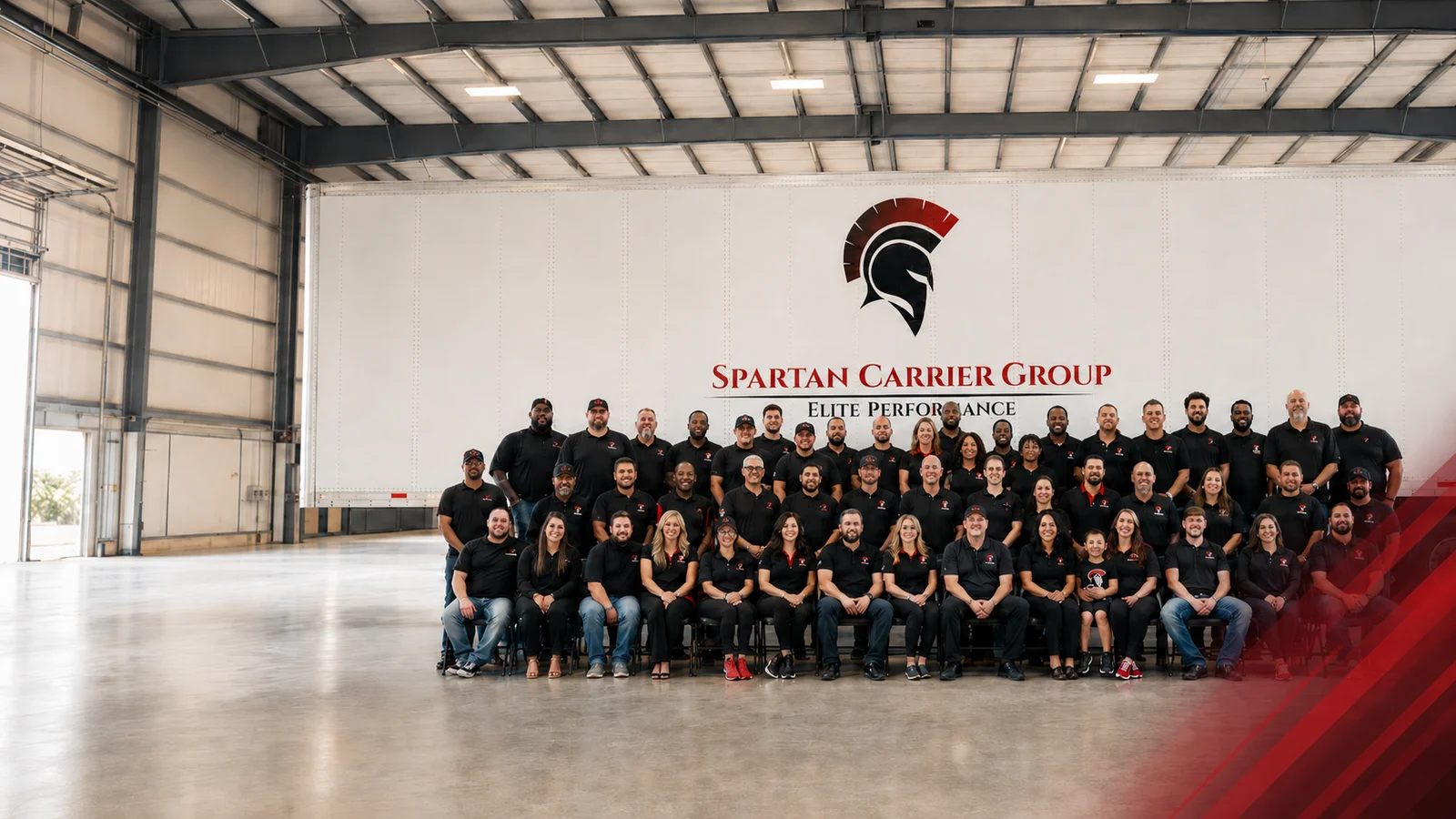
Based in Fort Worth, Texas, Spartan has grown from a single truck to a fleet of approximately 150 trucks in five years, primarily transporting just-in-time automotive freight. Toyota is its largest customer. As the carrier continues to expand, its strategy increasingly centers on automating repetitive administrative tasks rather than hiring additional personnel.
Kendrick Dawson, Spartan’s vice president of operations, is leading the initiative. He joined the company from Ryder in 2021 and initially doubted Llanes’ enthusiasm for AI.
“When we first heard about it, we thought he was absolutely insane,” Dawson told FreightWaves during an interview at Trimble Insight in San Diego last month. At the time, he and his colleagues questioned whether the technology could deliver the results their CEO anticipated. Two years later, the company is putting those ideas into practice.
Alvys introduced Foundry in August, giving carriers the ability to create AI agents within its transportation management system. Spartan was selected as one of the platform’s early customers.
Automation as a strategy for managing growth
Spartan operates around the clock with four dispatchers. One covers each shift, while another handles weekends and fills scheduling gaps. For Dawson, the central question is how the company could double its freight volume without adding another dispatcher.
His objective is not to eliminate jobs but to make better use of the people already on the team.
“We don’t want to let anybody go, we don’t want to fire anyone. That’s not the point,” he explained. Instead, automation should help employees increase their productivity while creating opportunities to develop new skills and take on more varied responsibilities.
Dawson believes logistics professionals are often attracted to the industry because they enjoy solving problems. Yet routine administrative work can leave little room for that kind of activity.
He questions whether people enter logistics simply to review PDF documents, stare at computer screens or repeatedly press buttons. In his view, freeing employees from those tasks is the first step toward giving them more meaningful responsibilities.
Hourly customer updates become Spartan’s first AI agent
The company’s initial automation project addresses a recurring task: preparing hourly shipment-status reports for customers who require updates at specific times throughout the day.
Previously, dispatchers compiled these reports manually in Excel. Each report took an average of seven to 10 minutes to prepare, with newer employees sometimes needing as long as 15 minutes. If Spartan doubled its freight volume, Dawson estimated that the same task could consume approximately 20 minutes per report.
In July, he asked dispatchers which single responsibility they would most like to eliminate. Every team member identified the hourly route updates.
The solution came together through two meetings with Alvys personnel. Dawson first learned how Foundry worked, then handed over the reporting task for development. A sample agent was returned in approximately two days, and the automated workflow was operational within a week and a half.
Dawson initially forgot that he had activated the system. He realized it was working when the reports began filling his inbox during a 9:30 a.m. operations call.
The reports arrived precisely on schedule at 10 a.m., 11 a.m., noon and 1 p.m., among other required times.
According to Dawson, the automated reports matched the dispatchers’ manually prepared versions with almost 100% accuracy. He planned to begin sending them directly to customers the following Monday.
The first agent is expected to recover approximately 17% of a dispatcher’s working day. Dawson believes that automating two additional tasks of comparable complexity could return roughly half of the team’s working time.
The additional capacity also provides insight into employees’ individual strengths and interests. By observing which responsibilities dispatchers prefer once repetitive work is removed, Dawson can better determine who should take responsibility for new projects, including further development within Foundry.
Toyota trucks power Spartan’s growth
Llanes bought a truck and development started on Spartan. The business then grew to five, 10 and 20 trucks before it hit the 50-vehicle capacity it needed under its first contract, Dawson said.
In 2023, the company started hauling freight directly for Toyota, starting with 5% of the freight at one location. Its share has since grown to about 30% at one plant and 20% at another, Dawson said.
Spartan is now one of 12 motor carriers in North America that operate directly for Toyota.
Operations support Toyota manufacturing facilities in San Antonio, Texas and Blue Springs, Mississippi. The company also has a partnership with a group at the Mazda Toyota Manufacturing plant in Huntsville, Alabama.
Spartan’s current fleet is about 150 trucks and 400 trailers and it has 170 drivers, said Dawson. The expansion also demonstrates the way the company has built out its operating capability while continuing to serve a major automotive customer with challenging delivery schedules.
Automated payroll for drivers is a more complex problem
Spartan has automated customer reporting and is developing a second AI agent around driver payroll. The workflow has yet to be tested, but Dawson expects it will reduce the time spent on payroll-related administration by at least half.
Spartan pays drivers a flat weekly guaranty for 5 days of work per week. Much of its freight is handled via relay operations, in which a number of solo drivers each carry a different leg of a single shipment.
For example, a load from Detroit to San Antonio might need six drivers, with changes in Fort Wayne, Indiana; Shepherdsville, Kentucky; Memphis, Tennessee; Arkansas; and Dallas, Texas.
These operations depend on precisely coordinated handoffs. Hours-of-service restrictions can delay subsequent movements if a driver shows up late, putting the route further behind schedule each day.
Managers are pulling in extra drivers from the on-call extra board to keep Toyota’s delivery schedule on track. Meanwhile drivers who lose a working day due to circumstances beyond their control must still be paid their guarantyd pay.
To resolve these situations, field teams must review the Samsara electronic logging device record against their own notes. The whole process usually takes an entire Monday, Dawson said.
He says workforce management and accurate compensation are critical to logistics operations. Payroll errors can impact driver satisfaction, he notes.
The Foundry workflow makes this easier. Every day it would email field teams with a list of drivers missing from the despatch planner, asking whether each absence should be recorded as a call off or an unplanned extra board day.
Once accepted the relevant record would be put into the despatch planner and a corresponding line item in the driver’s settlement report. A weekly summary would then consolidate the decisions taken in the period.
The system is still under development and has not yet been tested for effectiveness. Still, Dawson expects the automation to reduce the time needed to process payroll by at least 50%.
Dispatchers and field teams prepare to build their own AI workflows
Spartan’s adoption of Foundry follows a transition from an earlier transportation management system that Dawson described as less focused on innovation.
Alvys personnel helped develop the first reporting agent alongside him. For the payroll project, however, Dawson intends to begin modifying the workflows himself once he returns to the office. He also wants dispatchers and field operators to gain the same capabilities.
Despite having no background in coding, data science or technology development, he believes operational experience can be sufficient to build useful automation when the platform is accessible.
“I’m not a tech guy, I’m not a coder, I’m not a data scientist. I just run trucks,” he said.
The reporting template supplied by Alvys requires only a customer name and a selection of report formats. Dawson said this approach could make it relatively straightforward to accommodate additional customers. If Spartan added 25 customers, for example, the company could ask each one to select from three predefined templates.
Payroll is expected to be a more demanding test because of the complexity of Spartan’s compensation arrangements.
Dawson said the platform appears relatively intuitive so far, although certain details remain challenging. He considers payroll the real test of whether operational staff can independently manage these workflows.
If he can successfully master that process, he believes developing other agents should be more straightforward.
AI offers an alternative to adding operational staff
Spartan’s experience illustrates how artificial intelligence is beginning to change day-to-day fleet management. Rather than using automation primarily to reduce staffing, the company is exploring how it can accommodate more freight, improve consistency and free employees to focus on higher-value activities.
The first Foundry agent replaces manually prepared hourly customer reports at a carrier that has grown to approximately 150 trucks in five years. The next project targets driver payroll, a process involving multiple systems, operational exceptions and compensation decisions.
The payroll workflow has yet to be validated, and its anticipated time savings remain an estimate. However, the initial reporting results have encouraged Spartan to continue developing its own AI capabilities.
For Dawson, the longer-term ambition is to make automation accessible to the people who understand the operation best. If dispatchers and field teams can create and adapt agents themselves, Spartan could expand its capacity without automatically increasing headcount every time business grows.
The company’s next challenge will be determining whether the same approach that simplified reporting can also handle the more intricate demands of driver compensation.