



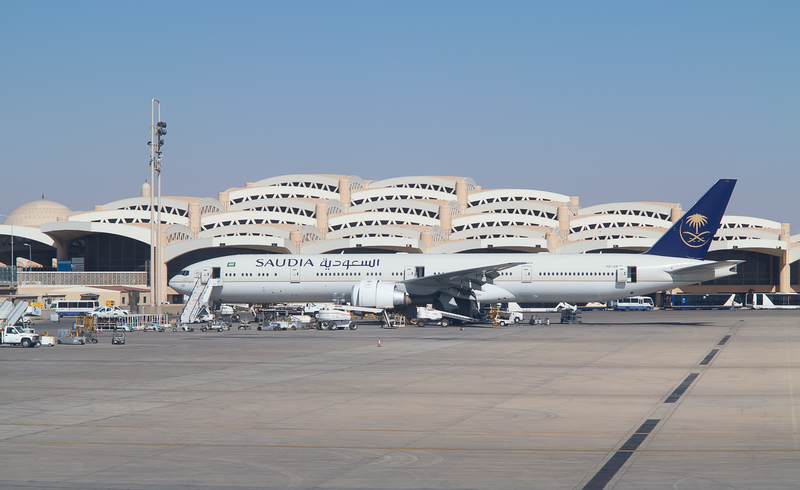
King Khalid International Airport (RUH) in Riyadh is experiencing a significant disruption to its air freight operations, with approximately 1,500 tons of outbound cargo capacity vanishing every day after Houthi attacks forced the closure of the Saudi hub on 10 October.
Aviation consultancy Aevean said the airport is operating at just 6% of its normal cargo capacity. Security concerns remain and international airlines are continuing to suspend services, so the recovery is likely to be slow.
“Riyadh has lost about 1,500 tons of outbound air cargo capacity a day and so far very little of it has come back,” said Maarten Wormer, Head of Consulting at Aevean. “With attacks continuing and foreign carriers extending suspensions, a gradual recovery is more likely than a rapid return to normal operations,” he added.
Partial reopening provides little relief
King Khalid International Airport partially reopened on Sunday, Reuters reported, after operating restrictions were imposed on October 18. But the return to activity has done little to restore traffic levels to normal.
The reopening also follows ongoing threats from Houthi forces based in Yemen, who have labeled the airport a “military target” and threatened additional attacks. Aviation activity is still limited, according to flight-tracking data.
A short-lived spike in cargo activity was seen on 20 October, merely days after the airport reopened for limited operations. But then volumes slumped sharply to an estimated one-third or even one-quarter of the level reached in that temporary bounce.
Heavy losses on key international routes
The disruption has impacted several major outbound cargo routes from Riyadh, especially to Asia, Gulf aviation hubs and South Asia. Aevean estimates daily capacity reductions include the following destinations:
| Destination | Estimated daily cargo capacity lost |
|---|---|
| Doha | 139 tonnes |
| Dubai | 121 tonnes |
| Hong Kong | 115 tonnes |
| Dhaka | 112 tonnes |
| Cairo | 98 tonnes |
Source: Aevean. Figures represent estimated daily outbound air cargo capacity lost from Riyadh’s King Khalid International Airport.
The losses underscore the extent of the disruption for Riyadh’s international air cargo network. A large part of the capacity that has disappeared is to Asian destinations, with Gulf hubs accounting for around a quarter of the total reduction. South Asian markets have also been hit hard.
It will take time for normal cargo flows to resume, with the airport still operating at only a fraction of its normal capacity and several foreign carriers still suspending services. The future of Riyadh’s air cargo operations will largely depend on the security situation and when airlines choose to return to the skies.