




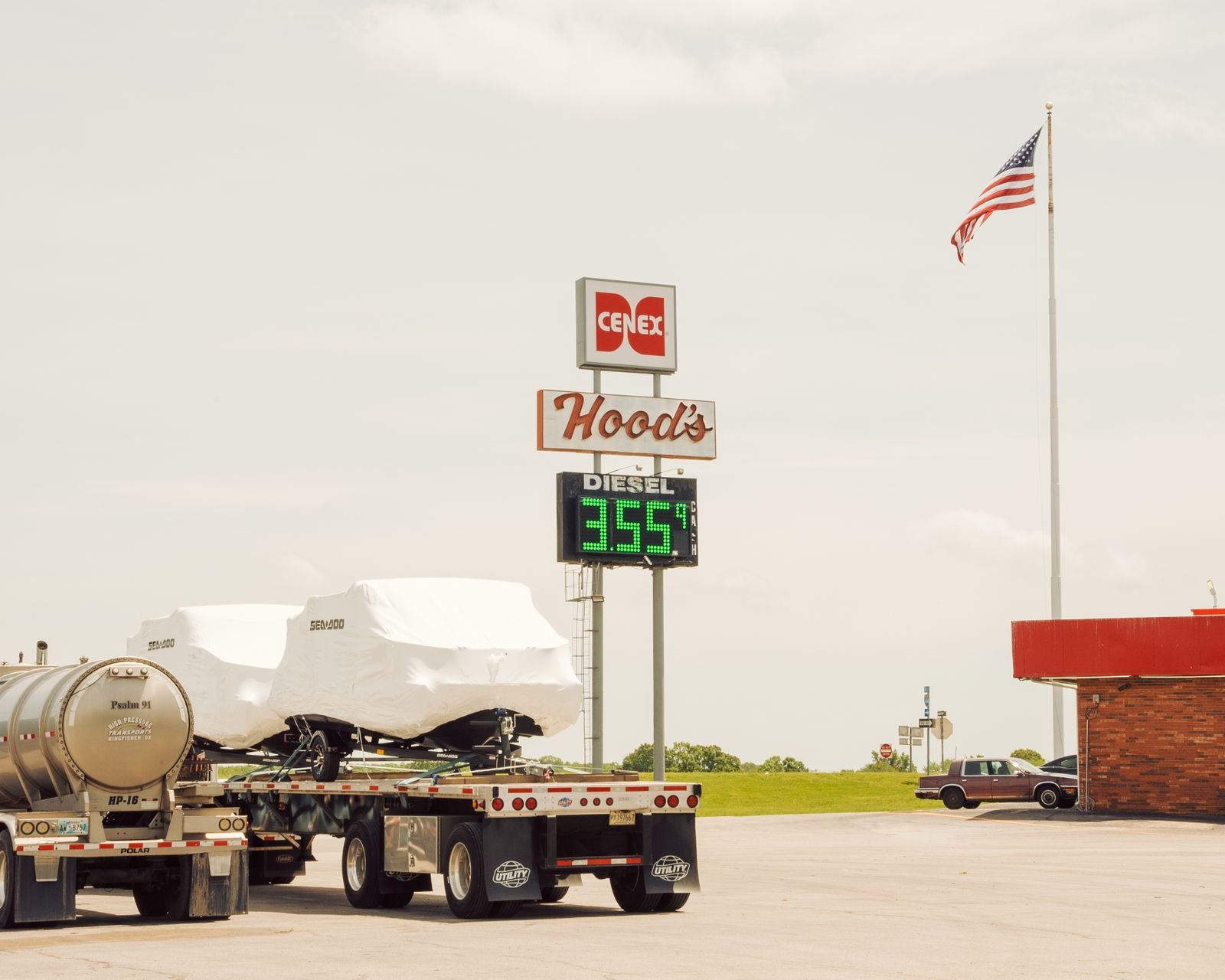
Rising diesel prices intensify financial strain on Florida carriers
Florida’s trucking industry is facing growing financial challenges as rising diesel prices consume an increasing share of carriers’ operating budgets, overtaking driver compensation as the largest expense for some fleets.
Scott Perry, CEO of the Florida Trucking Association, said motor carriers are being squeezed by a combination of higher fuel prices, escalating insurance premiums, more expensive equipment and continued pressure on driver wages. The cumulative effect is making it increasingly difficult for companies to maintain sustainable profit margins.
Speaking to FreightWaves during an interview at the WEX OTR Summit in Jacksonville, Perry explained that fuel has displaced driver pay as the leading operating expense for many trucking businesses.
“Traditionally, driver pay was the number one line item on the P&L,” Perry said. “Fuel has surpassed that in many instances, and it’s extremely challenging for them to absorb that if they don’t have good fuel charge mechanisms or recapture ability with their customers.”
With more than 35 years of experience in the trucking industry, Perry warned that carriers without effective fuel surcharge agreements are particularly exposed to sudden increases in diesel prices.
He pointed to an approximately 70% year-over-year rise in fuel costs, describing such an increase as potentially catastrophic for businesses that cannot pass the additional expense on to their customers.
Although Perry said he was not aware of any Florida Trucking Association members that had shut down or laid off employees specifically because of the latest fuel increases, he acknowledged that the financial strain is already affecting several companies.
“I’ve had several that it’s definitely compressing their ability to operate with increases in insurance that they’ve been absorbing over the last three, four, five years or more, the pressure on wages from a driver retention standpoint,” he said.
He warned that the combined impact of these expenses is becoming increasingly difficult to sustain.
“All of that combined adds up to generally a negative margin business that can’t be sustained forever.”
Freight rates show signs of improvement as capacity contracts
Despite the pressure on operating costs, Florida trucking companies are beginning to show greater confidence in freight pricing as the industry approaches 2027.
Perry said tighter trucking capacity is contributing to a more favorable rate environment. However, he cautioned that the improvement does not necessarily reflect a substantial recovery in freight demand.
Instead, the market is benefiting largely from a reduction in the number of available trucks, which is changing the balance between capacity and demand.
“I think there is some improved confidence with rates and what they’re seeing in rate structures right now,” Perry said. “As we’ve heard and read, there’s not a real demand increase in many instances. It’s capacity is being taken out of the market.”
Higher freight rates could help carriers recover some of the additional costs they have incurred. Nevertheless, Perry said much of the potential benefit is currently being offset by escalating diesel expenses.
He also highlighted tensions between carriers and shippers over freight pricing. Some shippers have sought to reverse the substantial rate increases introduced during the COVID-19 pandemic, even as trucking companies continue to face significantly higher operating costs than they did before 2020.
Perry argued that returning freight rates to pre-pandemic levels does not reflect the current cost structure of the industry.
“We’ve seen insurance costs go up substantially. Diesel rates are up substantially. Labor rates are up substantially,” he said. “Those don’t align with the depressing rates back to pre-COVID era. It just doesn’t.”
For Perry, sustainable freight pricing is essential to ensuring that trucking companies can remain profitable, replace aging equipment and continue investing in their operations.
He warned that financial constraints are already causing some carriers to postpone equipment replacement, potentially undermining fleet reliability, operational productivity and their ability to retain drivers.
“There’s got to be realism in the rates,” Perry said. “There’s got to be recognition that those costs are real. There has to be the ability for those carriers to make a profit so that they can reinvest in their businesses.”
Florida advances plans to expand truck parking along I-4
Beyond the immediate financial pressures, Florida is making progress on another longstanding challenge for the trucking industry: the lack of safe, accessible truck parking.
Perry said the state entered 2026 with approximately 2,100 publicly accessible truck parking spaces. Authorities are now advancing a four-phase development project intended to add another 922 spaces.
A groundbreaking ceremony for the initiative took place in July.
Most of the planned additions will be located along the Interstate 4 corridor, a major transportation route linking the Tampa and Orlando areas and carrying substantial commercial truck traffic.
Perry said the expansion should provide drivers with better access to secure parking and help ease some of the pressure on existing facilities.
“That will absolutely help put a dent in the need for secure parking, easily accessible parking,” he said.
However, he emphasized that the additional capacity will not resolve the state’s broader parking shortage.
“Will 3,000 public access parking spaces serve the entire need for the industry? No, it won’t,” Perry said. “Is this a significant step in the right direction? It absolutely is.”
The shortage has implications for both road safety and trucking efficiency. Drivers who cannot find suitable parking may be forced to choose between complying with federal hours-of-service regulations and stopping in potentially dangerous locations, including highway shoulders and exit ramps.
Expanding parking availability is therefore essential to helping drivers take mandatory rest breaks without compromising their safety or the efficiency of their operations.
“We need to provide them with solutions that give them access to maximize their productivity for their driving hours, have a safe place to park and get their rest break,” Perry said.
Trucking group supports stricter enforcement of federal safety regulations
The Florida trucking industry also supports efforts to increase compliance with federal safety regulations, particularly in areas involving commercial driver licensing, English language proficiency and electronic logging devices.
Perry said carriers generally support enforcement actions against operators who evade federal requirements and get an unfair advantage over businesses that follow the rules.
He praised Derek Barrs, administrator of the Federal Motor Carrier Safety Administration and a former member of the Florida Highway Patrol.
“The industry supports efforts to address regulatory violations and prevent operators from exploiting enforcement gaps,” Perry said.
“They like the idea that he’s going after those carriers that are breaking the rules, bending the rules, manipulating the rules,” Perry said.
His comments also supported proposed safeguards against tampering with electronic logging devices, or ELDs, that track drivers’ hours and help ensure compliance with federal limits on driving time.
These systems can be tampered with by drivers to drive longer hours than is legally permitted. This can lead to fatigue-related incidents and can pose potential dangers to commercial drivers as well as other road users.
“Steps to prevent falsification or manipulation of ELD records would go directly to safer operations,” Perry said.
“Anything we can do to make sure drivers are not driving outside the legally allowed hours and there’s no manipulation of ELDs to push those hours out and create unsafe circumstances … can only enhance public safety,” he said.
The association’s position reflects a broader industry interest in consistent enforcement, highway safety and fair competition among motor carriers.
Sustainable profitability will remain key going into 2027
Florida’s trucking companies look toward 2027, freight rates improving offer some hope of relief after years of weak margins But Perry stressed that a real recovery will depend on whether carriers can generate enough revenue to cover costs and reinvest in their businesses.
New trucks, insurance and labor costs have risen sharply, making it harder for operators to remain profitable at freight rates similar to those before the pandemic.
For companies already struggling with driver retention and trying to maintain productivity, delaying equipment purchases could mean more operational headaches.
The replacement of aging trucks is important not only to maintain fleet performance but also to support reliable service and to maintain the working conditions necessary to retain qualified drivers.
Carriers that can’t afford to make the investments they need to make are only going to prolong their underlying financial problems, not solve them, Perry said.
“If they can’t reinvest in their business, they’re just buying time and delaying the inevitable,” he said.
Hence the immediate challenge for the industry is to secure freight rates that adequately reflect its current cost base. Tighter capacity may help pricing conditions, but benefits will be limited if rising fuel expenses and other operating costs continue to eat into additional revenue.
Why it matters: Persistent increases in diesel, insurance, labor and equipment costs could force trucking companies to delay fleet replacements, scale back investment or face growing financial difficulties, even as tightening capacity points to a potentially stronger freight rate environment. The sustainability of the sector’s recovery will depend on carriers’ ability to recover their operating costs, maintain safe and productive fleets, and generate sufficient margins to support long-term investment.