



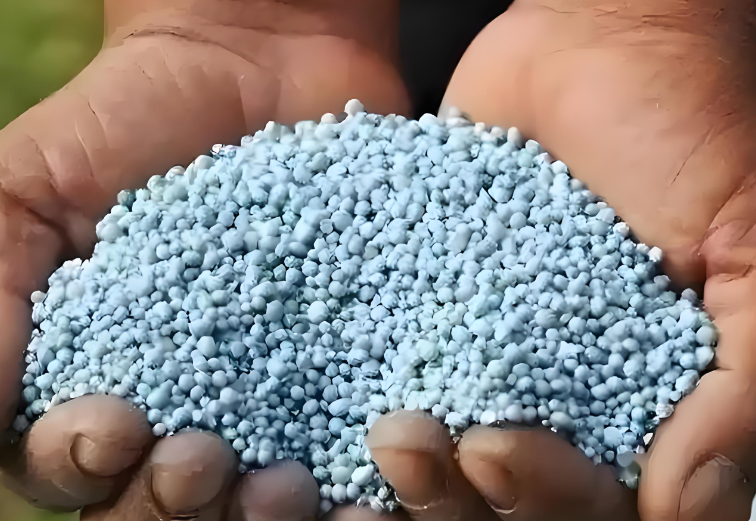
The United States is seeking to boost its domestic fertilizer industry with an investment program that will cover eight manufacturing projects valued at more than $1.3 billion. On October 22, Vise President J.D. Vance and Agriculture Secretary Brooke Rollins announced the initiative, meant to boost production capacity, improve security of supply, and reduce the nation’s reliance on agricultural nutrients from abroad.
The U.S. Department of Agriculture (USDA) has announced proposed funding of $573 million through its Fertilizer Investment and Expansion for Long-Term Domestic Supply (FIELDS) program. Some of the financial support is from previously allocated funds under the Biden administration’s Fertilizer Production Expansion Program.
The selected projects are distributed across the major agricultural states and encompass the production of fertilizers containing nitrogen, phosphorus, potassium and sulfur. new production facilities, extensions of production lines, upgrades of existing industrial sites. Two of the projects will be developed by Agriculture Project Holdco in Indiana and Kansas.
Moving away from global fertilizer suppliers
The investment is part of a push by the Trump administration to increase domestic fertilizer production and reduce dependence on global supply chains for farm products.
The U.S. is a major global producer of fertilizer (fifth in the world, according to the Fertilizer Institute), but still imports large amounts of some key nutrients, especially potassium. American farmers use a mixture of fertilizers to increase crops and maintain the quality of agricultural products.
The USDA said on Oct. 7 that more than 25 million tons of fertilizer had arrived in the country since the beginning of the year. Potassium and urea, a nitrogenous fertilizer product, are still among the main imported commodities.
The trade statistics for April 2025 to March 2026 give a particularly striking picture of the extent of this dependence. During that period, the U.S. imported roughly 8.7 million tons of potassium fertilizer, according to USDA data cited by Investigate Midwest. About nine of every 10 tons came from Canada.
During the same period imports of nitrogen fertilizers made about 6.1 mln tons. Russia and Canada combined accounted for about half this volume.
Market concentration is still a big concern
In addition to reliance on imports, the USDA is trying to deal with the concentration of production capacity in the hands of a relatively few firms.
Four companies account for about 77% of North American capacity for producing nitrogen fertilizer, the department says. The phosphate market is concentrated too, two companies account for 90% of the output. Two other firms control 90 percent of the potash producing capacity.
Potash is the slang word for potassium fertilizer, a very important fertilizer for farmers.
The administration hopes to attract new investment and spur more manufacturing capacity to bring more competition to the market and ultimately lower prices for farmers.
USDA estimates that once the selected facilities are operational, higher production could reduce nitrogen fertilizer prices by 4.4% and potash prices by 5.3%. The eight projects are expected to increase U.S. fertilizer production by about 1.1 million tons a year.
“Part of the reason this administration is so ambitious about trying to find ways to build things here instead of overseas,” Vise President J.D. Vance said at a midterm political rally in North Platte, Neb.
“I’m tired of having to rely on everybody else to make our stuff and grow our food,” Vance said. “We had to do it right here in the house.
Eight Projects Selected For Federal Aid
USDA awards FIELDS Program assistance to eight companies and investment projects. They have in their plans a range of fertilizer products, manufacturing technologies and production sites.
Talus AG
TalusAG, Austin, Texas, plans to install 20 modular ammonia manufacturing units at 11 sites in seven states — Iowa, Kentucky, Minnesota, Tennessee, Nebraska, Illinois and South Dakota.
The facilities are expected to produce a combined total of 130,000 tons of anhydrous ammonia per year. The USDA is offering to contribute $99.8 million to the project, which has a total estimated cost of $270.2 million.
Valley of tranquility
Peace Valley plans to increase production at its Bartow, Fla. fertilizer plant to 250,000 tons a year.
The project has an estimated cost of $50.6 million, with the USDA proposing to share $19.9 million.
Nitrogen PCI
The Texas-based company plans to upgrade and expand its manufacturing facilities in Pasadena, Texas and St. Helens, Ore.
The upgraded facilities will have an annual production capacity of 148,280 tons combined, including products like urea and ammonium sulfate. For the $200 million project, proposed federal funds would be $100 million.
Potash Fearless
Intrepid Potash intends to build a new manufacturing facility near Carlsbad, New Mexico, to make sulfate and potash.
The plant is expected to have an annual capacity of 220,000 tons. The USDA has pledged $139 million for the project that is expected to cost a total of $265 million.
AdvanSix
AdvanSix is investing in an upgrade and expansion of its anhydrous ammonia manufacturing facility in Hopewell, Va.
The upgrades will increase the site’s production capacity to 84,000 tons per year. The project has a value of $98.1 million and includes a proposed $47.4 million in USDA funding.
Illinois Sulfur-Plus
Sul4r-Plus Illinois is planning to expand production at its existing sulfur production facility in Marissa, Illinois, with a new production line.
The investment is expected to upgrade storage and transport infrastructure and to have an annual production capacity of 100,000 tons. The project is estimated to cost $69.7 million, with $34.9 million in proposed federal support.
100% Organic Products
The company, based in California, intends to increase its manufacturing operations in Helm, Calif.; Boardman, Ore.; and Arlington, Ariz.
Raw materials for the project will be by-products from agriculture and the project is expected to produce 142,805 tons per annum of fertilizer. The project is estimated to cost $30.6 million, with $15.3 million in funding from the USDA.
Holding Company for Agricultural Projects
Agriculture Project Holdco said it will construct two manufacturing plants, in Lewis, Kan., and Fair Oaks, Ind.
The facilities will turn dairy manure into liquid ammonium nitrate fertilizer. The combined production capacity will be 4,100 tons per year.
The project would cost a total of $360 million and look to USDA for $116.9 million in funding.
Domestic capacity is central to agricultural supply security
The eight projects will represent a major step toward rebuilding the U.S. fertilizer manufacturing base, and address weaknesses in the global supply chain.
The USDA wants to increase production of certain fertilizer categories in several locations, which should improve availability of these critical farm inputs, increase competition and decrease exposure to global market fluctuations.
The expected growth in domestic annual production of around 1.1 million tons could also help to reduce price pressures on farmers, especially in sectors where imports and market concentration are still important factors.
The longer-term impact will depend on the successful development and operation of selected facilities and their ability to deliver the production volumes anticipated by the USDA.






