




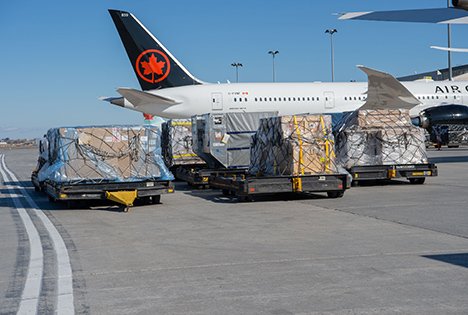
Air Canada Cargo is implementing an ambitious network strategy based on a hub-and-spoke model centered on Canada, aiming to position the country as an international logistics transit hub.
Rather than focusing on origin-destination volumes, the company is redefining its network so that 60% to 70% of the freight passes thru its hubs in transit. This approach maximizes the efficiency of flows between Europe, Asia, and the Americas, while strengthening the resilience of its network in the face of fluctuations in global demand.
The strategy includes the integration of dedicated cargo flights with the hold capacity of passenger planes, as well as complementary services such as ground connections (“road feeder”) and interline partnerships, which extends network coverage without multiplying direct flights.
For shippers and freight forwarders, this architecture offers better global connectivity, a more robust response to seasonal variations, and greater flexibility in planning international routes.
By reconfiguring its Canadian hub in this way, Air Canada Cargo is adopting a long-term approach, prioritizing the stability of flows and adaptable capacity over short-term tactical gains.