



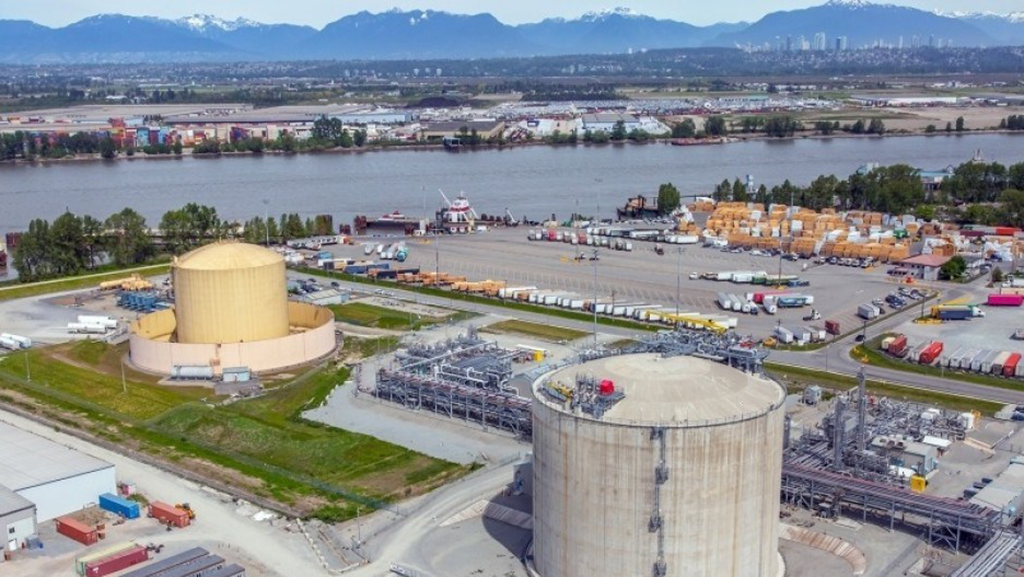
FortisBC has received the environmental assessment certificate required to proceed with the Tilbury Phase 2 LNG expansion at its existing facility on Tilbury Island in Delta, British Columbia.
The certificate was issued by the Province of British Columbia after the project underwent a provincial environmental assessment. It clears a key regulatory hurdle for the planned expansion, which will remain entirely within the footprint of FortisBC’s existing Tilbury facility.
B.C. Environment and Parks Minister Tamara Davidson and Energy and Climate Solutions Minister Adrian Dix said the project is expected to generate employment, contracting, procurement and training opportunities during both construction and operations.
The ministers also pointed to the broader economic contribution expected from the expansion, including increased economic activity and tax revenues. The project is also intended to strengthen energy resiliency in the Lower Mainland by adding natural-gas storage capacity.
New LNG storage and production capacity
The Phase 2 expansion will include a large new LNG storage tank along with new equipment capable of producing up to 7,700 tonnes of liquefied natural gas per day.
The additional infrastructure will be built within FortisBC’s existing Tilbury facility footprint.
The Tilbury operation currently plays an important backup role for the Lower Mainland gas system during periods of peak demand. It also produces LNG for both domestic and international markets.
The province emphasized that the proposed Phase 2 expansion is separate from FortisBC’s Tilbury Marine Jetty project, which received its own environmental assessment certificate in 2024.
Environmental assessment sets 18 binding conditions
According to the Environmental Assessment Office (EAO), the assessment determined that the Phase 2 project would not result in significant adverse effects once the required mitigation measures and proposed conditions are implemented.
The environmental assessment process began in February 2020. FortisBC later requested an extension to the assessment timeline as a result of the COVID-19 pandemic and submitted a revised application in February 2026.
The environmental assessment certificate comes with 18 legally binding conditions covering a broad range of environmental, safety and community requirements.
These include measures related to:
-
air-quality controls and monitoring;
-
protection of wildlife and vegetation;
-
greenhouse-gas emissions reductions;
-
health and emergency planning;
-
public information and community feedback;
-
continued monitoring of impacts on First Nations; and
-
local hiring and training opportunities.
The conditions are intended to govern the project throughout its development and operation and to ensure that identified environmental and community impacts are monitored and addressed.
Indigenous consultation formed part of the review
The EAO worked to build consensus with 12 participating Indigenous Nations throughout the assessment process.
A further 13 Indigenous groups were notified at key stages of the review.
The environmental assessment was conducted by the EAO on behalf of both the provincial and federal governments. Under the current process, the same assessment can be used to support decisions at both levels of government, avoiding the need to carry out two separate environmental assessments for the same project.
While B.C. has now issued its environmental assessment certificate, the federal decision remains pending.
Once the remaining federal process is completed, FortisBC’s Tilbury Phase 2 project will have moved through the principal environmental review framework governing the proposed LNG expansion.