



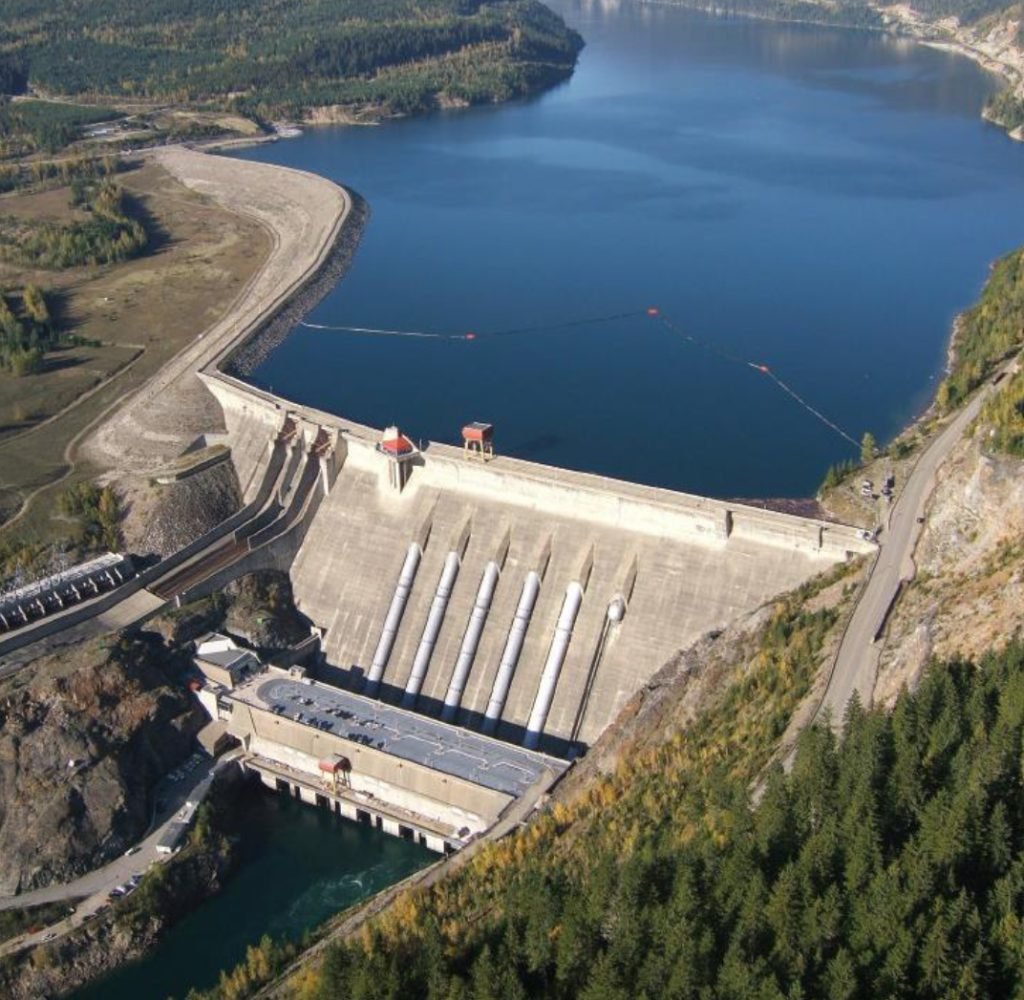
After years of planning, regulatory review and changing electricity forecasts, BC Hydro has started construction of the sixth and final turbine at Revelstoke Generating Station in southeastern British Columbia.
The generating station is located on the Columbia River and is one of BC Hydro’s largest power facilities and a key component of the province’s Columbia River power system.
The expansion will add 500 megawatts of electricity capacity to the provincial grid, adding more power as demand increases from electrification, population growth and economic development.
A station built decades ago for a project
The expansion is not about constructing a new hydroelectric dam.
The Revelstoke Generating Station was originally built for six turbines but only four were installed when it opened in 1984. Eventually a fifth turbine was added, entering service in 2010, leaving one turbine bay unused.
The sixth unit was subsequently put on hold, as BC Hydro’s electricity demand forecast did not indicate an immediate need for more generation.
Those forecasts have changed since then.
The utility revived the expansion due to growing demand from electrification and economic activity, enabling it to add substantial generating capacity without constructing a new dam or expanding the station’s existing footprint.
The project is located within the claimed traditional territories of the Syilx Okanagan Nation, Ktunaxa Nation and Secwepemc Nation.
BC Hydro describes the approach as “resource smart,” using existing infrastructure to get the most value from decades of public investment, while minimizing environmental impacts and avoiding the cost of developing a completely new generating project.
A more flexible electricity grid
The other turbine is expected to serve multiple purposes in addition to increasing electricity production.
The new unit will help BC Hydro meet peak electricity demand, integrate new renewable energy sources and provide more operational flexibility during extreme weather events and unplanned outages, BC Hydro said.
Work will be conducted inside the existing generating station.
Crews will install a new turbine and generator in the unused turbine bay and build a sixth steel penstock on the face of the dam to send water to the new unit.
It also features a host of mechanical and electrical upgrades including a new generator transformer and switchgear.
Six years in the making
The construction program is expected to be for a period of about six years, passing thru successive civil, mechanical and electrical phases before testing and commissioning.
BC Hydro anticipates the new generating unit will be online by December 2032.
This year’s work is about site preparation. The work includes installation of foundations for a new warehouse and construction of rockfall fencing along the left bank of the dam below Highway 23 North.
Construction will be delivered by independent contractors under several major contracts in accordance with BC Hydro’s procurement policies.
There are about 60 workers on site at the moment, but that figure is expected to increase as the project gains momentum. The workforce is anticipated to peak at approximately 180 workers in 2029.
BC Hydro estimates the project will create more than 450 person-years of employment during construction.
There will be opportunities for a variety of roles including tradespeople, equipment operators, crane operators, laborers, technicians, supervisors and administration staff.
Local spending and opportunities for First Nations
The project is also anticipated to generate significant economic activity in the area.
“BC Hydro estimates approximately $60 million in local spending will flow to Revelstoke and communities in the surrounding Columbia Basin on goods, materials and services.
The utility is also encouraging opportunities for First Nation-owned businesses and contractors.
It has a local hiring program that first gives priority to workers who live within 100 km of the project and then to workers who live in the Columbia Basin.
BC Hydro’s agreement with the unions also includes provisions for hiring qualified workers from First Nations communities.
There are also provisions for additional equity hiring of qualified workers who are women in non-traditional roles, visible minorities or persons with disabilities.
A project resurrected by changing energy needs
The present program of construction is the result of a decision which has been evolving over a period of years.
The Revelstoke expansion was released an Environmental Assessment Certificate in 2018, following consultation with First Nations and other stakeholders.
However, BC Hydro put the project on hold because of changes in electricity forecasts in 2021 and 2022 when the forecasts showed the additional capacity wouldn’t be needed in the short term.
Expectations for future electricity consumption were raised by electrification, population growth and industrial development, and the outlook changed.
The project now aligns with BC Hydro’s broader Powering Growth Plan, a long-term strategy to ensure British Columbia has enough electricity to support economic growth while transitioning to a lower-carbon economy.
The strategy is based on three key pillars: conservation of electricity thru energy-efficiency measures; better utilization of existing hydroelectric assets; and new generation and transmission infrastructure.
The plan for Revelstoke is to fill a space that’s been waiting for its last turbine since the station was originally designed, converting existing infrastructure into an extra 500 MW for British Columbia’s more power-hungry economy.