Maritime Nov 26, 2026
Bonny Gas Transport expands LNG carrier fleet with two newbuildings at Hudong-Zhonghua
The Nigerian shipowner has placed a follow-up order for two 174,000 cu m LNG carriers, bringing Hudong-Zhonghua’s orderbook to 57 vessels and reinforcing its leading position in the global LNG shipbuilding market.
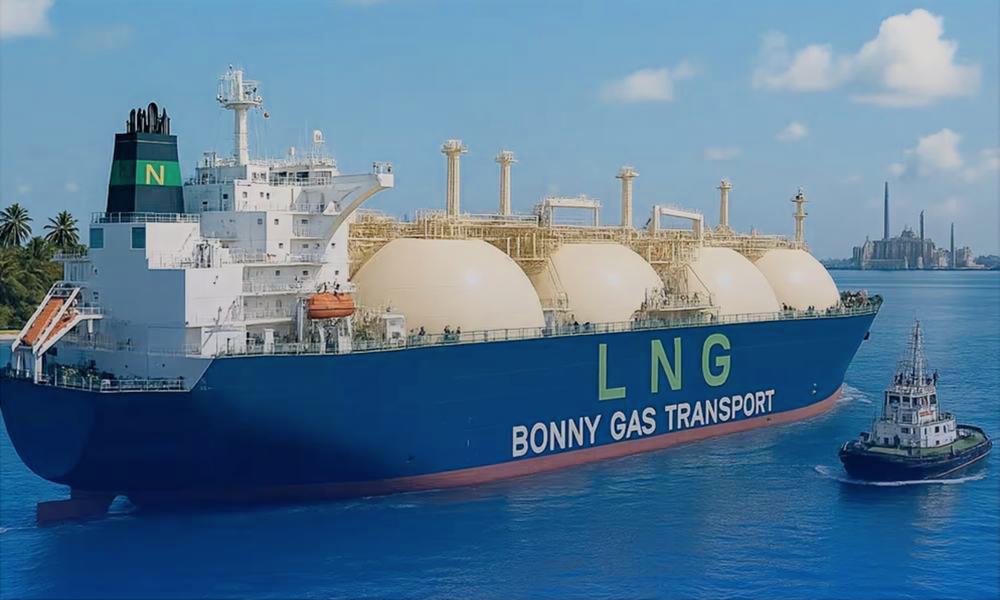
Bonny Gas Transport (BGT) has gone back to China’s Hudong-Zhonghua Shipbuilding with a new order for two LNG carriers of 174,000 cu m each. The order comes after the Nigerian shipowner placed an earlier order in December 2025 for three vessels of the same size from the Chinese shipyard.
The newbuildings are to be built on the basis of Hudong-Zhonghua’s in-house designed fifth generation Changheng series, which incorporates a number of energy-saving and low-carbon technologies. The shipyard says the vessels combine lower total energy consumption with large cargo capacity and maintenance-friendly features.
Both carriers will feature the advanced NO96 Super+ cargo containment system. The design aims to provide strong Energy Efficiency Design Index (EEDI) performance, improved environmental credentials and a reduced boil-off rate (BOR). It is expected that the ships will reduce the daily carbon emissions by over 10 tons, in comparison to a reference vessel. They will also be able to service 120 LNG terminals worldwide.
BGT is the shipping arm of Nigeria LNG, one of Africa’s leading LNG exporters. The company, with an established footprint in the continent’s dedicated LNG transportation market, plays an important role in moving Nigerian gas to international markets. Its latest investment is another step in increasing China-Africa cooperation in LNG carrier construction.
Hudong-Zhonghua has been riding a strong wave in the LNG shipbuilding market this year, winning contracts for 17 LNG carriers this year and leading domestic yards in new orders. Its latest fleet includes 16 vessels of 174,000 cu m capacity, four ordered by Cardiff Gas Carriers, 10 by MISC Berhad and two by Bonny Gas Transport. MISC Berhad has also ordered a smaller 18,700 cu m LNG carrier.
This leaves Chinese shipbuilder with 57 LNG carriers in its orderbook, making it the global leader in terms of total cargo tank capacity.
Information published on BGT’s website shows the Nigerian operator has a fleet of 11 owned LNG carriers and two vessels chartered on a bareboat basis. The company’s owned fleet includes five ships delivered between 2002 and 2006 and six vessels built in 2015 and 2016.
END OF REPORT