Maritime Nov 26, 2026
Former Venezuelan Oil Tankers Enter Gulf Trade Despite Rising Hormuz Security Risks
Attractive freight rates and substantial discounts on Iraqi crude are drawing tankers previously involved in Venezuelan oil shipments into the Arabian Gulf, despite heightened maritime threats and continued disruptions in the Strait of Hormuz.
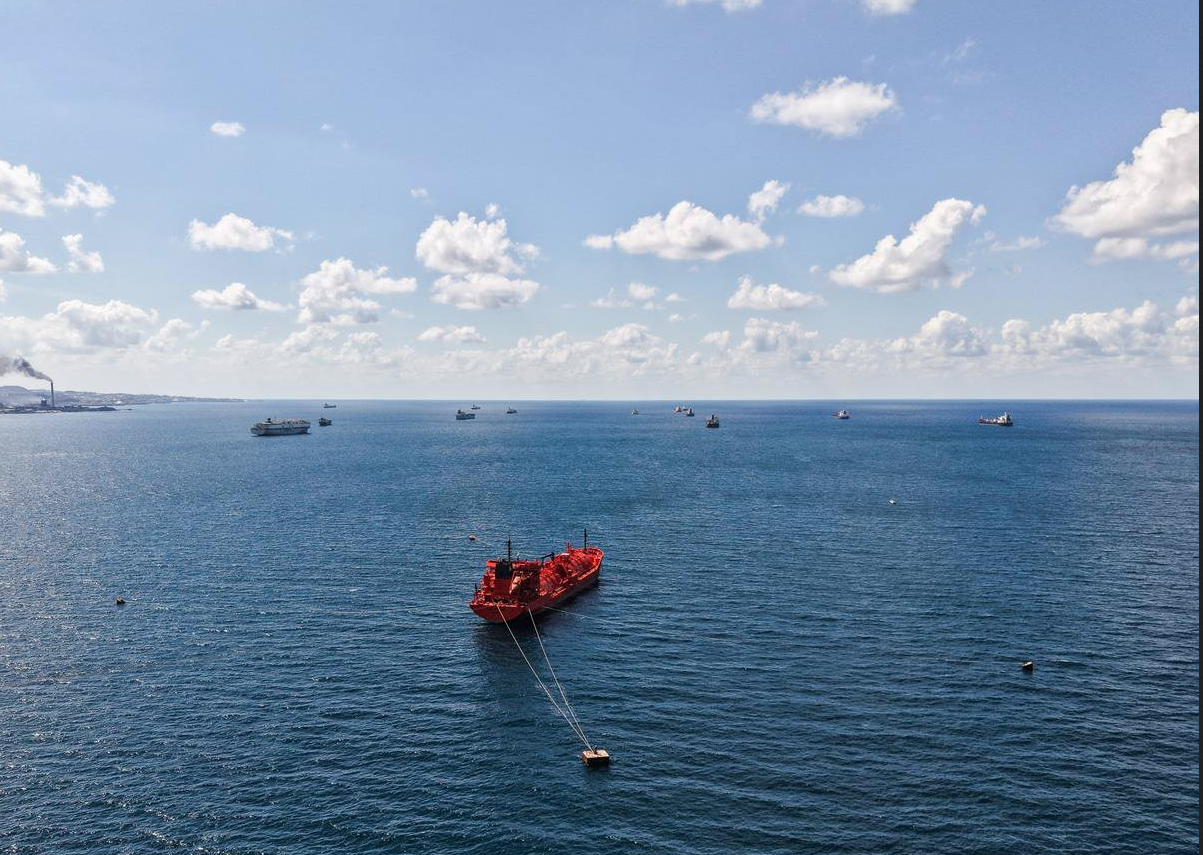
Venezuelan oil tankers enter Gulf trade as Hormuz security risks rise
Attractive freight rates and substantial discounts on Iraqi crude are drawing tankers that previously shipped Venezuelan oil into the Arabian Gulf market. The changing regional shipping patterns are seen in the growing involvement of these vessels in regular oil transportation even as security threats loom over the Strait of Hormuz.
The trend was highlighted once again by two tanker attacks in November. The VLCC Vieira (IMO 9234654) was hit in the Strait of Hormuz on Nov. 5, and the Suezmax Arina (IMO 9248813) was attacked later that month. Both vessels have carried Venezuelan crude in the past during the years when US sanctions impacted the country’s oil export activities.
The attacks themselves were not unexpected given the frequency of maritime incidents in the Strait, but the background of the two ships drew special attention. Both vessels have previously been used to transport Venezuelan oil, but neither is currently on an official sanctions list.
Vieira, Arina see changing tanker landscape
As of Nov. 24, the Arina and the Vieira were among at least 26 commercial vessels attacked in November. Their recent activity fits into a wider pattern of tankers with a history of trading high-risk oil heading for the Middle East.
But the available shipping data does not indicate that this development began in November. Similar operations were already underway in April, and the author drew attention to the emerging pattern in a May Substack post titled “Outliers in the New Hormuz Order.”
The data now available suggest this movement may become a broader trend. The risks of coming in and out of the Gulf remain high and the market still needs more tanker capacity to move crude oil.
Kpler data shows that Vieira has been loading Basrah crude at southern Iraqi export terminals since at least September. The ship was built in 2022. The VLCC was in at least 2021-2025 Venezuelan oil trades before switching to the Gulf. In a post on X, TankerTrackers also confirmed its previous trading activity.
Arina, built in 2003, has a history that also has a relationship with the Venezuelan crude, especially in the period 2024-2025. MarineTraffic’s AIS data tracked the tanker entering the Gulf of Oman in late October.
In the months before its arrival, the vessel had been active in other regions, including carrying Russian crude to India, Kpler said. But it is unclear exactly when it passed through the Strait of Hormuz or where in the Gulf it picked up its cargo prior to the November incident.
Arina was struck by an unknown projectile while sailing outbound in the Strait of Hormuz on Nov. 21. The effect was on the ship’s engine room.
The author of this article keeps a maritime map with further information about past attacks on commercial vessels.
Their eagerness to be involved in oil shipments in the Middle East raises the question of why they are new to the scene.
Iranian attacks on vessels continue and security risks across the Arabian Gulf and the Strait of Hormuz have been elevated for several months, reducing the number of shipowners and operators willing to navigate the waters.
But the commercial rewards are still huge. High tanker freight rates and discounts by Gulf oil exporters to offset transport costs have continued to pull in shipping capacity.
This trend had begun to emerge in the early days of the war as oil exporters had to re-evaluate their trading arrangements and pricing strategies in the face of disruptions to the Strait of Hormuz if they were to maintain access to buyers.
So, tankers with experience in high-risk markets like Venezuela became potential candidates for these routes. Venezuelan oil exports have in recent years been linked to opaque trading and manipulation of the AIS.
The new Gulf trade was also likely to look at ship-to-ship oil transfer vessels which were previously working in Malaysia’s Eastern Outer Port Limits (EOPL). By April the movement was already showing signs of life, particularly around the Iraqi loading terminals.
“Other than Vieira and Arina, two other tankers with similar trading backgrounds have been operating in the area since the early days of the Iran war. These are Helga (IMO 9176993) and Kiara M (IMO 9285823) which have mostly loaded Basrah crude at Iraq’s southern export terminals deep in the Gulf.
The author first identified the ships in May, and shipping data since then shows they have stayed busy in the Middle East.
Iraqi Basrah crude main drag
One key indicator of the shift in oil transport and tanker deployment since March is the Basrah loading area in Iraq.
Most of the country’s crude oil exports travel via Basrah to the Strait of Hormuz, especially to Asia. But that flow has become harder and harder to maintain, forcing Baghdad to offer steep discounts on prices to attract tanker operators and keep Iraqi crude in demand.
Iraq’s State Oil Marketing Company (SOMO) was offering December supplies of Basrah Heavy at discounts of around $33 a barrel to official selling prices, an Energy Intelligence report said on 23 November.
Basrah Medium, a grade above Basrah Heavy, was said to be offered at a discount of $29.20 a barrel.
In October the declines were even more pronounced. SOMO offered Basrah Medium at a discount of $34.50 a barrel against the benchmark and Basrah Heavy at a discount of $37 a barrel, Bloomberg reported.
SOMO Director-General Ali Nazar Faeq al-Shatari told a parliamentary hearing in September about the problems facing Iraqi oil exports and the strategy of pricing.
"Iraq was working with companies that had refineries prior to the war," he said. But since the beginning of the crisis, some three-quarters of these companies had been unable to enter the Strait of Hormuz and charter tankers to load.
Here’s a breakdown of Iraqi crude exports from March for a look at how disruptive the disruption has been. It also shows how regional exporters have adapted their pricing and trading tactics, and which tanker operators are still willing to take on cargoes despite the security dangers.
Kpler data showed Iraq was exporting some 3.3 million barrels per day (bpd) of crude oil in February, before the war.
Volumes fell between March and May, placing huge strain on the country's public finances which rely heavily on income from oil exports.
June saw a slow recovery with exports at around 500,000 bpd. Volumes then rose above 1 million bpd from July, then neared 3 million bpd in October.
In the lull of loading activity, there were reports that Helga and Kiara M took on crude at Basrah. Data from Kpler and MarineTraffic shows both ships have remained in the Iraqi oil trade ever since.
Iraqi business grows for Helga and Kiara M
Helga was built in 2000 and is not currently subject to sanctions. But the vessel has previously been associated with deceptive shipping practices, a hallmark often associated with dark fleet activity.
According to Kpler data and contemporaneous Reuters reporting, the VLCC went into the Gulf in April 2026 carrying Basrah crude as its first cargo in the region.
The tanker has since delivered Iraqi oil to Ain Sukhna in Egypt and the Gulf of Oman. In the latter area, oil cargoes could be transferred to other vessels within the framework of a shuttle transport system.
Its actions have also spilled over beyond the Gulf. In September Helga was tracked sailing to the Linggi lightering zone halfway across the Strait of Malacca where it transferred a crude cargo to another tanker before returning to the Persian Gulf.
A SOMO document shows that the vessel loaded 1,992,530 barrels of Basrah Medium on 10 August for the voyage to Linggi.
During the conflict, the Kiara M, built in 2004, also entered the Iraqi crude trade. The VLCC has been working Iraqi waters since it took its first Basrah cargo in late April.
Like Helga, Kpler data shows Kiara M also traded Venezuelan crude between 2022 and 2025.
But the ship does have a history of sanctions. In 2025, the US Treasury sanctioned Kiara M and its registered owner, Arctic Voyager Incorporated, for its alleged involvement in Venezuela’s oil sector.
The tanker and its registered owner were then removed from the Office of Foreign Assets Control (OFAC) Specially Designated Nationals (SDN) List in March 2026, US Treasury’s records show.
New tanker pattern amid regional instability
Vieira, Arina, Helga and Kiara M’s actions illustrate how the changing security and commercial environment around the Strait of Hormuz is altering tanker deployment.
The Gulf is seeing new commercial possibilities for vessels that once traded in higher-risk oil trades, with traditional players remaining wary about working in the region.
“Good freight rates, discounted Iraqi crude and the increasing need for available tanker capacity have given incentives for these ships to participate in regional export operations.
But it’s not automatic that more ships docking at the Gulf means a steady rebound in energy shipments.
Key obstacles are the ongoing Iranian maritime campaign and the absence of a diplomatic resolution. So the recovery of regional oil shipping is likely to be patchy and further disruptions likely, even as more tankers are readied to ply the dangerous waters.
END OF REPORT