World Nov 24, 2026
COP31 impasse threatens to derail the IMO’s global maritime decarbonisation framework
With climate negotiations at COP31 ending without an agreement, the IMO faces renewed political resistance to its Net-Zero Framework. As the maritime sector prepares for a decisive round of discussions, divisions among major shipping nations risk delaying global emissions rules and increasing uncertainty for shipowners, operators and clean technology developers.
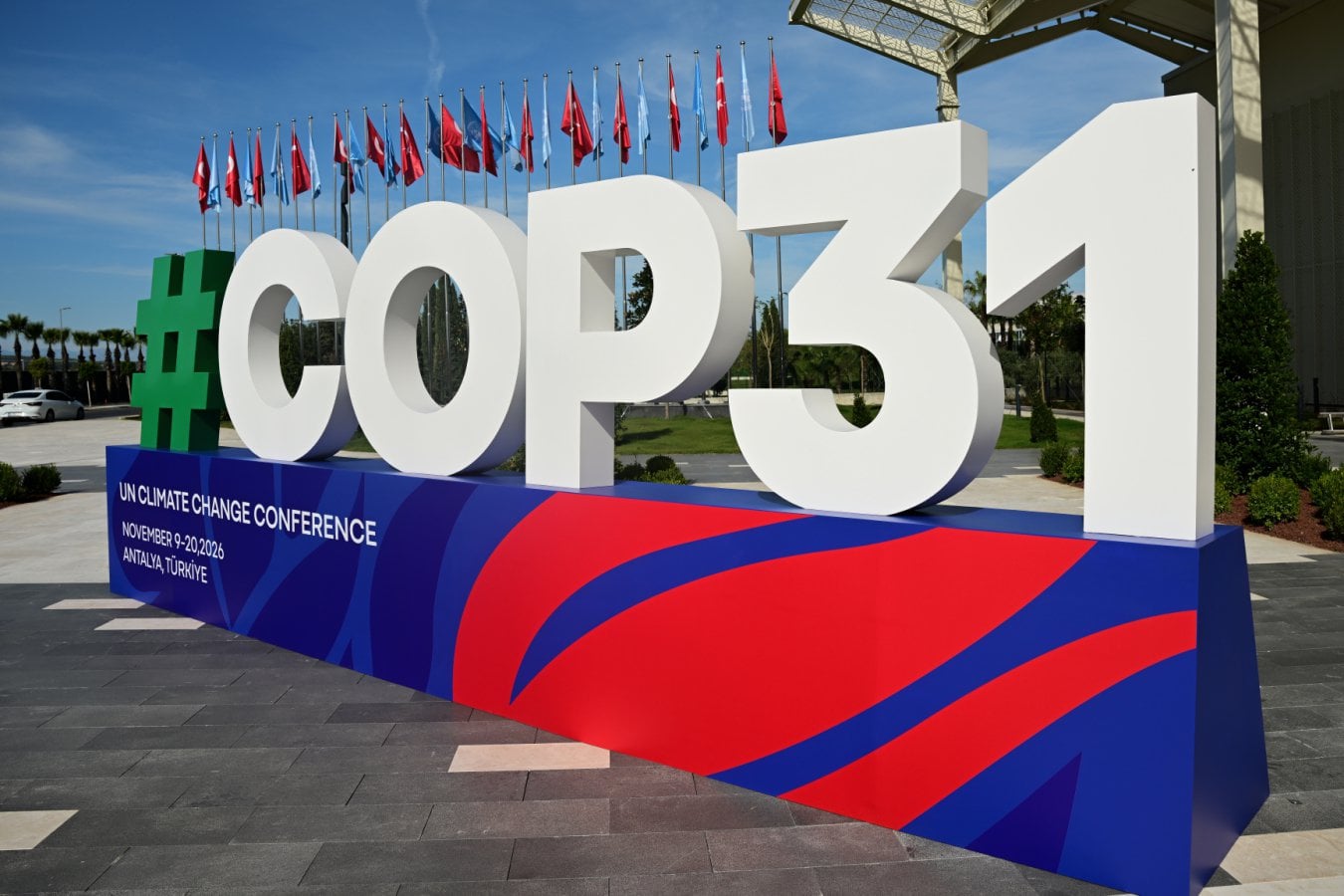
The absence of agreement at COP31 has sparked fresh fears over the future of international climate policy, and the maritime sector is now facing another critical test. The International Maritime Organization (IMO) could face similar resistance when its member states meet to discuss its Net-Zero Framework (NZF), as nations resist adopting it.
The COP31 deadlock, apparently driven in part by a handful of oil-producing nations led by Saudi Arabia, has raised concerns that political disputes could again derail progress on establishing a global framework to curb shipping emissions.
The spotlight is now on the 85th session of the IMO’s Marine Environment Protection Committee (MEPC 85), which starts on 30 November and runs for four days. Discussions will then resume on December 4 on a continuation of the second Extraordinary Session held in October 2025 (ES.2). The outcome is likely to have a profound impact on the environmental strategy of the maritime industry in the years to come.
Dr Peter Schniering, founder and CEO of German climate innovation think tank Future Cleantech Architects, said the outcome of COP31 was a failure that transcended political differences.
"The stalemate in Antalya is not just a failure of political will but also a failure of imagination," he said.
There are already technologies available that can decarbonize hard-to-abate industries, including maritime transport, says Schniering. “But he said they are still underdeveloped and not sufficiently taken into account in political strategies.
Deep resistance remains to the IMO framework
Resistance to the Net-Zero Framework has not yet shown signs of abating. On 11 November, Laura DiBella, chair of the US Federal Maritime Commission (FMC), reportedly reiterated Washington's opposition to the proposal, saying the framework could not be adopted, would never be enforced and should stay off the negotiating table.
Last year the implementation of the NZF was postponed and the United States, together with Saudi Arabia, was key to this.
At the same time, there are also splits within Europe. Greece and Cyprus were reported to have broken the EU consensus on the framework last year. Now both countries seem to be holding firm, joining the informal Risotto Group, set up at a meeting in an Italian restaurant in September.
Seatrade Maritime News had approached the maritime ministries of Greece and Cyprus for comment but had not received a response by the time of publication.
Cyprus’ deputy shipping minister Marina Hadjimanolis earlier this year admitted, ahead of last year’s ES.2 session, that the country’s liquefied natural gas (LNG) reserves were behind its wavering support for the framework.
However, a report released on 19 November by University College London (UCL) and WWF Greece takes a different view of the economic impact of postponing the maritime energy transition, especially for Greek shipowners.
Greek shipping faces significant exposure to the energy transition
The report, titled Real Economy Consequences for Greece from Success or Failure of the Net-Zero Framework, argues that adopting the NZF would give Greek shipowners the regulatory clarity they need while protecting them against a fragmented system of regional emissions rules.
According to the study, approximately $78 billion in Greek-owned assets are exposed to the transition away from fossil fuels as global demand for oil and gas declines.
This exposure comes on top of the risks already confronting vessel owners and operators worldwide as international shipping undergoes its own energy transition. That process will continue whether it is driven by IMO regulations adopted in December or by delayed global action accompanied by a patchwork of regional requirements.
The report therefore highlights the potential economic consequences of regulatory uncertainty for one of the world's most influential shipowning communities.
UCL professor of energy and transport Tristan Smith outlined the broader implications should the NZF face another postponement this year.
A further delay could weaken the IMO's authority, despite its central role in supporting the effective functioning of international trade. It could also encourage regional regulators to introduce their own greenhouse gas (GHG) emissions requirements, increasing regulatory fragmentation across the shipping industry.
Smith warned that prolonged uncertainty surrounding IMO climate policy would make maritime decarbonisation more difficult and could threaten the survival of companies developing solutions for cleaner shipping.
He also highlighted the additional risks facing shipowners if the framework fails to gain approval.
“What the [UCL/WWF Greece] report finds is that when those consequences of NZF adoption failure are taken into account, the 'supply-side' climate risks that the shipowner community then face worsen: there is higher uncertainty, admin burden and difficulty for different technology pathways to coexist,” Smith said.
For Greece in particular, the consequences could be substantial. WWF Greece CEO Demetres Karavellas argued that Greek shipowners have more to lose from delaying the maritime transition than any other group within the industry.
“The IMO Net-Zero Framework is the only credible global pathway to decarbonise the sector while providing the certainty businesses need to invest,” he added.
WWF calls on European leaders to defend the global framework
The political dispute has also prompted renewed calls for European leadership.
On 20 November, Ester Asin Martinez, director of the WWF European Policy Office, wrote to EU transport commissioner Apostolos Tzitzikostas, who is Greek, urging European leaders to take responsibility for supporting the maritime industry and strengthening international climate diplomacy.
In her letter, Martinez warned that the same tactics used to delay the NZF's adoption last year were being deployed again to prolong the process.
She criticised opponents of the framework for repeatedly failing to present credible alternatives capable of meeting the IMO's climate targets in a reliable and equitable way.
“These efforts are not genuine negotiations but mere attempts to throw off balance the majority of IMO Member States engaging in good faith in the debate,” she wrote.
Her intervention reflects growing concerns that continued political obstruction could prevent the international shipping community from establishing a consistent regulatory direction.
FMC questions economic impact of Net-Zero Framework
Outside politics, the economic cost of putting the NZF into operation is a major point of contention.
But FMC chair Laura DiBella said the move away from oil and gas in the maritime industry should be led by market forces and not regulatory intervention.
She also asked whether access to alternative fuels could be assured, arguing that fuel diversification does not necessarily mean that adequate supply, stability or reliability would be achieved.
Federal Maritime Commission estimates published last year indicate that the NZF could create annual costs to the maritime industry of between $53 billion and $265 billion. The FMC notes that these costs would eventually be passed down the supply chain and onto consumers.
The commission, however, has not disclosed how it arrived at these estimates, raising questions about the methodology behind its projections.
A critical moment for global shipping
MEPC 85 is coming up and the maritime industry is faced with a stark choice: stick to a unified global regulatory framework or embark on a period of fragmented climate policies.
A further postponement would weaken the credibility of the IMO, increase uncertainty for shipowners in administrative and financial terms and further handicap companies investing in alternative fuels and decarbonization technologies.
Greece and its vast shipping interests have much at stake. But the knock on effects would be felt well beyond the country, affecting international trade, shipping investment and the development of cleaner maritime technologies.
The discussions starting on 30 November and the resumed extraordinary session on 4 December will thus be crucial in deciding whether the IMO can maintain the momentum toward a common maritime decarbonization strategy or whether political divisions will once again put the brakes on the transition.
END OF REPORT