World Nov 18, 2026
US Congresswoman Ayanna Pressley urges Massport to improve healthcare coverage for Boston Logan airport workers
Joined by Massachusetts lawmakers and union representatives, the congresswoman is calling for an airport-wide healthcare benefits standard to protect thousands of contracted employees, as advocates warn of growing inequalities in access to medical coverage.
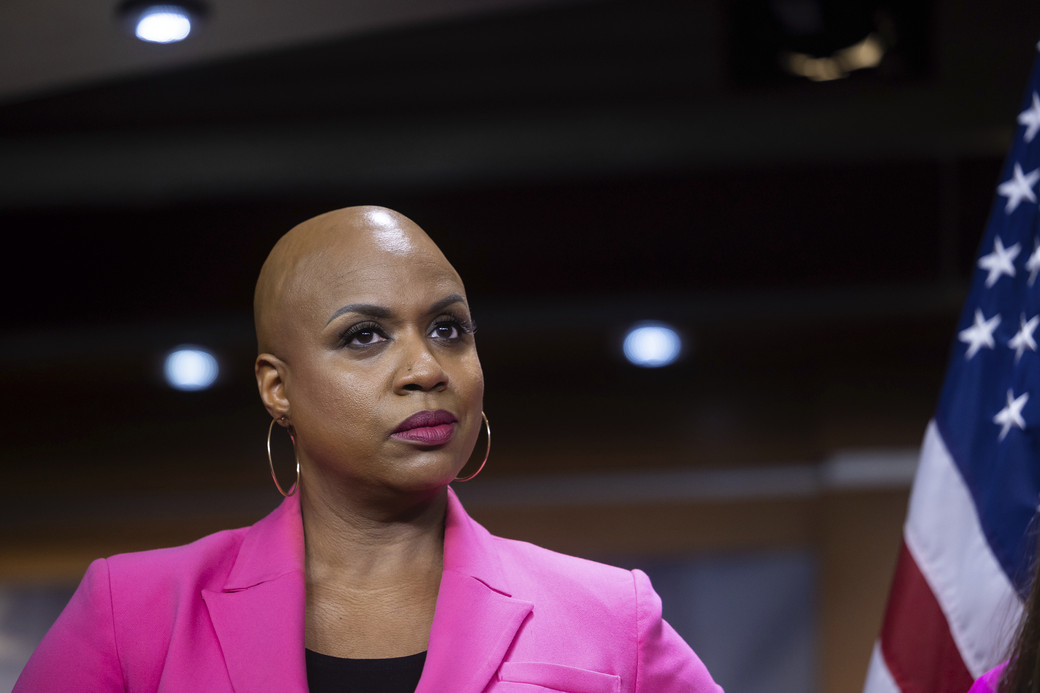
On 16 November, contracted service workers at Boston Logan International Airport (BOS), represented by the union 32BJ SEIU, gathered outdoors alongside US Representative Ayanna Pressley (MA-07) and several Massachusetts state legislators-elect to demand that the Massachusetts Port Authority (Massport) introduce an airport-wide healthcare standard before the end of the year.
The mobilisation brought together Erika Uyterhoeven, John Drinkwater, Will Mbah and Celina Reyes, with a common objective: securing a mandatory minimum healthcare benefits contribution for all full-time contracted employees working at Logan Airport.
The initiative follows the example of major US airports in New York, Newark, Philadelphia, San Francisco, Los Angeles and Portland, Oregon, where airport-wide minimum benefits requirements have already been introduced.
Speaking at the gathering, Kevin Brown, Executive Vice President of 32BJ SEIU, which represents 2,500 contracted airport service workers at Logan, highlighted the need to address structural weaknesses in the airport's employment conditions.
“Friday’s nationwide flight grounding suggests there are deep infrastructure problems in the U.S. airways that need to be addressed without delay,” Brown said. Referring to the situation facing airport employees, he added that inadequate healthcare coverage had become another structural problem that could no longer be ignored, leaving thousands of essential workers struggling to afford medical treatment.
Lawmakers demand an airport-wide benefits requirement
Federal and state representatives are urging Massport to establish a minimum benefits stipend covering every full-time contracted employee at Boston Logan. Their argument is that individual contractors cannot independently guarantee consistent healthcare protection in an airport environment characterised by multiple competing service providers.
Congresswoman Ayanna Pressley stressed that the demand was about recognising workers' rights rather than seeking preferential treatment.
“This mobilization is not an appeal for benevolence; this is not an appeal for good heartedness,” she said. “This is an appeal for what you are owed – for your labor that you put in day in and day out. You take care of millions of travelers every year. And it’s time for Massport to take care of you.”
Pressley also pointed to the fragmented structure of airport contracting as a major obstacle to improving employee benefits. Unlike a factory or warehouse operating under a single employer, Logan relies on dozens of contractors competing to provide services to airlines including American, United and Delta.
In such a competitive environment, companies offering better employee benefits risk losing business to competitors. According to the congresswoman, this creates a race to the bottom in employment conditions, making airport-wide intervention essential.
She argued that Massport is the only authority capable of establishing a common standard across the airport, recalling that the organisation had previously introduced a minimum wage requirement applying throughout Logan.
Pressley also highlighted that other major US airports had already demonstrated the feasibility of such measures, insisting that Boston should take the lead rather than fall behind other cities.
More than 100 Massachusetts lawmakers back the initiative
The campaign received significant political support. During the event, Kevin Brown presented a letter signed by more than 100 Massachusetts state senators and representatives, representing a majority of the entire state legislature.
The letter calls on Massport to introduce a mandatory benefits supplement for airport contractors before the end of the year. The proposed requirement would enable contracted employees to obtain quality, affordable health insurance through improved employer contributions.
A second letter, signed by the Coalition of Logan Airport Workers (CLAW), was also presented to participants, reinforcing the demands of the workforce.
Healthcare coverage remains a major concern despite Massachusetts' high insurance rate
The timing of the mobilisation is particularly important. The press conference took place just three days before Massport's final monthly board meeting of the year, scheduled for 19 November, which represents the last opportunity for the authority to approve a healthcare policy in 2026.
Despite Massachusetts recording a health insurance coverage rate of 98%, among the highest in the United States, a significant gap remains among workers employed by contractors at the state's main international gateway.
As airlines and their contracted service providers prepare for the substantial revenues generated by the upcoming holiday travel season, essential airport personnel continue to face difficulties accessing affordable medical coverage.
These employees perform critical operational duties, including baggage handling, aircraft cabin cleaning and assisting passengers requiring wheelchair services. Yet many remain without adequate health insurance, transferring part of the financial burden to state-funded programmes and taxpayers.
A recent white paper published by 32BJ SEIU and MassBudget highlights the scale of the problem. According to the survey, nearly one in three contracted service workers at Logan, equivalent to 30%, reported having no health insurance.
The situation is also problematic for those who do have coverage. More than half of insured respondents depend on publicly subsidised programmes, including MassHealth and the Health Connector, because the plans offered by their employers involve unaffordable premiums, deductibles, out-of-pocket expenses and other restrictions.
The prospect of federal healthcare funding reductions in 2027 adds another dimension to the issue. Advocates warn that companies shifting healthcare costs onto public programmes could increase pressure on Massachusetts taxpayers and people enrolled in publicly funded insurance schemes.
A proposed policy that could reduce public healthcare expenditure
For State Representative-elect Will Mbah, the current arrangement raises questions about the responsibility of profitable corporations towards their employees.
“Public healthcare programs should be there to support people who need them, not to subsidize profitable corporations that refuse to provide adequate healthcare for their workers,” he said.
In their letter to Massport, legislators argue that the situation could be addressed through an airport-wide benefits supplement requirement, following the same approach already used to establish a common minimum wage across Logan.
They also highlighted the potential financial benefits for the state. According to the figures included in the letter, moving 1,000 workers away from MassHealth and towards employer-sponsored insurance through a policy requiring companies to contribute to healthcare coverage could generate estimated savings of up to US$5.2 million for Massachusetts.
State Representative-elect John Drinkwater also underlined the straightforward nature of the demand, reminding airport authorities that workers should be able to access the healthcare they need.
“You deserve to get the healthcare that you need,” he said. “Let’s not overcomplicate it. It’s simple.”
The 19 November Massport board meeting therefore represents a decisive moment for the campaign. With political representatives, union officials and airport employees aligned behind the proposal, pressure is mounting on the authority to introduce a common healthcare standard and address longstanding inequalities affecting Boston Logan's contracted workforce.
END OF REPORT