World Nov 19, 2026
US panel calls for FMC investigation into China’s detention of Panama-flagged vessels
The US-China Economic and Security Review Commission recommends sanctions, an investigation by the Federal Maritime Commission and referrals to the IMO, accusing Beijing of using Port State Control measures as an instrument of economic and geopolitical pressure.
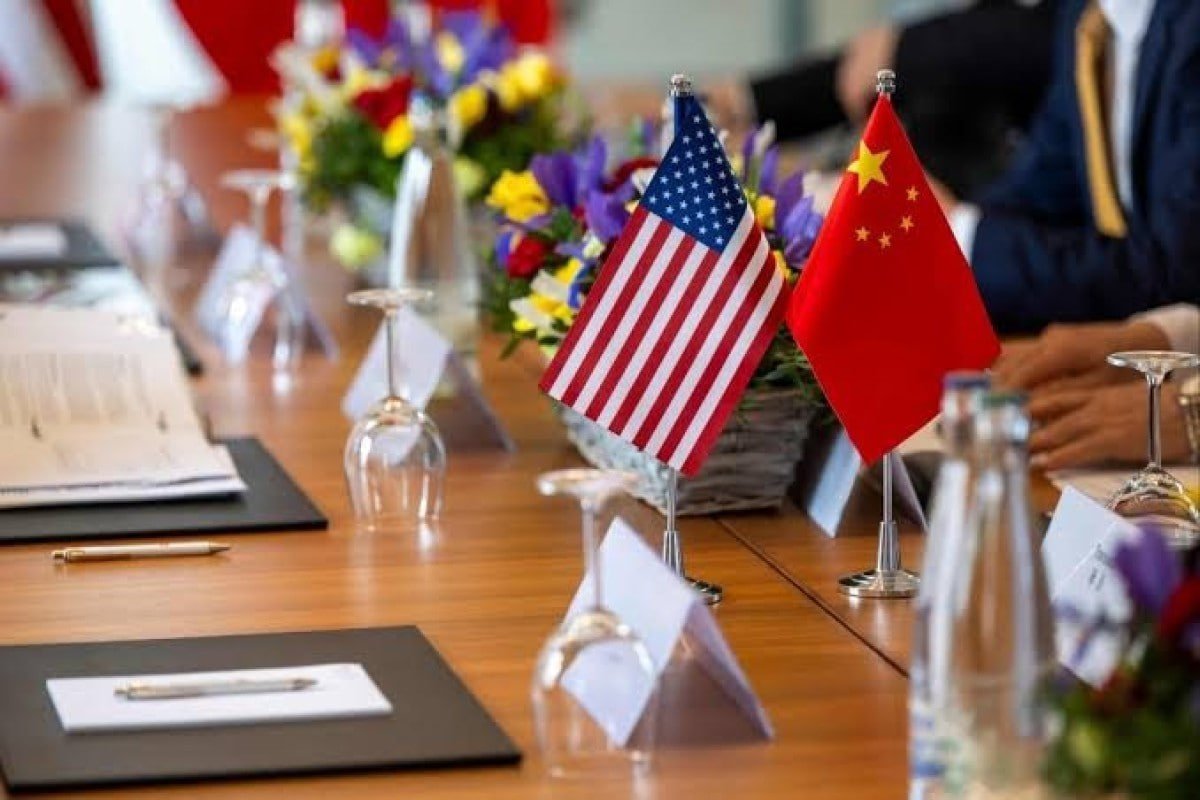
With China continuing to detain commercial vessels flying the Panamanian flag, pressure is mounting on the United States to take action, with national security concerns spurring renewed calls for regulatory action and closer scrutiny of Beijing’s maritime activities.
The US-China Economic and Security Review Commission (USCC) on Wednesday released its 2026 Annual Report following a year of hearings and investigations into the economic and security relationship between Washington and Beijing, offering a slate of recommendations for Congress. Among its major proposals is the formal designation of China’s detention of Panama-flagged commercial vessels as economic coercion.
The commission is urging Congress to craft a US policy that recognizes what it describes as China’s systematic use of Port State Control (PSC) inspections and vessel detentions against ships registered in Panama as a tool of economic coercion.
It also calls for authorizing the US President to take appropriate economic countermeasures against Beijing, while supporting the Panamanian government in the dispute. These could include using existing sanction powers and referring to the International Maritime Organization (IMO) to document China’s alleged use of port access as a geopolitical tool.
Congress established the USCC to assess the impact of US-China trade and economic ties on national security. The USCC also wants the Federal Maritime Commission (FMC) to initiate its own investigation. The commission wants lawmakers to order the agency to study the pattern of detentions and produce its findings within 90 days.
The FMC had already highlighted the sharp rise in detentions of Panama-flagged vessels earlier this year.
Increased scrutiny of Chinese shipping operators
The new guidance emerges amid growing concern in Washington over the activities of Chinese shipping companies and what that could mean for US national security.
In October, American lawmakers requested the Department of Homeland Security (DHS) to revoke the U.S. Coast Guard’s Qualship 21 status for at least 10 commercial vessels owned by Cosco Shipping Lines. It was believed the ships were doing surveillance off the coast of the US.
Qualship 21 is a program that allows qualifying vessels to receive a reduced frequency of port state control exams. The lawmakers therefore urged DHS to exclude Cosco-operated vessels from the program, refuse to renew them in the future and ramp up scrutiny on other companies linked to China’s industrial base.
In a letter of 14 October, they argued that the measure should be implemented without delay and that vessels linked to Chinese industrial interests should no longer be eligible for the programme's preferential treatment.
Washington eyes China’s grip on strategic ports
Beyond the fight over Panama’s ship registry, the USCC is calling for a broader, coordinated response to China’s growing influence over maritime infrastructure in the Western Hemisphere, especially in Latin America.
The commission recommends that the Director of National Intelligence be directed to prepare an annual, unclassified assessment of China’s presence in strategic infrastructure sectors. The review will look at ports, energy facilities and telecommunications networks, highlighting possible cybersecurity vulnerabilities.
Another idea is to form joint technical teams with members from the State, Defense and Homeland Security departments and the U.S. Maritime Administration.
Their mission would be to provide technical assistance, support inspections and establish a regional baseline for identifying and addressing vulnerabilities linked to Chinese involvement at strategically important maritime chokepoints.
The goal is to develop the ability of regional partners to detect and mitigate risks to critical maritime infrastructure.
Agricultural supply chains also under the spotlight
The commission's recommendations extend beyond port infrastructure and maritime security to include vulnerabilities in international agricultural supply chains.
The USCC wants Congress to strengthen the US Department of Agriculture's (USDA) market intelligence and early-warning capabilities, particularly regarding Chinese influence over agricultural commodity markets and logistics networks.
More specifically, it recommends expanding the department's ability to monitor Chinese agricultural markets, supply chain movements and state-managed commodity reserves.
The proposed monitoring activities would include price signals from the Dalian Commodity Exchange, as well as South American logistics flows controlled by entities affiliated with China. The commission also insists that sufficient funding should be allocated to support these additional responsibilities.
USCC warns against underestimating Beijing's strategic ambitions
The report was released as US President Donald Trump was meeting Chinese leader Xi Jinping and Russian President Vladimir Putin in Shenzhen, adding a geopolitical dimension to the commission's warnings.
Commenting on the report, USCC Chairman Randall Schriver acknowledged China's public support for what it describes as constructive strategic stability.
However, he cautioned against interpreting Beijing's position without considering its broader strategic objectives.
From the commission's perspective, China's approach could provide it with greater room to manoeuvre, allowing Beijing to advance its own interests while limiting Washington's influence.
The recommendations therefore reflect growing concern within the US political and regulatory establishment that maritime inspections, port access, infrastructure investments and control over supply chain networks could increasingly become instruments of geopolitical competition between the two powers.
END OF REPORT