World Nov 23, 2026
Ukraine Claims First Strike on Russian Warship in the Mediterranean as Naval Conflict Escalates
Kyiv says Ukrainian naval drones sank the Russian corvette Merkury and struck a military cargo vessel in Benghazi, bringing the war closer to European shipping routes. The attack raises fresh concerns over maritime security, regional stability and war-risk exposure for commercial vessels operating across the Mediterranean.
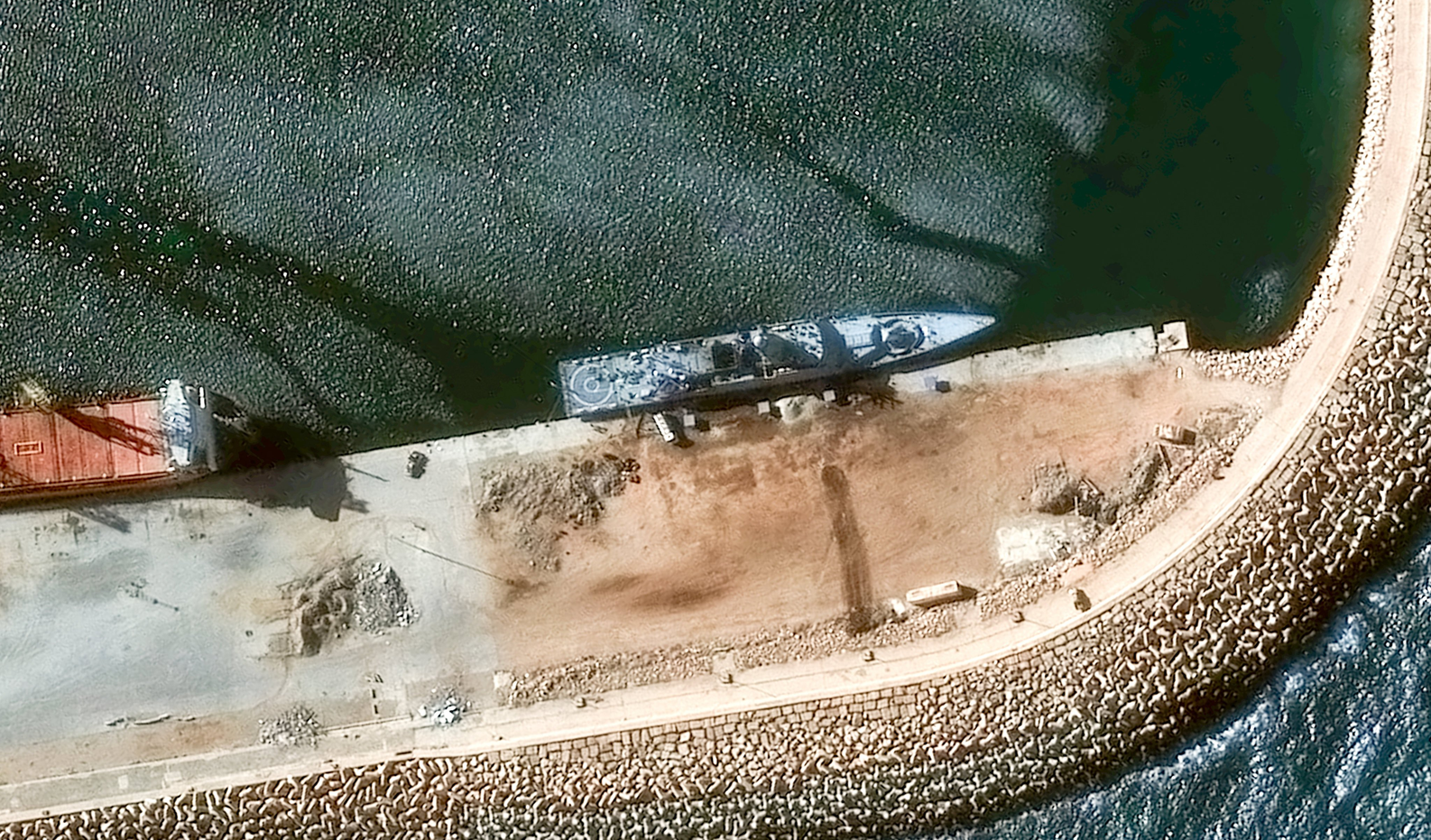
On the morning of 22 November 2026, the Russian corvette Merkury was struck by explosions at the naval base in Benghazi, eastern Libya, controlled by Khalifa Haftar’s administration. Later that evening, a naval drone struck a roll-on/roll-off, or ro-ro, vessel used by Moscow to transport military equipment off the same port. The next day, Ukrainian President Volodymyr Zelensky confirmed Ukraine’s involvement, calling the operation an exemplary Ukrainian mission.
Zelensky said seven Ukrainian-made naval drones used by the Security Service of Ukraine (SBU) sank the corvette, destroyed the Ka-27 helicopter on board and struck the cargo vessel Angara, which he said Russia had been using to move weapons.
It is the first reported attack on a Russian warship in Mediterranean . Previous efforts in this space have largely focused on commercial vessels and tankers that comprise Russia’s shadow fleet. The strike also highlighted the growing geographic spread of the conflict, having taken place some 1,500 miles from the front and much closer to Italian territory.
Russian naval asset lost in Benghazi
The Merkury is part of Project 20380, also called the Steregushchiy class. The corvette, which entered service in 2023, was part of Russia's Black Sea Fleet and regularly escorted Russian convoys, including trips with the Angara, the SBU said.
The eastern Libyan government said the vessel had stopped in Benghazi to take on fuel and supplies on its way back to Russia, under a military cooperation agreement with Moscow. But naval defense publication Naval News said the corvette had been in port for several days and was involved in escorting Russian military cargo vessels.
Satellite images from Vantor show the ship capsized alongside the quay with only the bow protruding from the water. British maritime security firm Ambrey said it was likely that some of the explosions at the naval base were caused by the detonation of ammunition stored on board the corvette.
There were no fatalities. Ten people, including Russian and Libyan nationals, were slightly injured, medical sources in Benghazi said.
Conflicting accounts over drone attack, cargo vessel
The precise scale of the Ukrainian operation is disputed. Two drones hit the corvette and at least four other drones were intercepted, two Libyan officers told the Associated Press. But military sources in eastern Libya said more than 20 drone boats had been destroyed by naval and air forces.
SBU claims the drones were launched from a mother ship.
The identity of the second vessel targeted is also unclear. Kyiv said it was the Russian ship Angara (IMO 9179842), which has been used to transport military equipment to Syria and Libya and is under international sanctions. However, early open-source assessments pointed to the involvement of its sister ship the Ascalon (IMO 9198226), which had sailed from Kaliningrad at the end of October.
Two Libyan military sources initially said the targeted ship was flying the Maltese flag. This identification may have been the result of confusion with a Maltese-flagged tanker operating in the same area, with its Automatic Identification System (AIS) transponder switched on.
The Libyan navy later rescued the crew of the cargo vessel. Several seafarers were taken to hospital and remain in stable condition, the Health Ministry said.
Libya caught between Ukrainian and Russian military interests
The eastern Libyan government, headed by Osama Hammad, condemned the incident as a serious violation of national sovereignty. It announced an investigation in coordination with Russian authorities and called on the United Nations to establish an international inquiry.
Saddam Haftar, deputy commander of the Libyan National Army, also called for investigations into the possible use of military facilities in western Libya to launch naval drones, as well as the alleged presence of Ukrainian personnel in the country.
The issue is particularly sensitive given previous allegations concerning Ukrainian military activity in Libya. In September, Tripoli rejected reports published by CNN and RFI suggesting that a Ukrainian drone detachment was operating from Misrata airbase.
The government of Abdul Hamid Dbeibah has reiterated its opposition to Libya becoming an arena for international confrontations. Meanwhile, the United Nations Support Mission in Libya (UNSMIL) has called for an immediate, independent and transparent investigation.
Russia's ambassador to Libya, Aydar Aganin, accused Kyiv of attempting to draw third countries into the conflict and warned that the attack would not go unanswered.
According to The New Arab, a team of Russian military specialists has arrived in Benghazi to investigate how the Ukrainian drones managed to penetrate the port's defences.
Italy has also expressed concern about the escalation. The country's Foreign Minister urged all parties to prevent the Mediterranean from becoming another theatre of war, highlighting the worrying proximity of the conflict to Italian territory.
More attacks on Russian-linked shipping
Already there have been a number of attacks against vessels associated with Russia in the waters between Libya, Malta and Crete, suggesting that the Benghazi operation is part of a wider pattern of maritime confrontation.
In December 2025, the SBU said it attacked the Omani-flagged tanker Qendil, which it said was connected to Russia’s shadow fleet. The vessel was hit between Greece and Libya and subsequently ran aground on the Turkish coast.
On March 3, 2026, off Malta, the Russian LNG carrier Arctic Metagaz was badly damaged by a naval drone while carrying 61,000 tons of liquefied natural gas. All 30 crew members were rescued, of whom two were burned. Moscow blamed Ukraine for the attack, saying it was launched from Libyan territory.
The Libyan authorities first said the vessel had sunk, but it remained afloat. The damaged vessel broke free on April 22 after its towing cable snapped about 120 nautical miles north of Benghazi and began drifting again.
In early September 2026, airborne drones struck the Russian military cargo ship Lady Mariia with explosive devices in waters between Crete and Libya.
More recently, a day ahead of the Benghazi attack, on Nov. 21, a drone hit the sanctioned Russian ro-ro vessel Sparta II in the Gulf of Finland. Its 16 crew were evacuated and Finland's armed forces judged Ukraine was likely to blame.
Taken together, these incidents show the widening geographic reach of attacks against Russian military logistics and shipping assets, from the Baltic Sea to the central Mediterranean.
Growing exposure for marine insurance and commercial shipping
The escalation also has direct consequences for the maritime insurance sector and global shipping operators.
Libya has for years been a high-risk area for the London insurance market’s Joint War Committee (JWC). Ships calling at ports in defined areas may be required to notify their insurers and pay additional war-risk premiums.
In September 2026, the JWC extended its Black Sea high-risk designation to virtually the entire basin. The Baltic Sea, however, has not yet been added to the committee’s list of areas.
Attacks have so far mainly targeted military vessels or sanctioned Russian ships engaged in military logistics. But the increasing number of such operations is worrisome for commercial shipping companies operating in the same maritime corridors or anchoring in the same areas as Russian vessels.
The risk doesn’t necessarily extend to ships connected to Russia. Commercial vessels operating near potential targets could also be at risk, regardless of their flag, ownership or cargo.
The latest developments underscore the need for shipowners, operators, charterers and insurers to review their operational risks in the Mediterranean. With military activity spreading to areas outside of traditional war zones, it is becoming harder to tell military logistics apart from ordinary commercial shipping routes.
Hence, the Benghazi attack is more than a direct confrontation between Ukrainian and Russian maritime forces. This is a further deterioration of maritime security in the Mediterranean, with possible consequences for regional stability, shipping operations and the cost of insuring ships sailing through waters that are increasingly exposed.
END OF REPORT