Maritime Nov 10, 2026
Cosco Shipping posts 80.73% profit surge as rising freight rates drive third-quarter growth
Performance is being led by trans-Pacific services and revenue gains on important international shipping routes are far outpacing cargo volume increases. The Chinese carrier also said it had stronger cash flow but warned geopolitical tensions and supply chain disruption remain big challenges for the maritime industry.
Freight revenue drives strong increase in profitability
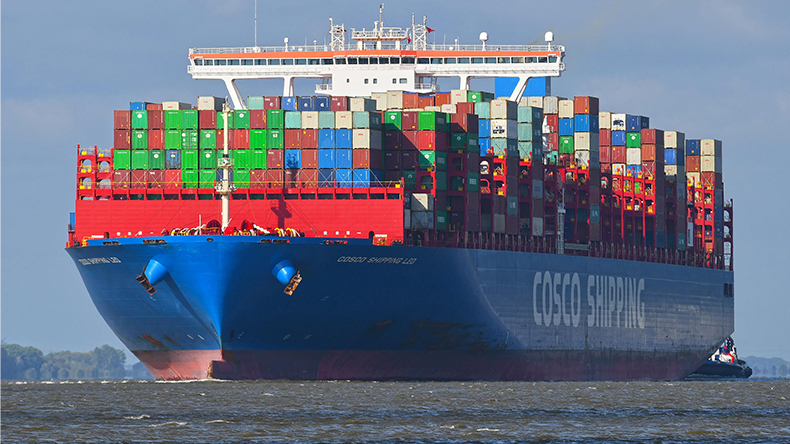
Cosco Shipping Holdings posted strong third quarter financial results in 2026, with profit attributable to shareholders jumping 80.73% year-on-year to around $2.58 billion The increase was driven by improved revenue generation on major international trade lanes, with freight revenues growing much faster than cargo volumes.
The Chinese shipping group, which is listed as 601919. SS, also saw its profit more than double from the prior quarter."
Operating revenue was approximately $11.34 billion, an increase of 29.39% compared to the same period a year ago. EBIT (earnings before interest and taxes) was even stronger, up 69.61% to $3.47 billion.
Profit attributable to shareholders $4.59 billion for the first nine months of 2026, up 13.22% compared with the same period of 2025.
Geopolitical disruption favors freight rate increases
Cosco’s earnings improved in a geopolitically-volatile maritime market. Extended voyages of vessels due to disruptions to established shipping routes have helped maintain elevated container freight rates and support carriers’ revenue growth.
Cosco’s third-quarter performance was mainly supported by trans-Pacific operations.
These services saw revenue growth of 61.20 per cent year on year, well ahead of the 12.98 per cent growth in volumes of cargo. The difference shows how developments in freight pricing can impact financial results more than just the growth of transported volumes.
The Asia-Europe trade also had a positive outcome. Revenue on these routes grew 25.74% and cargo volumes increased 14.64%.
Cosco’s container-shipping unit moved 7.21 million twenty-foot equivalent units (TEUs) during the quarter, up 4.46% from a year ago. The business had revenue of about $10.98 billion, up 30.35% from a year earlier.
International business supported by changes in network
In addition to improving its financial results, Cosco has been consistently adjusting its shipping network to the changing market conditions.
The company restructured capacity on routes to the U.S. Southwest and Asia-Europe trade, and enhanced coordination between its maritime transport and port operations.
It also expanded its network in Latin America, Africa and Southeast Asia, thereby increasing the group's service coverage to boost its international presence and diversify its operations.
Financial indicators also indicated better cash generation from operations. Operating cash flow was approximately $7.18 billion for the first nine months of 2026, an increase of 19.83% year-on-year.
Another sign of Cosco’s financial health was its debt-to-asset ratio of 41.36% at the end of September.
Terminal operations growth is more moderate
Cosco’s port terminal business also expanded in the third quarter, but the results were less robust than in the container-shipping segment.
Terminal throughput rose 2.38% year on year to 8.76 million TEUs. The business generated revenue of about $496 million, an increase of 7.44 percent.
The numbers show that port activity is still rising, but at a much slower rate than revenue growth in the group’s core shipping business.
Shipping industry still worried over Middle East tensions
“While profitability has improved, the international shipping market continues to face significant operational and geopolitical uncertainties,” Cosco said.
Geopolitical conflicts, evolving global trade patterns, port congestion and supply chain disruptions are factors the company cited as likely to affect market conditions in the near-term.
Particular importance was attached to developments in the Middle East, given their possible effect on the balance between shipping capacity and demand throughout the industry.
However, Cosco expects global container-shipping demand to be relatively resilient. International container transport is likely to continue to be supported by trade flows between countries in the Global South and by increasing exchanges within regional markets.
Higher carrier earnings put more pressure on cargo owners
Cosco’s third-quarter results show how disruptions to maritime trade routes can create favorable financial conditions for shipping companies, especially when longer voyages and changes in available capacity support freight rates.
But the benefits for carriers may result in greater financial pressure for businesses that depend on international freight services. Importers, exporters and others involved in worldwide supply chains are dealing with higher transportation costs and uncertainty about shipping schedules.
The company’s latest performance thus highlights the diverging impact of the current maritime environment: stronger profitability for shipping operators, along with ongoing cost and operational challenges for cargo owners.
Why it matters: The 80.73% profit increase at Cosco is a stark indicator of how much freight rate fluctuations and geopolitical disruptions can impact carriers' earnings and the potential cost consequences for companies dependent on international container shipping.
END OF REPORT