




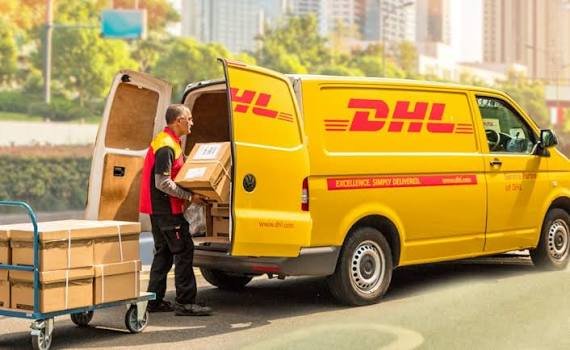
DHL Celebrates 35 Years in Poland; From One Express Operation to a Nationwide Presence Across All Five Business Divisions The group now has close to 10,000 people working in the country, making Poland its largest market in the Central and Eastern Europe (CEE) and one of its ten biggest employment markets globally.
DHL came to Poland in 1991, at a time of great political, technological and economic change. Tim Berners-Lee opened the World Wide Web to the world at CERN the same year, Sony commercially launched the first lithium-ion battery, the Soviet Union was breaking apart, and the Maastricht Treaty was laying the foundations for the European Union.
Equally important, Poland underwent an economic transformation over the ensuing three decades. Its gross domestic product (GDP) was €923 billion in 2025, making it the sixth largest economy in the European Union and the largest in Central and Eastern Europe. Since 2005, the country’s GDP per capita has doubled, reflecting the pace of its development over the past two decades.
Air freight has been identified by Poland’s Ministry of Economic Development and Technology as an important contributor to the country’s service exports. The sector continued its expansion in 2025, showing 7% growth year-on-year.
From an express operation to five divisions of DHL
DHL’s Polish roots date back to the opening of its Warsaw offices and the inclusion of the country in the company’s international air network. Poland was rapidly opening its economy to foreign investment and international commerce, creating strong demand for reliable cross-border express services.
The development of DHL since then has followed the course of the country’s economic development. All five of the group’s business divisions are now established in Poland, including DHL eCommerce and DHL Express.
DHL Express Poland employs around 1,000 people, and has 16 service centers, supported by 3,149 service points and four dedicated aircraft. The group’s five divisions in Poland now employ almost 10,000 people.
The company also connects Polish companies with more than 200 countries and territories worldwide.
DHL Express Country Managing Director Poland, Tomasz Burás, said that the growing pool of specialist talent in the country is making it an attractive place for international companies to penetrate. He cited the example of a medical device manufacturer choosing Lublin, Poland’s ninth largest city, partly because of the proximity of a strong pool of highly qualified biomedical and bioscience graduates in the surrounding area.
€180m investment in logistics near Poznań
A major milestone in DHL’s expansion was the 2024 opening of its €180 million International Logistics Center in Robakowo near Poznań.
DHL calls the facility one of the largest and most advanced logistics hubs in Europe. It can sort up to 45,000 parcels an hour and handle as many as one million parcels a day at peak times.
The investment reflects both the scale of DHL’s growth in Poland and the country’s rising importance within European supply chains. The Robakowo center is situated along the major European transport corridors, which enhances Poland’s role in the development of manufacturing and logistics networks.
Poland has also become an increasingly attractive destination for offshoring / nearshoring. As companies grow and look for places that can support their fast-growing operations, they are turning more and more to the country, Burás said.
DHL prepares another big investment in Katowice
DHL is expanding in Poland. This year DHL Express announced plans for a major new cargo facility at Katowice Airport.
The project aims to enhance export connectivity from one of Poland’s most industrialized areas, while further strengthening the country’s role as a European manufacturing and trading center.
The company’s ongoing investment in infrastructure, technology and operational capacity shows that it expects further growth potential in the Polish market.
Digitalization is also gaining more and more importance for DHL’s approach. It is leveraging data and integrated supply chain processes to better move shipments, complete documentation before aircraft departs and start processing information while goods are in transit.
Its aim is to shorten processing times and minimize delays for customers, while giving Polish businesses a more efficient link to international markets.