



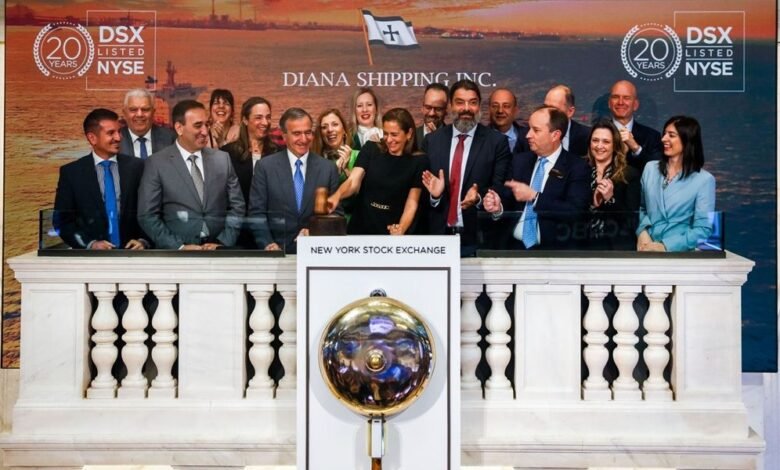
The dispute between Diana Shipping and Genco Shipping & Trading is becoming increasingly public and far more direct, with both companies now actively trying to win over shareholders ahead of an important proxy vote.
Genco, based in New York, has pushed back hard against Diana’s arguments, accusing it of spreading “false and misleading” claims in its attempt to gain influence over the company. Diana, meanwhile, has stepped up its own campaign by launching a dedicated website focused on what it calls unlocking “immediate value” at Genco.
At the heart of Diana’s push is the belief that changes in governance and capital allocation could improve Genco’s direction and boost shareholder returns. The company, led by Semiramis Paliou, is also framing its involvement as part of a broader effort to improve long-term performance in the dry bulk sector.
Genco has responded with a detailed “myths and facts” breakdown, addressing Diana’s criticisms point by point. It rejects the idea that it has underperformed, saying its total shareholder return has actually beaten both Diana and the wider dry bulk market over one-, three- and five-year periods.
Valuation is another major sticking point. Diana argues that Genco is trading below its net asset value, while Genco says those figures are based on outdated assumptions. It points to analyst estimates placing net asset value between roughly $26.50 and $26.80 per share, higher than the $23.50 level cited by Diana.
The tone has also hardened. Genco has accused Diana of trying to gain control without offering a fair takeover premium, and has questioned its rival’s credibility, saying there is “no basis for trusting Diana” and pointing to past deals it believes did not fully protect minority shareholders.
Governance is another key battleground. Genco is challenging Diana’s proposed board nominees, saying they lack the independence and experience needed for effective oversight. It has also raised concerns about Diana’s own governance history and some nominees’ previous industry ties.
Despite this, Diana is continuing its campaign. It argues that combining both companies could create a stronger, more efficient dry bulk platform with meaningful scale benefits. Over time, it has also gradually increased its stake in Genco, reinforcing its position as an active investor.
What started as a disagreement over strategy has now clearly turned into a full proxy fight, with both sides communicating directly to shareholders and trying to shape the narrative ahead of the vote.
The annual general meeting on June 18 will ultimately decide the outcome. For both companies, it will not just be about board seats, but about the direction each believes the business should take going forward.