



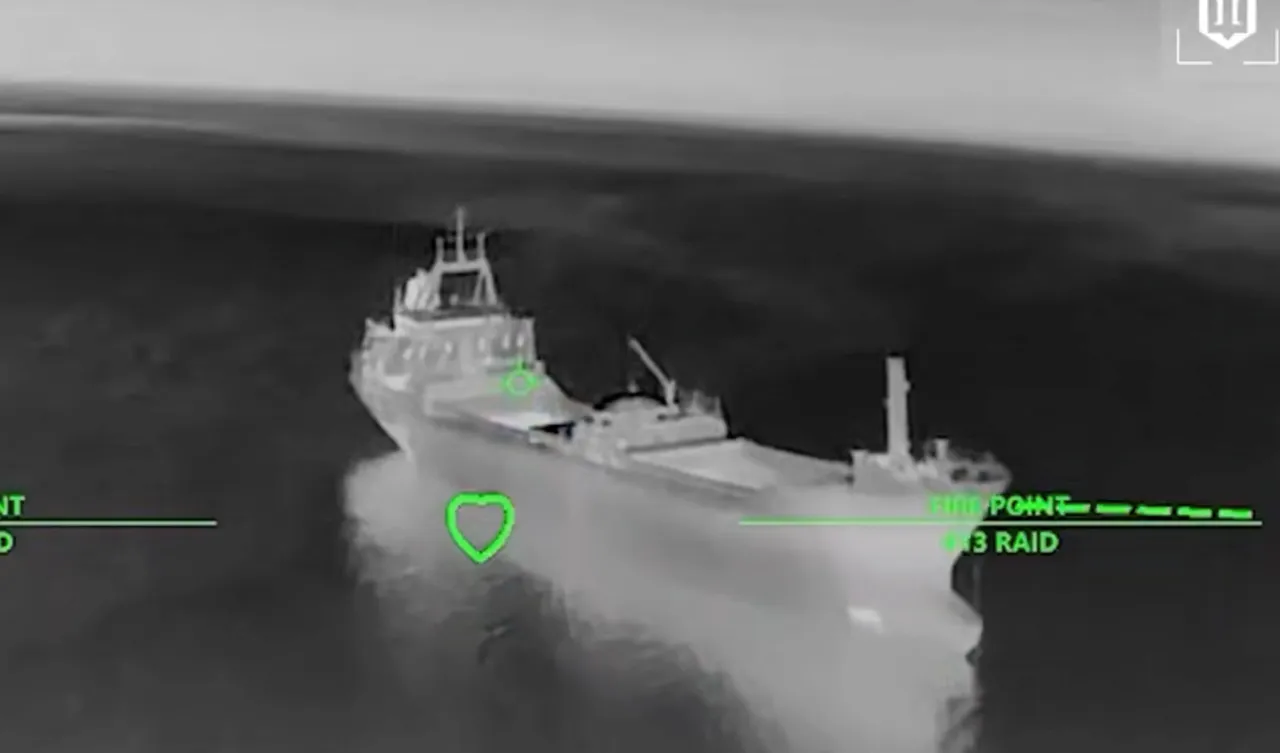
The security environment in the Black Sea is expected to remain challenging through the rest of 2026, with maritime intelligence company Ambrey assessing that the conditions that prompted the Joint War Committee (JWC) to expand its Listed Area are unlikely to ease in the near term.
On 16 September, the JWC expanded the Black Sea Listed Area to cover the entire Black Sea, excluding the territorial waters of Bulgaria, Georgia, Romania and Türkiye.
Ambrey said the decision followed the escalation in attacks on shipping rather than anticipating a future deterioration in risk.
According to Ambrey senior analyst Tomas Alexa, 45 merchant vessels were struck outside the previously listed area during the 12 months to 21 September 2026. That compares with no such strikes during the preceding 12-month period. Of those 45 incidents, 33 occurred during the last three months alone.
The situation remained deadly as the assessment was released.
On 23 September, maritime security firm Vanguard Tech reported an overnight Russian attack on an Antigua and Barbuda-flagged cargo vessel approaching Ukraine’s Port of Odesa. The attack killed the vessel’s Ukrainian master and caused a fire onboard.
Russia’s Ministry of Defence made an unverified claim that the vessel was carrying military cargo. Such accusations have frequently been used by both Russia and Ukraine to justify attacks against merchant vessels.
Attacks moving further offshore
The scale of the threat has changed significantly as attacks have expanded beyond the areas previously considered higher risk.
Ambrey reported that strikes against ports increased from 21 to 139 quarter-on-quarter. With neither side accepting a maritime truce, the company assesses that the open Black Sea is highly likely to remain a contested operating environment for the foreseeable future.
The attacks have also moved south and further offshore.
Up to September 2025, only five vessels had been recorded as being struck outside the former Listed Area boundary. Four of those incidents involved drifting sea mines.
By the third quarter of 2026, attacks beyond the former boundary had become routine, with 29 incidents recorded during the quarter to date.
Ambrey said changes in vessel drifting locations and approaches to Russian territory, combined with the growing number of attacks, had contributed to the shift. With fewer targets remaining inside the former Listed Area, more incidents have occurred beyond its previous limits.
Threat now extends across vessel types
The risk is also no longer concentrated on tankers.
Ukraine’s intensive campaign of attacks against ships began in July 2026 with tankers as the initial focus. Ambrey said the threat has since expanded to bulk carriers, general cargo vessels, container ships and ro-ro vessels.
The company also warned that the criteria used to identify potential targets could affect a much wider group of ships than their destination or flag alone would suggest.
“Ambrey assesses that targeting is driven by sanction status, ownership, trading history, and sanctions exposure, not solely by the declared destination, flag or ownership, which widens the population of vessels that could be affected.”
UAVs and USVs become the dominant floating hazard
Unexploded ordnance (UXO) is adding another layer of risk for vessels operating in the region.
The increasing frequency of attacks means more failed munitions and intercepted weapons are being discovered in the Black Sea. During the first four years of the Russia-Ukraine war, UXO discoveries ranged between 14 and 20 per year.
In the fifth year, however, 53 UXOs have been discovered to date.
The nature of the floating hazard has also changed. Ambrey said unmanned aerial vehicles (UAVs) and unmanned surface vessels (USVs) have become the dominant threat, while sea mines now account for only two of the 53 UXOs discovered this year.
That contrasts sharply with the first year of the war, when sea mines accounted for 15 of the 17 UXOs identified.
Territorial exclusions do not remove the risk
Although the JWC’s expanded Listed Area excludes the territorial waters of the Black Sea countries adjoining the region, with the exception of Russia and Ukraine, Ambrey stressed that those exclusions should not be interpreted as safe zones.
The Romanian, Bulgarian and Turkish coasts continue to record the highest concentration of UXO discoveries.
Ambrey also noted that at least one tanker was struck approximately 11.6 nautical miles north of the Bosphorus, underlining that the maritime threat extends well beyond the newly defined Listed Area itself.
“The exclusion of adjacent territorial waters should not be read as an absence of risk,” said Ambrey.