




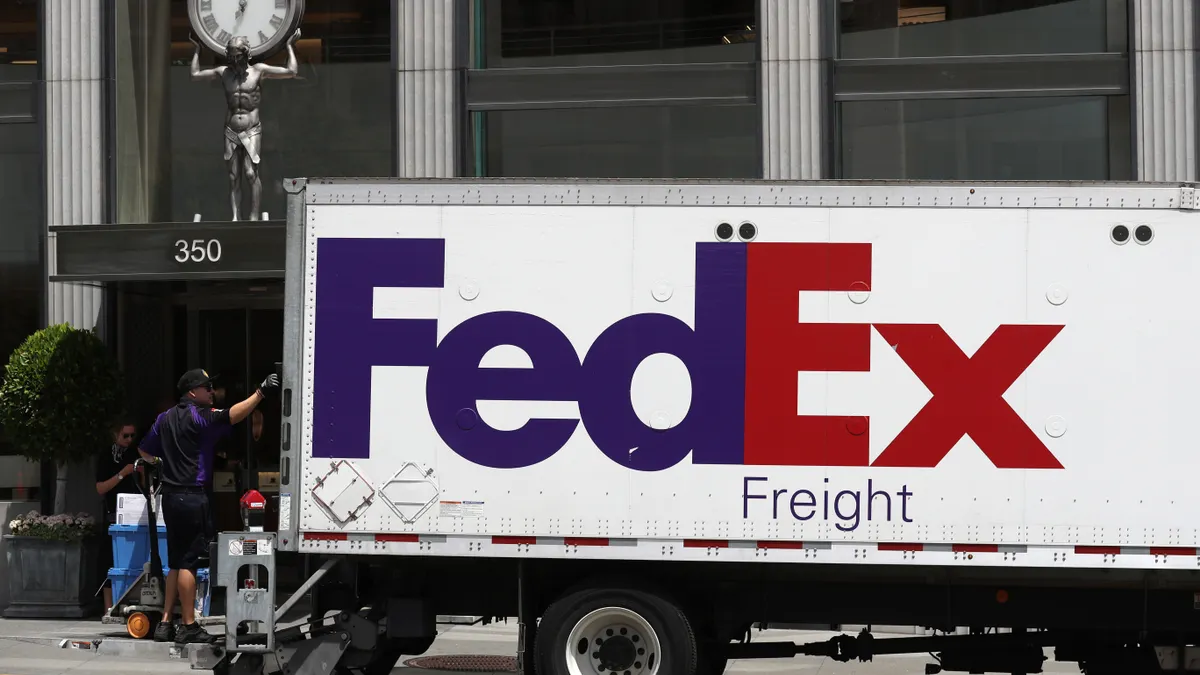
FedEx Freight says its scale, network density and ability to reach nearly every U.S. ZIP code will be central to its growth strategy once it becomes a standalone public company in June.
During an investor day in New York last week, executives set out the carrier’s plan to use its established footprint and stronger customer tools to drive profit and revenue growth after the spin-off from FedEx on June 1.
Mike Lyons, chief specialised services and commercial officer, said the company is targeting higher-growth customer segments that align closely with its service offering. These include small and medium-sized businesses, healthcare shipments requiring expedited delivery, grocery logistics and technology markets, particularly those tied to cloud infrastructure and artificial intelligence build-outs.
John Smith, the incoming president and chief executive of FedEx Freight, said the carrier’s North American network is built for scale and precision and is capable of serving companies of different sizes across a broad range of industries.
The business currently operates more than 365 locations, 26,000 doors and 30,000 vehicles, assets executives said give it immediate strength as it enters life as a standalone company.
Lyons said FedEx Freight will continue deepening relationships with long-standing customers, especially those that have worked with the brand for more than a decade, but it also intends to pursue new business aggressively. A dedicated sales force of more than 500 people will support that effort.
The company is entering a competitive LTL landscape in which rivals have also been expanding their networks in preparation for an eventual market recovery. AAA Cooper Transportation extended its reach through a major acquisition in 2024, while Estes Express Lines, Saia and XPO have all strengthened their footprints through Yellow Corp.-related opportunities and other expansions.
FedEx Freight believes it can stand out not only through size, but also through easier customer interaction. Lyons said one goal is to make it simpler to do business with FedEx Freight, while chief operating officer Clint McCoy pointed to customer-facing technology that will deliver more detailed shipment visibility and better route optimisation.
Still, executives were clear that scale is the company’s core advantage. In a statement issued Wednesday, FedEx Freight said it expects medium-term revenue growth of between 4% and 6%.
Smith said scale matters in the LTL segment because a broader network means fewer shipment touchpoints, while modal flexibility — including intermodal options — can help reduce costs and improve service resilience.
He said the company is a network-driven business with durable competitive advantages and that it is only at the beginning of its next growth chapter.







