



As interest in wind-assisted propulsion continues to accelerate across the maritime sector, UK-based clean technology company GT Wings has introduced a new performance assessment tool designed to help shipowners better evaluate the commercial value of wind propulsion systems before installation.
The company announced that the new modelling framework, developed in partnership with maritime simulation specialist Blue Wasp Marine, has now received independent verification from classification society RINA. The platform is intended to provide operators with a faster and more transparent way to estimate potential fuel savings, emissions reductions and regulatory compliance benefits linked to GT Wings’ AirWing technology.
The assessment tool is built on Blue Wasp Marine’s Pelican Suite™ software and uses a four-degrees-of-freedom modelling approach to simulate vessel behaviour across different routes, operational profiles and sail configurations. According to GT Wings, the platform allows owners to carry out detailed early-stage performance studies while improving confidence in investment decisions tied to wind-assisted propulsion.
RINA confirmed that the methodology aligns with recognised industry standards and guidelines, including IMO and ITTC frameworks related to wind-powered shipping technologies. The classification society issued an Approval in Principle validating the robustness and credibility of the assessment process.
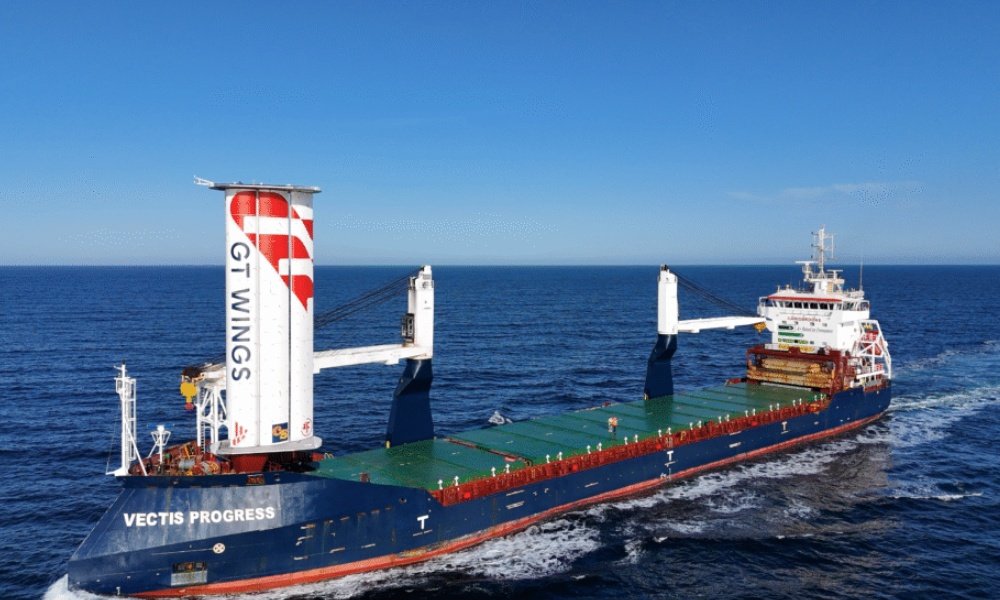
GT Wings has been developing its AirWing Jet Sail system as a compact wind propulsion solution that combines controlled suction and blowing technology to enhance aerodynamic performance while limiting deck space usage onboard vessels.
The company has already installed the AirWing system aboard Carisbrooke Shipping’s MV Vectis Progress and has also secured additional commercial orders from Grieg Maritime Group as momentum around wind-assist technologies continues to build.
“Our Jet Sail technology represents a fundamentally new approach to wind propulsion,” said Jonny Gambell, sales and strategy director at GT Wings. “It’s vital that early performance assessments are credible and transparent.”
Blue Wasp Marine chief executive Giovanni Bordogna described the RINA verification as an important milestone for both the company’s modelling tools and the wider wind propulsion segment, which is gaining traction as shipowners look for practical ways to improve efficiency and reduce emissions.
Patrizio Di Francesco from RINA added that the organisation was pleased to support the development of what it described as a reliable and robust assessment framework for emerging wind propulsion technologies.
The launch comes at a time when more shipping companies are exploring wind-assisted propulsion solutions to reduce fuel consumption, lower emissions and improve vessel efficiency amid tightening environmental regulations and growing pressure to decarbonise operations. Interest in the sector is also expected to intensify further during next week’s Posidonia exhibition in Athens, where numerous wind technology companies are set to showcase their latest innovations.