World Nov 17, 2026
Foton Plans 5,000 Ultra-Fast Charging Stations to Accelerate Electric Truck Adoption in China
The Chinese manufacturer is bringing together vehicle production, battery technology and energy infrastructure in an ambitious charging programme spanning 368 cities. The initiative involves major industrial partners and targets charging times as short as eight minutes, while Foton also plans to expand its global energy network beyond China by 2027.
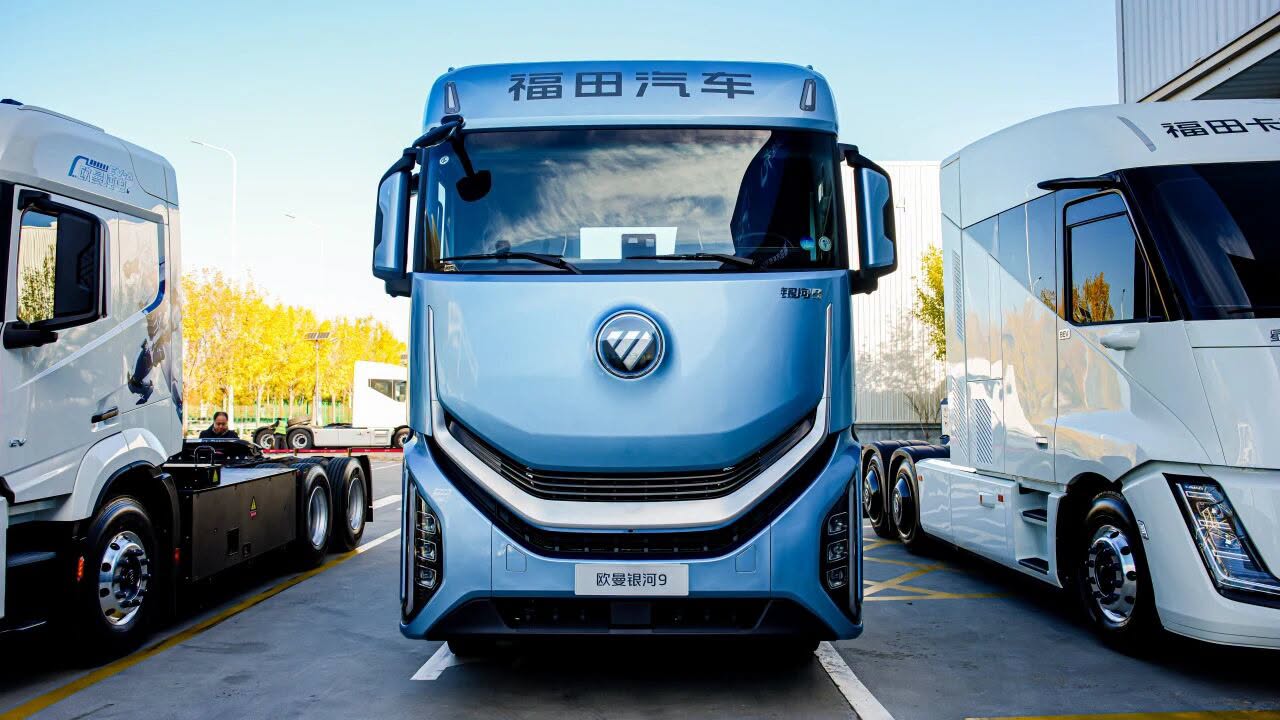
China is strengthening its position in electric road transport, not only through the growing number of electric commercial vehicles on its roads but also through the rapid development of charging infrastructure. Foton is taking another step in this direction with an ambitious ultra-fast charging programme designed specifically for commercial vehicles, combining truck technology, battery systems, charging stations and intelligent energy management.
Announced in Beijing on November 6, 2026, the initiative sets out plans to establish a network of 5,000 high-performance charging stations with standardised capabilities. The project brings together several major industrial partners, including CATL, Sunwoda, Teld and Hunan Jingneng, under a dedicated industry alliance.
The strategy reflects a broader effort to address one of the main challenges facing electric freight transport: reducing charging times while ensuring that infrastructure can support the operational requirements of commercial fleets.
Charging a truck from 20% to 80% in just eight minutes
Foton's ultra-fast charging technology is being developed for different categories of commercial vehicles, with performance specifications varying according to the vehicle and battery configuration.
For its lightweight electric Aumark Z, built on an 800-volt platform, the manufacturer reports a peak charging power of 1.05 MW and a maximum charging rate of 8C. Under the stated conditions, the battery can be charged from 20% to 80% in just eight minutes.
The technology is also being extended to medium-duty commercial vehicles, including the Auman Galaxus and Cavan Beacon models. For these vehicles, Foton indicates that charging from 20% to 80% takes approximately 18 minutes. The system can also restore enough energy for an additional 100 kilometres of driving in six minutes.
The charging architecture operates at 800 V and supports compatibility with systems of up to 1,000 V. At system level, maximum power reaches 1.5 MW, using two connectors rated at 800 A each, providing a combined current capacity of 1,600 A.
Foton also reports a battery lifespan exceeding 6,500 charging cycles, an important specification for commercial operators seeking to maximise vehicle utilisation and control long-term operating costs.
The company's progress in high-power charging is not entirely new. At IAA Transportation 2026 in Hanover, Foton had already showcased a 1.44 MW charging solution for the heavy-duty Cavan Beacon, with a reported charging time of 18 minutes and the ability to recover 100 kilometres of range in six minutes.
A national network spanning 368 Chinese cities
The scale of the infrastructure programme is central to Foton’s strategy beyond vehicle technology.
It plans to build 5,000 ultra-fast charging stations in 368 Chinese cities. Priority will be given to major distribution centres, intercity logistics hubs and underserved sections of the main freight transport corridors.
This geographic strategy is designed to enhance the availability of high-power charging where commercial vehicles need it most – on routes linking industrial hubs, logistics facilities, and distribution networks.
The stations will be powered from a 10 kV medium voltage source and will offer a direct current output of up to 1,000 V. They will also build out their energy infrastructure to incorporate renewable generation and more advanced electricity management systems.
In particular, facilities may combine solar photovoltaic installations, battery storage and smart load management. These capabilities could enable individual sites to operate as microgrids, providing additional grid services and supporting vehicle-to-grid (V2G) applications.
That model would also put charging stations into a larger energy management network, not just a place for trucks to get electricity.
A partnership model that goes beyond Foton-owned stations
But the 5,000-station target doesn't mean Foton wants to run every facility itself.
Instead, the manufacturer is using an investment model based on partnerships with several levels of participation. The first phase is direct investment and construction of demonstration sites, which provide the technical and operational basis for the network.
The company will then grow through joint investment agreements, based on shared revenues. Another possibility is to provide charging equipment and integrated technical solutions to independent third-party operators who will invest in and operate their own facilities.
This structure enables Foton to expand the infrastructure network without the need to take direct ownership and operational responsibility of each charging location. It also opens the door for other companies to participate in the development of commercial vehicle charging services.
Foton targets overseas expansion by 2027
The company is not just targeting the domestic Chinese market.
By 2027, Foton will build over 3,000 international energy replenishment units through its energy ecosystem. The expansion plans cover a number of strategic regions, including the Asia-Pacific, Latin America, Africa and Europe.
The international focus is part of a broader Foton push to build an integrated energy infrastructure serving commercial transport markets beyond China.
By combining vehicle manufacturing, battery partnerships, high-power charging equipment and energy management solutions, the company is positioning infrastructure development as the foundation of its electric commercial vehicles strategy.
The planned Chinese network of 5,000 ultra-fast charging stations, coupled with the international goal of more than 3,000 energy replenishment units, underscores the increasing importance of charging capacity in the transition to electrified freight transport.
END OF REPORT