



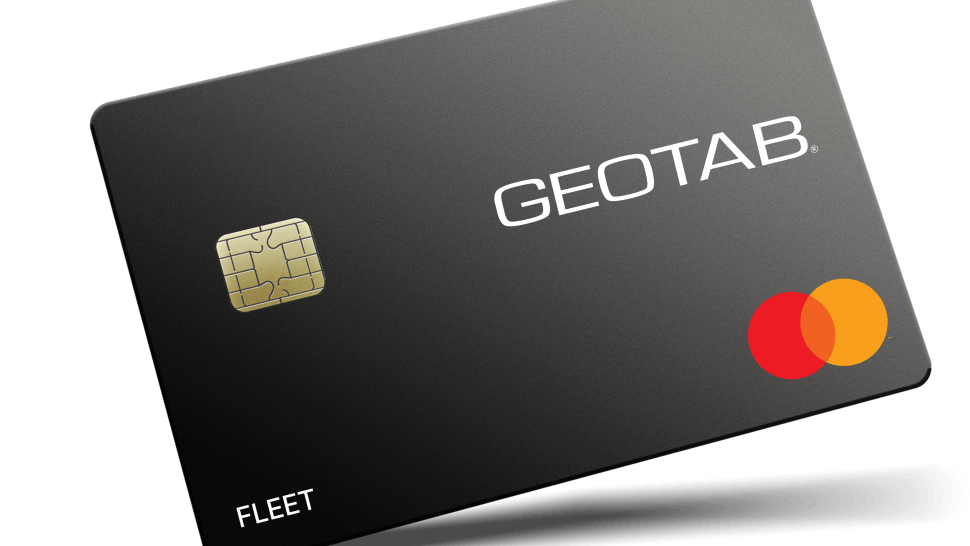
Geotab is moving deeper into fuel management with the launch of a new fleet card designed to connect vehicle telematics with fuel payments, giving trucking fleets more control over fuel spending while helping prevent unauthorized purchases.
The telematics provider announced Thursday that its Geotab Fleet Card, developed in partnership with transportation payment company AtoB, links vehicle data to AtoB’s payment platform and fuel discount network.
The system uses real-time information, including a vehicle’s location and fuel level, to determine whether a fuel transaction should be approved. A purchase can be declined when the truck is not physically at the fueling location or when the vehicle’s tank does not have enough available capacity to support the amount being purchased.
Geotab is not alone in bringing telematics and payment controls together. Other fleet technology providers have introduced similar solutions aimed at reducing fuel fraud and improving spending oversight.
WEX launched SecureFuel in July. The system combines fleet-card transaction information with real-time vehicle data to identify potentially unauthorized fuel purchases and block them before approval. WEX is a Geotab Premier Partner, and customers already using Geotab solutions can connect their vehicle data to SecureFuel.
Samsara followed with its Fuel Command Center in August. The platform brings together fuel spending, fueling locations, driver behavior and card controls. Through an integration with Coast, Samsara can use vehicle-location information to stop fuel-card transactions when the assigned vehicle is not at the fueling site.
The timing of Geotab’s launch comes as diesel prices remain sharply above year-ago levels in the United States. The national average price for on-highway diesel reached $6.382 per gallon for the week ending Sept. 28, according to the U.S. Energy Information Administration. That represented an increase of about 70% from the same week a year earlier, when the national average stood at $3.754 per gallon.
Price differences between nearby fueling locations are also significant, according to Geotab’s analysis. The company examined 419,000 diesel fill-ups across 660 U.S. fleets and found that two trucks fueling in the same town could pay as much as 77 cents per gallon more or less for diesel depending on the station.
On a 75-gallon fill-up, a 77-cent price gap would translate into roughly $58.
The opportunity to reduce those costs appears especially relevant for smaller fleets. Among fleets operating fewer than 100 vehicles, drivers chose the lower-priced fueling option only about 17% of the time, Geotab said.
According to the company’s calculations, consistently selecting the lower-priced station could save approximately $24 per fill-up, equivalent to about 32 cents per gallon, and around $4,700 per truck each year. The annual estimate assumes approximately 200 fill-ups per vehicle.
Geotab said the $24 savings figure was rounded from $23.55 per fill-up, which would result in $4,710 over 200 fill-ups.
“With fuel costs rising across the U.S., fleets need practical ways to reduce what they spend at the pump,” Steven Berube, Geotab’s vice president of sales, said in a statement.
The Fleet Card is designed to keep drivers from using the card outside authorized conditions. It remains locked until the driver unlocks it through the Geotab Drive app while the vehicle is parked at the merchant location.
The same app allows drivers to identify nearby fueling locations and compare fuel prices. When a transaction is initiated, the system verifies several data points, including the vehicle’s location, the merchant’s GPS coordinates and the vehicle’s current fuel level.
For eligible accounts, Geotab said transactions verified through telematics are covered by a fraud guarantee of up to $250,000. The guarantee is provided by AtoB.
Geotab also estimates the potential financial impact of fuel fraud on larger trucking operations. In a hypothetical 500-vehicle Class 8 fleet spending $31.3 million on fuel each year, the company estimated that unauthorized fuel purchases could account for approximately $2.19 million in annual costs.
That projection is based on annual fuel consumption of about 9,752 gallons per Class 8 vehicle, a diesel price of $6.41 per gallon using the AAA-reported national average, and an assumed annual fuel-fraud rate of approximately 7%.
Geotab emphasized that the 7% figure is an assumption used for the estimate rather than a measured fraud rate. Its $6.41 fuel-price assumption is also slightly above the $6.382-per-gallon national average reported by the EIA for the week cited above.
The Geotab Fleet Card is not limited to fuel purchases. Fleets can also use it for other road-related expenses, including maintenance, tolls, parking, towing and roadside assistance.
Companies can establish spending controls according to dollar amount, time frame, location and merchant category, giving fleet managers additional flexibility over how and where cards can be used.
AtoB and its issuing bank partners are responsible for issuing and operating the card. AtoB provides the payment platform, fuel discount network, spending controls and fraud guarantee, while Geotab connects those capabilities to its telematics platform.
The Fleet Card is currently available to eligible fleets in the United States.
Why this matters
Fuel remains one of the largest operating costs for trucking fleets, making even relatively small differences in diesel prices significant at scale. Geotab’s analysis highlights how much prices can vary between fueling locations in the same market, while the new card combines payment activity with vehicle data to give fleets greater visibility into where, when and how fuel purchases are made.
That connection also gives fleet operators another tool for identifying unusual transactions and reducing the risk of unauthorized fuel spending.