




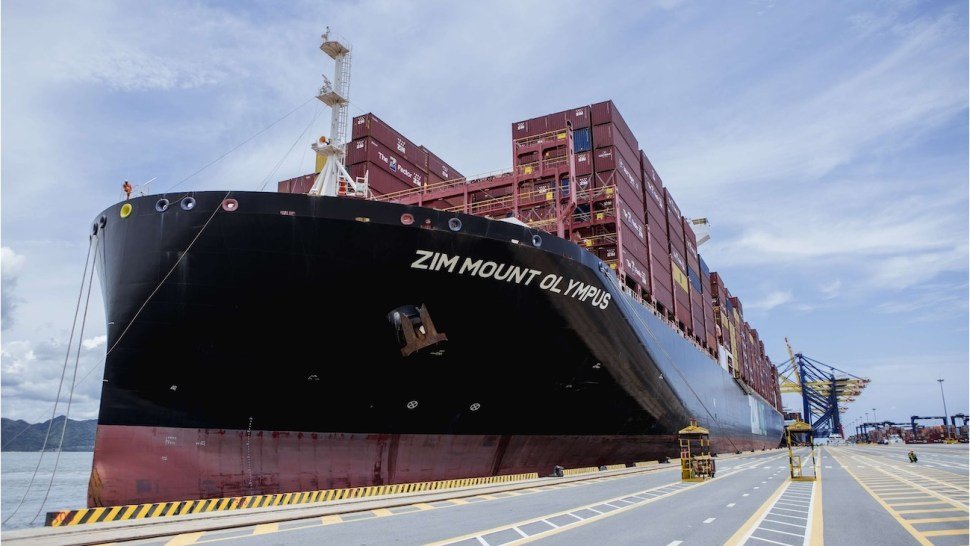
Hapag-Lloyd’s planned $4.2 billion acquisition of Zim Integrated Shipping Services has hit another regulatory hurdle in Israel, where the Government Companies Authority has closed its examination of the transaction’s original structure and determined that the substantially revised proposal now being prepared by the companies must go through a fresh review.
The German container carrier and its Israeli partner are still working toward a closing by late 2026. But tougher maritime-security requirements from the Israeli government, together with a new challenge from Zim shareholders, have introduced additional uncertainty into the deal.
Hapag-Lloyd Chief Executive Rolf Habben Jansen said Oct. 2 that the objections raised by Israel’s Finance Ministry and the Government Companies Authority applied to the original proposal and did not reflect the changes now being developed with Israeli private-equity specialist FIMI.
The carrier said the revised transaction package will be formally submitted to Israeli authorities and explained to them in the coming weeks.
“The positions presented … relate to our original proposal and do not take into account the significant improvements that have since been made to the proposed structure,” Habben Jansen said. According to the CEO, Hapag-Lloyd believes the revised arrangement responds to Israel’s national-security concerns and could “pave the way for approval.”
Security safeguards drive revisions
The acquisition agreement announced in February provides for Hapag-Lloyd, based in Germany, to pay $35 in cash for each Zim (NYSE: ZIM) share. The transaction values Zim’s equity at roughly $4.2 billion.
Zim shareholders have already approved the merger. Completion, however, remains dependent on a series of government and regulatory approvals, including authorization connected to Israel’s “golden share.”
From a fleet and capacity perspective, the transaction would significantly increase Hapag-Lloyd’s position in container shipping. The German carrier, currently ranked fifth globally by Alphaliner, would see its ocean container capacity rise from about 2.4 million container units to 3.1 million. That increase, while substantial, would not be enough to move Hapag-Lloyd into the industry’s top four carriers.
Under the original structure, Hapag-Lloyd would take control of Zim’s international operations, while FIMI would create a separate Israeli liner company known as New Zim or Zim Israel.
That successor company would take on the obligations tied to the golden share, a framework designed to safeguard Israel’s access to shipping capacity and strategically important maritime services during emergencies.
The revised package being developed by Hapag-Lloyd and FIMI is intended to reinforce the Israeli business and provide additional protections for the country.
Among the measures disclosed publicly are an additional shipping service connecting Israel with Asia, a new and modern fleet for Zim Israel, and enhanced safeguards covering strategic cargo as well as Israel’s maritime independence.
The revised structure may also face tighter foreign-ownership thresholds. Reports indicate that government oversight and golden-share protections could be triggered once foreign ownership reaches 10%, compared with the previous 24% threshold.
Zim Israel would also receive 16 vessels under the revised arrangement, exceeding the 11 ships required under the existing golden-share framework.
Fresh review creates another hurdle while shareholders raise questions
Because the Israeli regulator has ended its review of the original structure, the revised deal cannot simply return to the point reached under the earlier assessment.
Instead, the material changes require a new application and another regulatory examination. That makes the Israeli approval process the central remaining obstacle to completing the takeover.
At the same time, the transaction is facing a separate governance question.
A shareholder group holding more than 10% of Zim’s shares has called for another shareholder vote if the revised arrangement is considered materially different from the deal approved earlier this year.
The group maintains that a substantially changed structure should not be authorized solely by the board and that investors should have another opportunity to