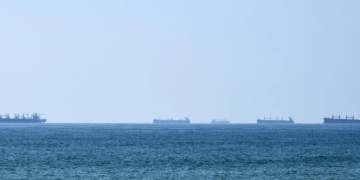




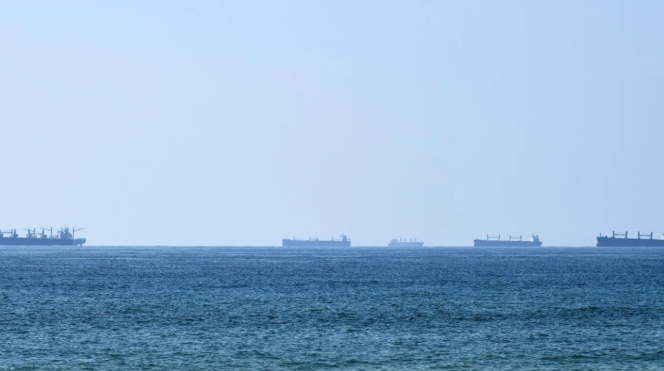
The International Maritime Organization is planning a major evacuation of thousands of seafarers stuck in the Persian Gulf after months of regional unrest and disrupted shipping traffic.
IMO Secretary-General Arsenio Dominguez announced the initiative while paying tribute to the seafarers who lost their lives during the crisis. According to the organization, 14 crew members died as a result of the conflict, while approximately 11,000 seafarers remain trapped in Gulf waters after enduring more than 115 days of uncertainty and operational disruption.
The announcement follows the recent peace agreement reached between the United States and Iran, a development that Dominguez described as a crucial step toward restoring maritime security and normalizing navigation through one of the world’s most strategically important shipping corridors.
“After months of hardship and distress for thousands of innocent seafarers, and negative impact for the whole world, I welcome with deep satisfaction the peace agreement concluded between the United States and Iran, marking a decisive step towards restoring maritime security and bringing to an end the unacceptable attacks against civilian shipping,” Dominguez said.
The Secretary-General confirmed that the evacuation plan will be carried out in close cooperation with Iran, Oman, other coastal states in the region, the United States and representatives of the maritime industry. The objective is to ensure a safe and orderly departure of vessels and crews while maintaining navigational security throughout the Strait of Hormuz.
According to the IMO, extensive work has already been undertaken to secure the necessary guarantees for safe navigation before launching the operation.
“We have secured the necessary safety guarantees and have thoroughly verified the conditions for safe navigation to support these operations. We remain fully committed to ensuring the safety of seafarers and the continuity of global trade,” Dominguez added.
The United Kingdom Maritime Trade Operations (UKMTO) has also confirmed its support for the initiative. In an advisory notice, the organization explained that the IMO is working alongside industry associations, coastal authorities and regional partners to establish a prioritized framework for vessel departures.
This process includes the identification of vessels eligible for phased departures and the sharing of operational information to support decision-making by ship operators.
UKMTO will act as a neutral intermediary, informing vessels when they have been included in the IMO’s departure planning process. However, the organization emphasized that participation remains voluntary and that all final decisions regarding vessel movements and routing will remain under the authority of each ship’s master.
The International Chamber of Shipping (ICS) welcomed the initiative, highlighting the importance of coordinated action to restore freedom of navigation in the region.
An ICS spokesperson stated: “The IMO evacuation plan is a welcome development to delivering this coordination and restoring freedom of navigation. It is vital this plan works in harmony, rather than conflicting, with existing mechanisms.”
The organization added that it will continue working closely with the IMO and industry stakeholders to support the safe movement of vessels leaving the region.
At the height of the crisis, industry estimates suggested that as many as 20,000 seafarers were stranded as vessel movements came to a near standstill. Beyond the operational consequences, crews faced severe humanitarian challenges during their prolonged stay at sea.
Many vessels experienced shortages of food, fresh water and auxiliary fuel. The reduced supply of fuel also affected essential services on board, including the air conditioning systems, and communication with families became more and more limited or even impossible in some cases.
For many crew members, however, the most difficult burden was psychological. Isolated at sea and uncertain about their future, they struggled to protect their families from the reality of their situation while confronting the possibility that they might never return home.
As maritime traffic gradually resumes and evacuation plans move forward, the industry hopes the operation will not only bring relief to thousands of seafarers but also mark the beginning of a broader restoration of stability and confidence across one of the world’s most critical maritime trade routes.