



Iran’s Persian Gulf Strait Authority (PGSA) has expanded its list of vessels deemed “non-compliant” in the Strait of Hormuz, adding 21 ships to the registry and taking the total number of blacklisted vessels to 77.
According to the latest update, the ships listed by the PGSA could face fines, detention or confiscation during future transits of the strategic waterway.
The new additions are predominantly crude oil tankers, covering a range of sizes from Aframax vessels to very large crude carriers (VLCCs). The list also includes product carriers, bulk carriers, an LPG carrier and an LNG carrier.
KOTC and Bahri among the most exposed owners
Kuwait Oil Tanker Company (KOTC) accounts for the largest number of newly added ships. Four vessels have been included: Burgan, Al Salam II, Al Riqqa and Al Kout.
Two of them, Burgan and Al Salam II, have previously come under Iranian attack in the Strait of Hormuz. KOTC’s Kaifan was already included in the original blacklist of 45 ships, taking the company’s total exposure on the PGSA list to five vessels.
Bahri is also facing an expanded presence on the list. Its VLCC Sidr, which was struck on 31 August in an attack that killed two Filipino seafarers, is now joined by Silver Shine. The additions bring Bahri’s total number of blacklisted vessels to six.
Sidr is not the only vessel newly listed after a fatal incident involving its crew.
Bulk carrier Riyan Star was targeted in a fatal Iranian attack in mid-August. A drone strike killed one seafarer and triggered a fire in the vessel’s engine room.
Another vessel with a previous history of being targeted by Iran is Metro Venetian. The ship was struck and disabled on 24 August while sailing in the Strait of Hormuz off Oman.
Riesco stands out among the latest additions
One of the most unusual cases in the expanded list is Riesco, a crude oil tanker that was falsely flagged in Zimbabwe and listed in maritime databases as having been sold to an undisclosed interest.
The vessel had already been sanctioned late last year by the US Office of Foreign Assets Control (OFAC) because of its links to the Iranian oil trade. As a result, Riesco would have been exposed to both Iranian and US sanctions.
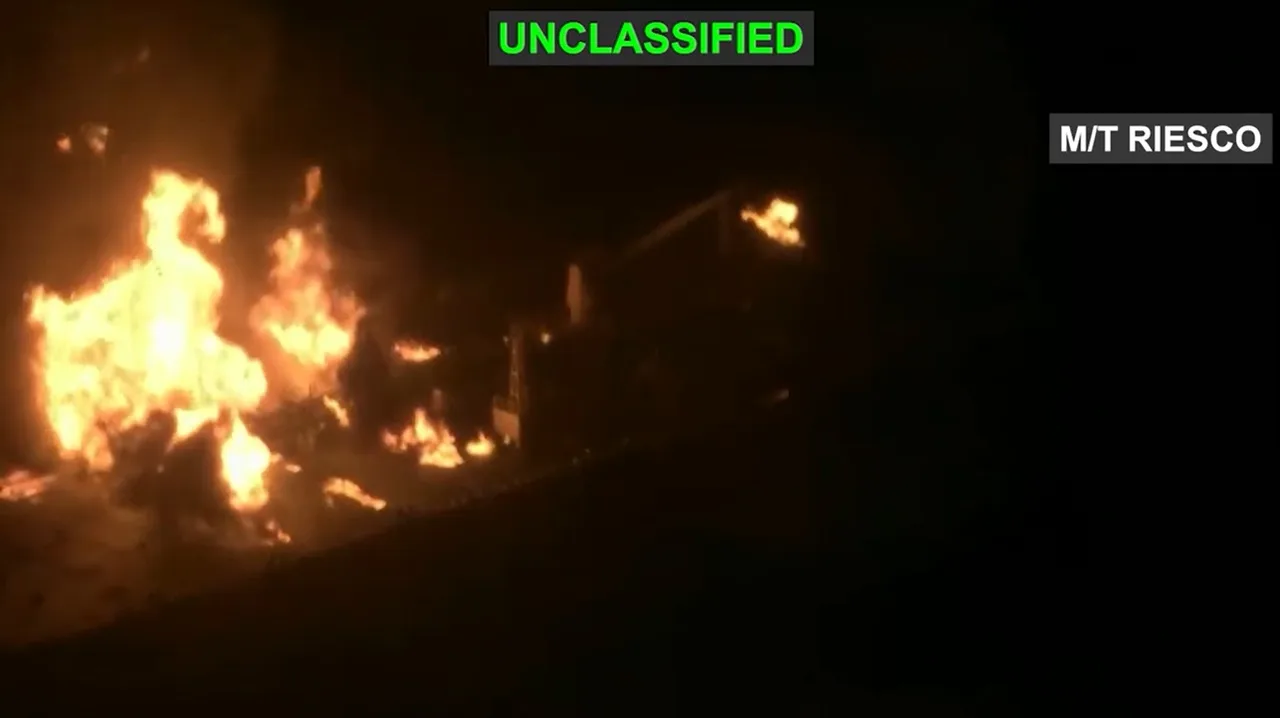
That situation changed following a US attack on 8 September, after which the tanker sank in the Gulf of Oman.
Despite that outcome, Riesco now appears among the 77 vessels identified by the PGSA.
ONEX enters the blacklist
The expanded list also brings a new owner into focus. UAE-based trader ONEX has three vessels added to the PGSA registry: On Pride, On Peace and On Phoenix.
On Pride reported a projectile landing approximately 1.5 nautical miles from its position in early August. The vessel’s master, however, believed the projectile may have been intended for another ship.
Other companies and owners outside the Gulf region have also been affected.
Dyanacom now has a second tanker on the blacklist after Pserimos joined Kavomaleas.
The latest additions also include vessels associated with Greece’s Dorida Shipping, Italy’s Finaval, Türkiye’s Güngen Maritime & Trading, as well as two ships with links to China.
With the number of vessels now reaching 77, the PGSA blacklist covers a broad cross-section of commercial shipping operating through one of the world’s most strategically important maritime chokepoints.
Updated PGSA blacklist as of 14 September
PGSA Strait of Hormuz Blacklist – 14 September
| No. | Vessel Name | IMO No. |
|---|