



Iran has issued a fresh warning to the international shipping community, cautioning vessels against using the southern navigation corridor through the Strait of Hormuz after Oman published new transit guidelines as part of an International Maritime Organization (IMO)-coordinated initiative.
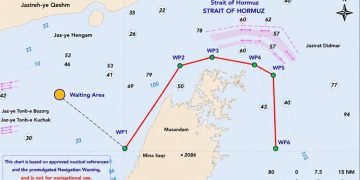
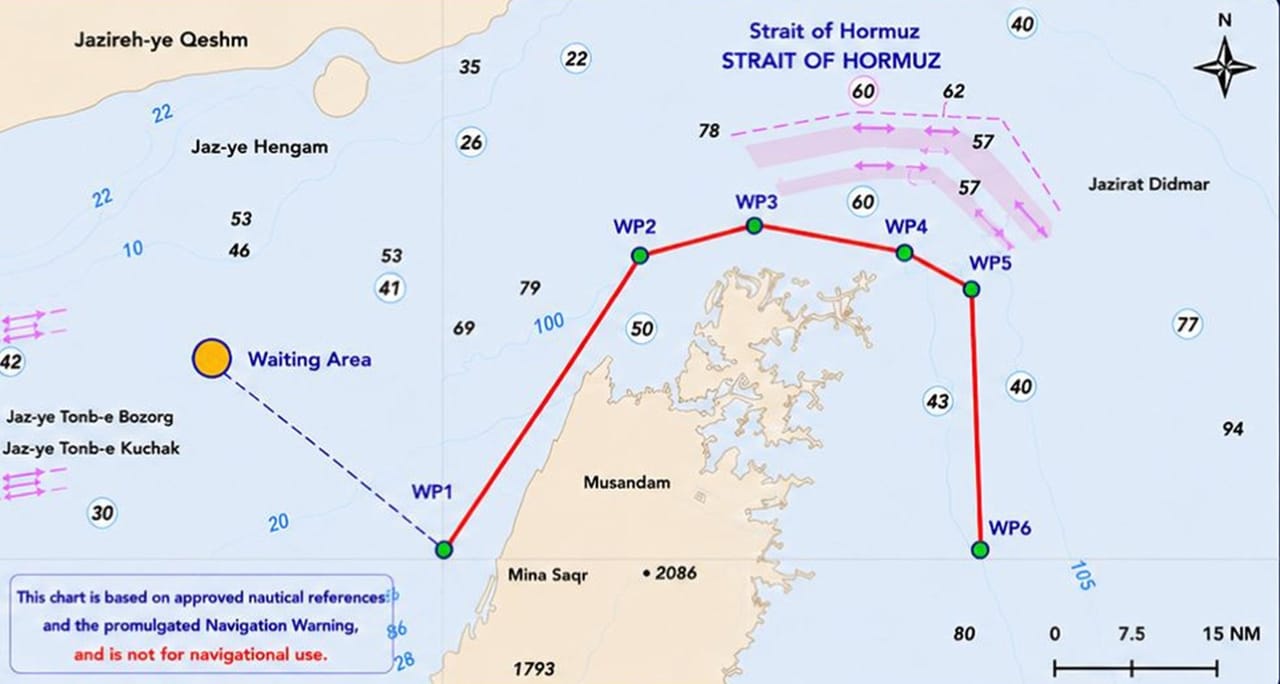
The warning was delivered by Iran’s Islamic Revolutionary Guard Corps (IRGC), which declared that any route outside the northern corridor passing through Iranian waters is both prohibited and dangerous. The statement came shortly after Oman’s Maritime Security Centre released operational guidance identifying waiting areas and designated waypoints for ships leaving the Gulf via the southern corridor.
According to Iranian state media, the IRGC criticised the announcement, arguing that the new route had been introduced without prior consultation or coordination with the Islamic Republic of Iran.
The military statement stressed that the only authorised shipping lanes through the Strait of Hormuz are those designated by Iran, warning that navigation outside these corridors presents serious safety risks. The IRGC urged all commercial vessels to avoid any movement beyond the routes approved by Tehran.
The latest tensions come only days after the IMO unveiled its plan to facilitate the evacuation of vessels that have remained stranded in the Arabian Gulf since the outbreak of the conflict between the United States, Israel and Iran on 28 February. Around 11,000 seafarers have been unable to leave the region during the crisis.
Under the IMO-coordinated framework, ships may choose either the northern route through Iranian waters or the southern route through Omani waters. Once a route is selected, vessel operators are instructed to coordinate closely with the relevant coastal authorities to ensure safe passage.
However, Tehran does not recognise the southern corridor. Before signing the recent Memorandum of Understanding with the United States, Iranian forces had reportedly targeted commercial vessels navigating this route using drones. Those attacks ceased after the agreement was reached and the United States lifted its naval blockade of Iranian ports. Any renewed attacks on merchant shipping would risk violating the ceasefire arrangement currently in place between Washington and Tehran.
Even with the temporary easing of hostilities, Iran continues to assert its authority over navigation in the Strait of Hormuz The conflicting positions between Tehran and the IMO-backed transit arrangements are creating growing uncertainty for shipowners, operators and global supply chains, leaving the long-term future of navigation through one of the world’s most critical maritime trade routes far from settled.