



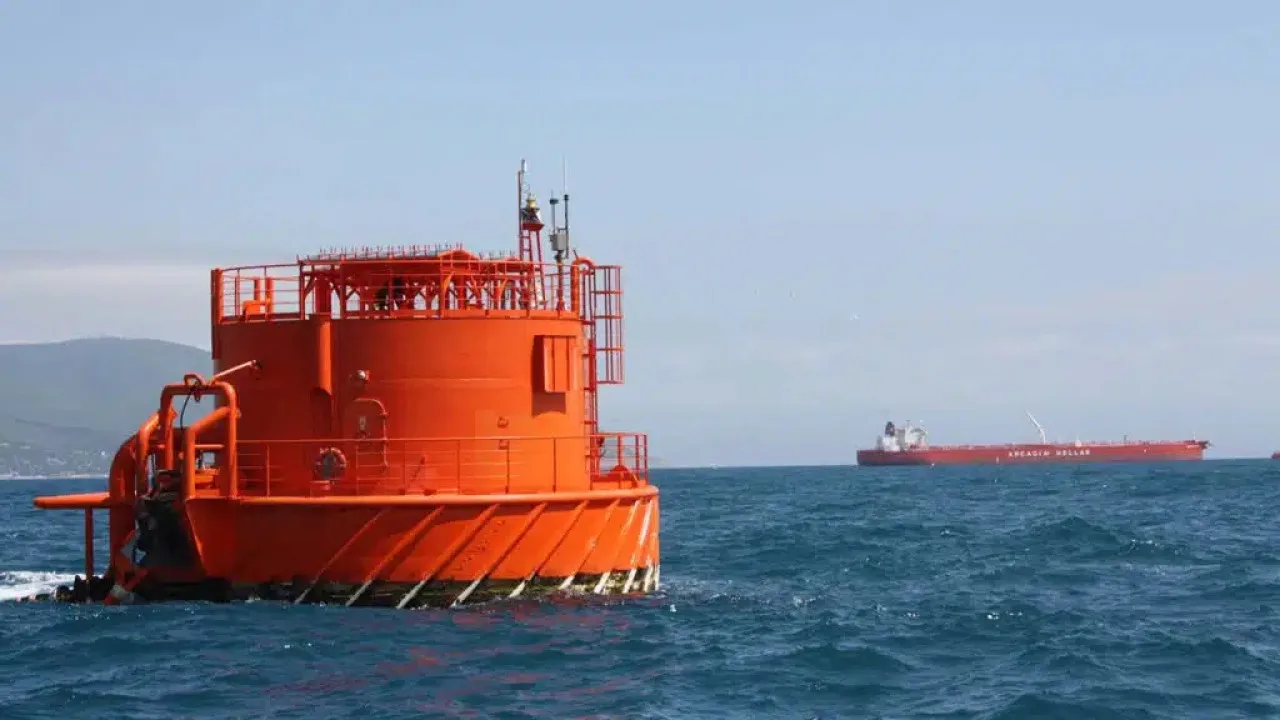
The cost of moving crude oil from the Black Sea has surged as repeated drone attacks around Novorossiysk drive shipowners away from one of the region’s key export routes.
Tanker rates on the route from the Caspian Pipeline Consortium (CPC) terminal in Novorossiysk to Augusta in the Mediterranean have more than doubled since June, reaching around $400,000 per day.
The Baltic Exchange’s TD6 tanker benchmark has risen from approximately WS230 in mid-June to around WS530, putting rates close to levels currently seen in the Middle East.
The sharp increase comes as operators reassess the risks of calling at Black Sea ports amid a series of drone strikes targeting tankers and other maritime infrastructure.
Kazakhstan particularly exposed
The CPC terminal plays an important role in exports from both Russia and Kazakhstan, although Russia has alternative routes for moving its crude.
Kazakhstan is far more dependent on the facility. Around 80% of the country’s exports are loaded onto tankers after travelling through the 1,510-kilometre Caspian Pipeline to the Novorossiysk terminal.
The growing security concerns therefore have implications beyond shipping costs, potentially affecting one of Kazakhstan’s main channels for getting crude to international markets.
War risk costs climb
The attacks are also having a direct impact on insurance costs.
Analysts say the unpredictable nature of the strikes — which have affected vessels operated by owners with different relationships to the conflict — is making some shipowners increasingly reluctant to enter the Black Sea.
London shipbroker Gibson has warned that the situation could undermine what has traditionally been a reliable alternative source of crude oil and place additional pressure on energy supply chains.
War risk insurance for ships and their cargoes has risen sharply. Black Sea port-call cover is now estimated to have doubled since late July, reaching as much as 2% of a vessel’s value. Cargo insurance costs have increased by a similar amount.
According to Gibson, vessels have continued to come under attack even when their owners had no previous involvement in Russian trade. In some cases, the owners have even been based in countries allied with Ukraine.
The absence of a clear pattern in the attacks has added another layer of uncertainty for operators trying to assess the risks before entering the region.
Black Sea trade faces wider disruption
The consequences are not limited to crude oil.
Last week, Reuters reported that attacks targeting ships, ports and export terminals were disrupting both grain and oil flows through the Black Sea, turning the region into what it described as the “latest strategic trade chokepoint.”
The stakes are particularly high for agricultural commodities. Russia is the world’s largest grain exporter, while agricultural exports are also a major part of Ukraine’s economy.
Both countries have intensified attacks on each other’s agricultural export facilities as well as commercial vessels.
With restrictions affecting both grain and oil exports, further disruption in the Black Sea could add pressure to global commodity markets and contribute to higher inflation, increasing the economic burden on consumers and businesses in the months ahead.
For tanker operators, however, the immediate impact is already visible in freight rates: a route that cost around WS230 only weeks ago is now approaching WS530, reflecting how quickly security risks can reshape the economics of maritime trade.