



After nearly three years of historically low transportation rates, shippers may soon face a much different reality. According to executives at ITS Logistics, mounting pressure across the freight market is creating the conditions for a significant capacity crunch that could challenge companies still budgeting for flat transportation spending in 2026.
Speaking with FreightWaves, Ryan Martin, President of Distribution and Fulfillment at ITS Logistics, warned that warning signs have been building for months.
“Pain is ahead on the transportation side,” Martin said. “Shippers don’t typically believe it until they start to feel the pain.”
The concerns come as the freight sector experiences a combination of carrier exits, business closures, tighter regulatory scrutiny of non-domiciled operators and rising fuel costs. While freight demand remains the biggest unknown, industry leaders believe that any meaningful increase in shipping activity could quickly expose the shrinking capacity available in the market.
Inventory correction reshaping supply chains
Martin explained that the industry is still dealing with the aftermath of the pandemic-era inventory boom. Companies that aggressively purchased inventory during periods of supply chain disruption are now facing the financial consequences of carrying excess stock.
According to Martin, products that once cost one dollar can now cost as much as $1.52 due to inflationary pressures, transportation expenses and tariffs, significantly increasing inventory carrying costs.
As a result, businesses are placing greater emphasis on inventory turnover and cash flow management.
“Every customer is pushing for better inventory turns due to the cost of inventory increasing,” Martin noted.
Many retailers accumulated large volumes of inventory during 2021 and 2022 when demand was exceptionally strong. However, as consumer spending patterns shifted, warehouses became overloaded with products that could not be sold without substantial markdowns.
Rather than immediately accepting losses through discounts of 50% to 75%, many companies chose to store excess inventory and wait for more favourable conditions. In many cases, liquidation decisions only occur when new management teams arrive and are willing to clear ageing stock from balance sheets.
The clean-up process has led to aggressive SKU rationalisation across several industries. Martin revealed that one ITS customer is eliminating approximately half of its product catalogue after evaluating the true cost of holding inventory.
The beneficiaries of this trend have been discount retailers and wholesalers such as TJX Companies, Ross and Dollar General, which are able to purchase distressed inventory at attractive prices when brands finally decide to liquidate excess stock.
Fuel prices remain the biggest consumer wildcard
While inventory levels continue to normalise, consumer demand remains difficult to predict.
Martin believes fuel prices play a far greater role in purchasing behaviour than many traditional economic indicators. According to his theory, consumers are more sensitive to fluctuations in gasoline prices than they are to gradual increases in grocery prices because fuel costs are highly visible and affect nearly everyone.
When fuel prices climbed to between $7 and $8 per gallon in certain regions, ITS observed a noticeable slowdown in e-commerce activity, particularly for discretionary and higher-value purchases.
Although seasonal events such as Mother’s Day temporarily boosted spending, Martin said consumer anxiety remains elevated.
This uncertainty is occurring despite record levels of revolving credit card debt, which now exceed $1.2 trillion in the United States. At the same time, consumer sentiment remains weak, creating what Martin describes as an unusual economic environment where spending continues despite growing financial concerns.
Should fuel prices remain elevated, he believes the broader economy and consumer purchasing power could face additional pressure in the months ahead.
Drop trailers becoming essential rather than optional
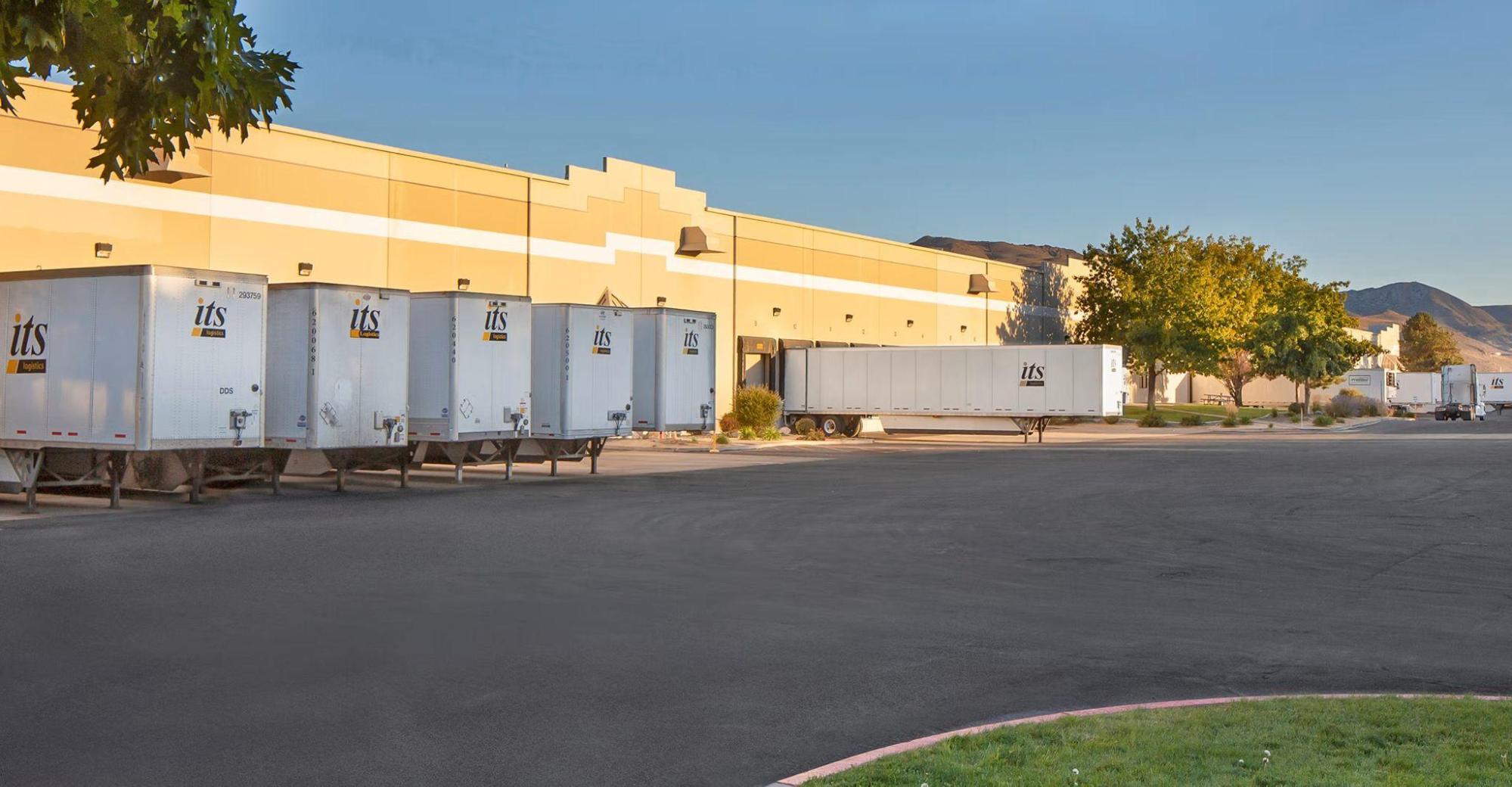
As freight markets evolve, ITS Logistics is significantly expanding its drop-trailer strategy.
Adam Angle, who oversees trailer operations and equipment at the company, revealed that ITS doubled its trailer fleet between 2024 and 2025 and expects to reach approximately 13,000 company-owned trailers by the end of the year. Additional growth may come through synergies created by Echo Global Logistics’ acquisition of ITS, completed in March.
According to Angle, trailer availability is increasingly becoming a prerequisite for major shipper relationships.
“It’s definitely at times table stakes to have assets in these conversations,” he explained.
The company’s strategy extends beyond its own equipment. In addition to its branded fleet, ITS has access to approximately 300,000 trailers through carrier partnerships, creating what it describes as a flexible and scalable trailer ecosystem.
Modern trailer technology is also transforming supply chain visibility. Internal cameras and advanced monitoring systems allow shippers to identify underutilised trailer space, improve loading efficiency and enhance cargo security. Hidden tracking systems further strengthen theft prevention and asset recovery capabilities.
ITS believes these technologies provide valuable operational insights while helping customers optimise network performance.
Capacity tightening despite stable freight demand
Even though freight demand remains relatively moderate, capacity continues to exit the market.
According to Angle, load tender volumes are currently similar to 2019 levels, yet carriers continue to leave the industry due to economic pressures. Spot market rates are already reaching record highs despite the absence of a significant demand surge.
This combination has created what executives describe as a “coiled spring” scenario. If demand increases suddenly—supported by lower fuel prices and reduced inventory levels—the market could tighten rapidly and push transportation rates sharply higher.
ITS believes its growing DropFleet strategy provides a competitive advantage in this environment by allowing trailer capacity to be shared and redeployed across thousands of carrier partners rather than relying on a limited number of transportation providers.
As capacity continues to tighten, the company argues that flexible trailer networks will become increasingly important for maintaining service levels during periods of disruption and market volatility.
For many shippers, however, the biggest challenge may be financial. After three consecutive years of declining freight costs, many transportation budgets, incentive plans and procurement strategies have been built around the assumption that rates would remain stable.
Martin believes that assumption is becoming increasingly risky.
“They’re going to get challenged from a budgetary perspective this year if rates continue to increase,” he warned. “It’s already happening, but it might just be the tip of the iceberg.”
With inventories leaner, capacity shrinking and fuel prices remaining unpredictable, ITS Logistics believes the freight market could be approaching a turning point that will test the preparedness of shippers across North America.